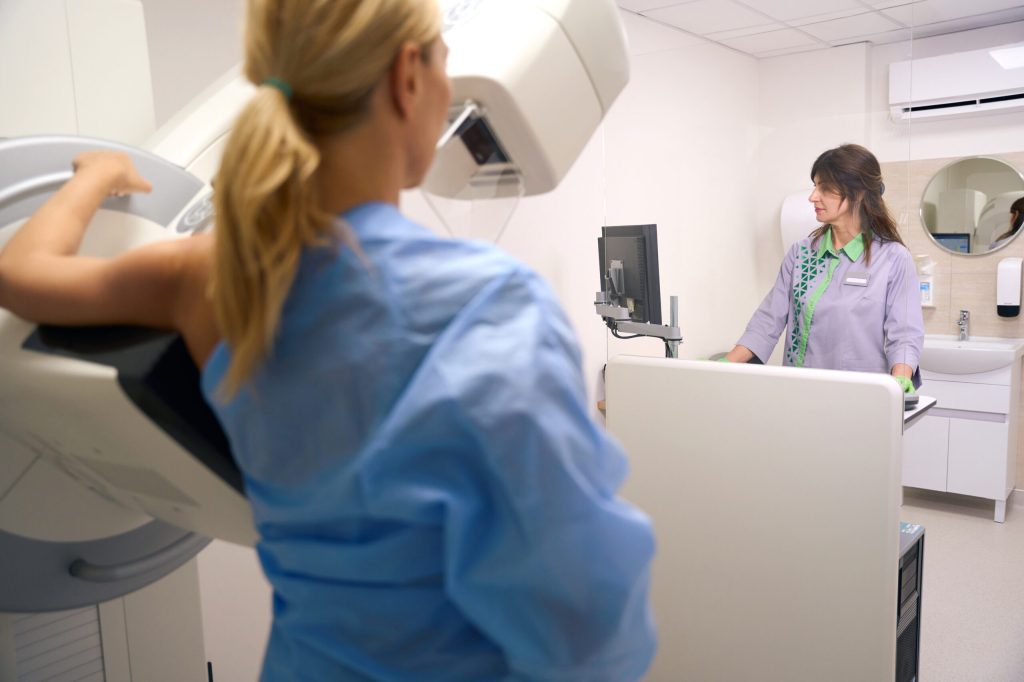
A Parkinson's specialist has said increasingly more nurses are offering valuable support to people living with the disease following yesterday’s awareness day.
Parkinson’s is a neurodegenerative disease that impacts the central nervous system, affecting someone’s movement and mood.
Over 1,100 Australians receive the diagnosis each month, and nearly 220,000 people across the country live with Parkinson’s.
Kate Warren, who became Murrumbidgee local health district’s (LHD) first Parkinson’s specialist nurse last January, said more RNs were training to care for people living with the condition.
Warren has 24 years of nursing under her belt and now works as a Movement Disorder Clinical Nurse Specialist (CNS) at the Wagga Community Care Centre in Peter Street.
“It’s important that people living with the condition know that support is available to improve their quality of life,” Warren said.
“Everyone’s experience with Parkinson’s is different, but we are here to help.”
Parkinson’s is the second-most prevalent neurological condition aside from Alzheimer’s.
The disease causes dopamine, a neurotransmitter responsible for sending messages between nerve cells and other neurons, to break down or gradually die.
It results in physical symptoms, such as tremors, rigid movement and slowness of movement balance, and cognitive impairment, like anxiety, depression and personality changes.
“Although the disease progressively worsens, I’m committed to enhancing the quality of life and self-management of people living with Parkinson’s,” Warren said.
There are roughly 100 Parkinson’s specialist nurses across Australia that typically work within movement disorder clinics, but they can also be based in pharmaceutical or research settings.
Nurses in Australia only recently started to specialise in Parkinson’s after the federal government launched a project in 1994 to improve healthcare support.
However, nurses wanting to specialise in Parkinson's care still struggle to find adequate schooling and training, according to the Australian College of Nursing (ACN).
The nursing college introduced a postgraduate unit last year for student nurses to extend their knowledge and skills in the field.
Warren joined other Parkinson’s specialist nurses who took up their roles in 2022, including Jody Lloyd in Mid-North Coast LHD and Trevor Lyons in NSW’s Coffs Harbour region.
Warren said she hoped to learn more about the specific issues people living with Parkinson’s face in rural and regional Australia.
“I hope I can improve their quality of life through exercise and support groups,” she said.
“Especially in regional Australia, people with Parkinson’s should [continue to] join community activities and social events to reduce isolation.”
NSW’s former Labor deputy premier, John Watkins, also contributed to yesterday’s World Parkinson’s Day.
Watkins was diagnosed with the disease nearly 15 years ago and struggled to grapple with ‘losing the capacity to do the common everyday things’ like swallowing.
“Even after a decade and a half, it surprises me with its odd, almost malicious intent, attacking when it is least expected and most unwelcome,” he shared.
“It has been the unrelenting attack on my mental health and peace of mind that has been hardest to cope with, and the bone-deep fatigue.”
Watkins said it was ‘frustrating’ to spend ‘hours in therapy rooms and doctor’s surgeries’, seemingly to no avail.
Luckily, he and his psychiatrist recently found an antidepressant that improved his mental health.
He also said he discovered Parkinson’s medications that worked for him and slowed the progression of the disease.
Watkins underlined that many nurses and clinicians had brought ‘unexpected positives’ to his life by reducing the symptoms and showing dedication to helping him.
“I’ve come across many nurses who are motivated by the deepest compassion and desire to ease suffering,” he said.
“Speech therapists, physios, psychologists, and neurologists who know it’s unlikely they will see a cure but still work to keep spirits up.
“Their treatments and encouragement are invaluable.”
While Watkins said he mourns his premature career loss due to the disease, he finds relief in advocating for a better quality of life as a board member of Parkinson’s NSW.
“I’ve realised that I have so much to be thankful for, not the least, the empathy for others living with Parkinson’s,” he said.
“As we mark World Parkinson’s Day, I pray they experience a journey that is gentle, free from the worst symptoms and surrounded by love.”