Hospital beds could be closed and and elective surgeries cancelled across Victorian public hospitals if a pay dispute is not resolved by the Allan government within the next week.
The "last resort" action was supported by members of the Victorian branch of the Australian Nursing and Midwifery Federation (ANMFVIC) last Tuesday following a rejection of the state's wage policy of three per cent a year, plus an annual $1,500 payment (pro rata for part-time) on 21 March.
Union members agreed to take "stage one" industrial action this week, which includes refusing to work overtime, banning administrative paperwork, and wearing red T-shirts promoting the push for better pay and allowances.
If the Allan government does not resolve the dispute by next Wednesday, the union will look at triggering stage two industrial actions, starting from 17 May.
Stage two would involve closing one in four hospital beds, cancelling one in four elective surgeries, and holding stop-work meetings.
ANMFVIC secretary Lisa Fitzpatrick said industrial actions were disruptive and inconvenient but would not impact the patients health or welfare.
"The nursing and midwifery workforce is the backbone of the public health system, but it’s fractured," Ms Fitzpatrick said.
"The Allan Government must get serious about retaining, recruiting and rebuilding our permanent nursing and midwifery workforce.
"We need a senior decision maker at the negotiating table who understands that workforce casualisation is the cause of our rostering challenges and a significant contributor to hospital budget blowouts."
Data from the Department of Health showed that health services spent $291m on overtime, and agency and casual nurses and midwives in 2023.
The ANMF projects the VIC government will spend an excess of $3bn on a casual workforce by 2028.
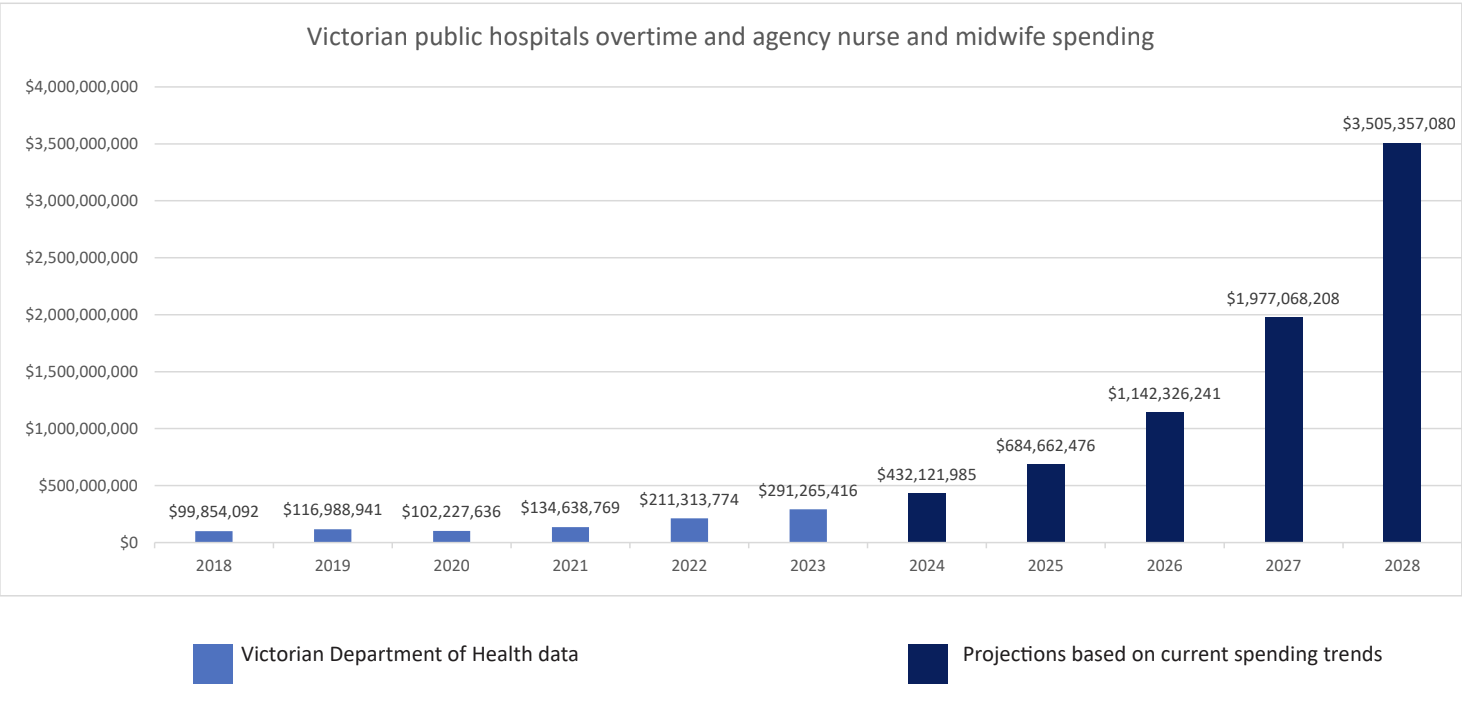
"Hospital spending on unrostered and rostered overtime and agency nurses and midwives has doubled over the last four years alone; hospitals could save a bucketload of money if they rebuild their permanent workforce," Ms Fitzpatrick said.
"Reversing the casualisation of the workforce will take a higher and more nuanced package than the government’s blunt three per cent wages policy.
"If we reverse casualisation and rebuild our permanent nursing and midwifery workforce to 2018 levels, we can fix our health system," she said.
The ANMFVIC is negotiating the 2024–28 public sector nurses and midwives enterprise agreement, on behalf of 60,000 members working in public acute and aged care services and stand-alone community health centres.
The 2020–24 agreement expires on 30 April.