A half-billion-dollar push to cut hospital waiting times in NSW has begun to have an effect, with a number of schemes sending patients places other than hospitals to be treated.
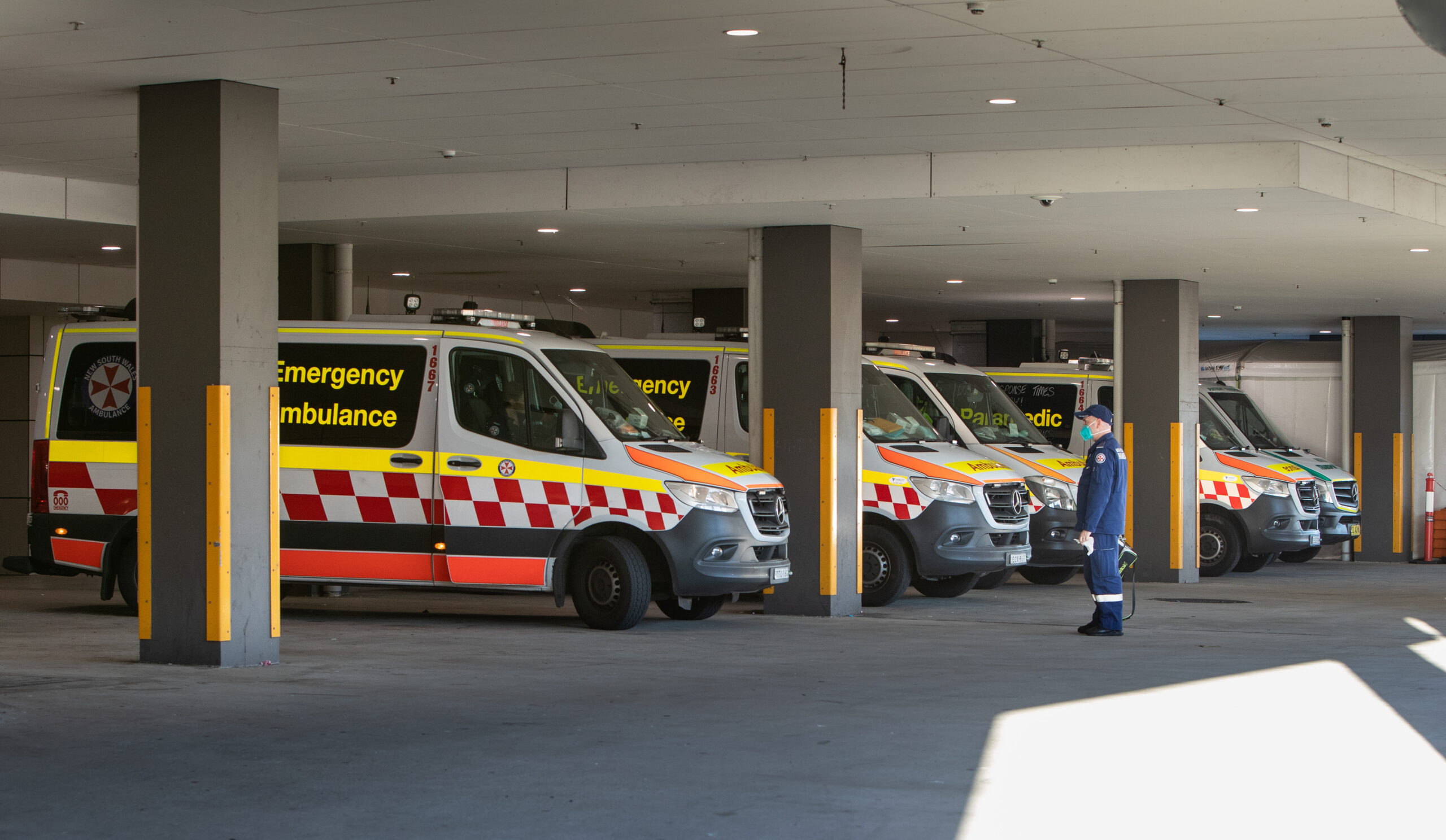
Data released on Wednesday showed that the poor ambulance ramping rates that have existed since the pandemic have begun to improve.
Treatment of the sickest and most severely injured patients (T2 emergency patients) has improved most at the hospitals in western Sydney, including Westmead, Blacktown and Cumberland.
T2 patients treated within the mandated ‘on-time’ measure increased from 29 per cent to 37.5 per cent in the past three months, compared with the same period last year.
For the severely injured and sick people taken to Blacktown Hospital, patients were treated on time 31.4 per cent of the time (up from 17.7 per cent) – a rate that has tripled since 2022.
“While lower ED wait times and ramping are promising, there is still more to be done,” NSW Health Minister Ryan Park said.

“I want to thank staff for their amazing work in delivering these significant improvements.”
The figures from the June quarter show NSW hospitals had their lowest ambulance ramping rates, and best T2 treatment times, since the pandemic.
The NSW government has spent $500m addressing the backlogs facing healthcare workers, through recruitment and by giving patients alternatives other than hospitals.
The Health Minister pointed out virtual urgent care services are now available across the state, and money has been pumped into allowing people to recover at home instead of in hospital. ‘Discharge concierges’ have also been employed to identify who can be sent home from hospital.
Almost 500 nurses had been recruited to emergency departments during the past year, the minister said.
Getting the seriously sick and injured out of the ramped ambulances and into hospital more quickly does, however, slow down the emergency room for less serious patients.
“During periods of high demand, those with less urgent conditions can experience longer wait times when there are large numbers of seriously unwell patients being prioritised for emergency care,” Mr Park said.
“So I want to remind the community of your options for care outside of the hospital which could spare you an unnecessary wait in an ED.
“If you have a non-life-threatening condition, please phone Healthdirect on 1800 022 222 where you will be assessed by a registered nurse who can potentially refer you to urgent care, or even virtual care from the comfort of your own home.”
People in NSW require, or use, ambulances far less than Queensland, Victoria and South Australia and the NT.
The Australia Medical Association’s 2025 ramping report card shows last year, per 1000 people, NSW had 133.9 incidents requiring an ambulance, compared to 157 in Victoria, and 232 in Queensland.