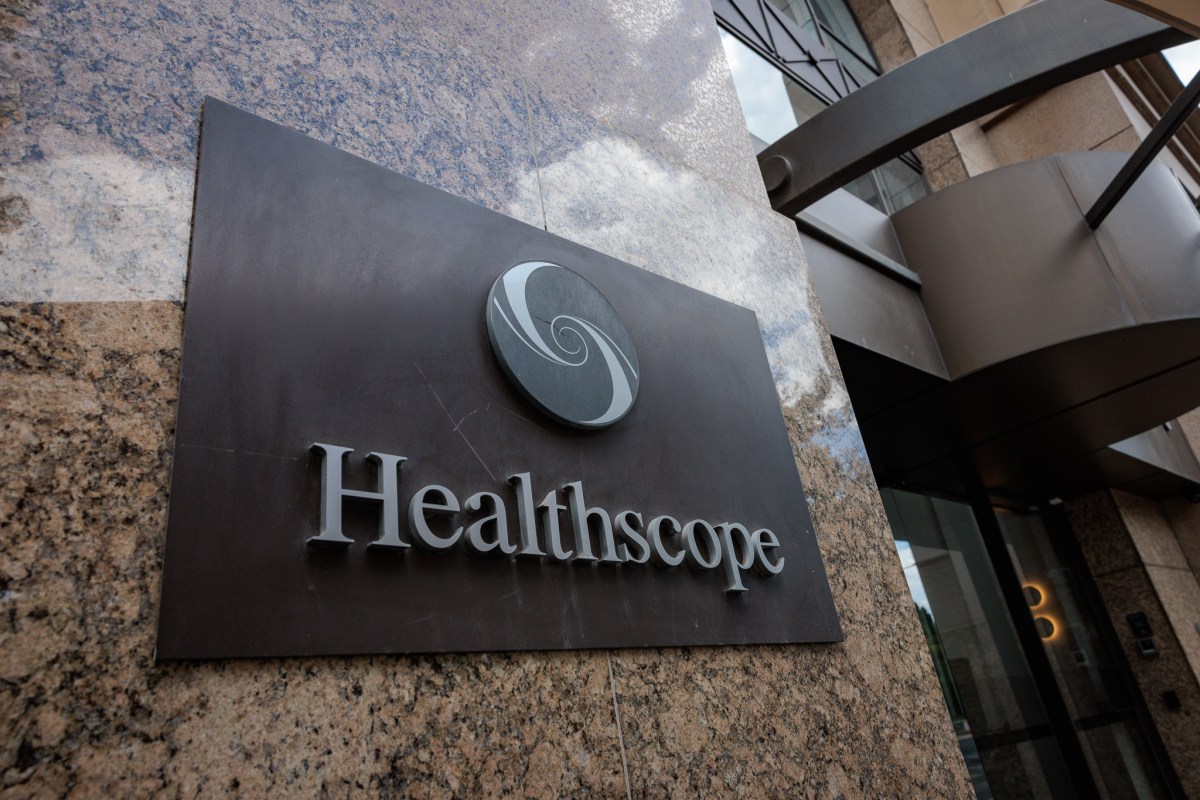
Australia’s second largest private hospital operator is in administration after lenders swooped to secure their $1.4bn in debt.
A syndicate of banks and hedge funds that control Healthscope’s loans placed the company into receivership after being handed control by its previous owner, Canadian asset management giant Brookfield, earlier this month.
Healthscope chief executive Tino La Spina said there has been no impact on hospitals, staff or patients.
McGrathNicol Restructuring is working with Healthscope management to complete an orderly sale of the business. The operational business, which runs the hospitals, is not in receivership.
“All 37 of our hospitals continue to operate as normal and today’s appointment of receivers, including the additional funding, ensures a stable path to a sale, with no impacts on any hospitals, staff or patients,” Mr La Spina said.
“Our incredible teams are all working as normal, providing the high standard of care they always have.”
McGrathNicol have been provided with a new $100m funding package by the CBA to support operations during the sale process.
This is in addition to Healthscope’s current cash balance of $110m and substantial additional asset backing across the group. Healthscope’s existing working capital financier is also providing support.
Mr La Spina said the additional funding, while they do not anticipate it being required, provides additional support.
“The receivers and management share the same goal of maintaining our market leading standards of patient care and protecting the business, the hospitals and our amazing people.”

The Healthscope Board has appointed partners from KordaMentha as administrators to the same non-operating entities, as is common practice. The receivers will assist the administrators as required to fulfil their statutory role.
McGrathNicol’s intention is to transition all hospitals to new ownership, with no plans for hospital closures or redundancies. It will undertake an immediate review of the sale process to date, with a view to re-engaging with interested parties in the coming weeks.
“We want to make it clear that the subsidiaries that own and operate Healthscope’s network of hospitals are not affected by our appointment to the shareholding companies,” McGrathNicol partner and appointed receiver Keith Crawford said.
“Our immediate focus is to engage constructively with all key stakeholders to ensure uninterrupted operation of Healthscope hospitals and continuity of best practice standards of patient care.
“We will also work closely with Healthscope management to support any operational funding requirements via access to $100m of new funding from Commonwealth Bank while we pursue an orderly transition of ownership of Healthscope’s hospitals.”
However, the long-term futures of 37 hospitals, surgeries and clinics around Australia remains in doubt as well as thousands of jobs. More than 6000 nurses and midwives alone are employed by the company.
NSW is the most exposed with 12 Healthscope assets including the Prince of Wales Private Hospital. Sydney Southwest Private Hospital, and the Northern Beaches Hospital, which is a public-private arrangement, while Victoria also has 13 including Latrobe and Knox private hospitals.
In Queensland, Healthscope operates Brisbane Private Hospital, Gold Coast Private Hospital, Peninsula Private Hospital, Pine Rivers Private Hospital and Sunnybank Private Hospital.
South Australia’s Ashford Hospital, Flinders Private Hospital, Griffith Rehabilitation Hospital and The Memorial Hospital are also operated by the group.
Healthscope has National Capital Private Hospital in the ACT as well as the private hospitals in Darwin and Hobart.
Health Services Australia NSW secretary Gerard Hayes said the “sorry episode” showed why there was no place for private equity in public health.
“The commercial need for an operator like Healthscope to turn a profit will always chafe against the needs of patients and hospital workers,” he said.
“This is why we have had absurd situations like the maternity ward at Northern Beaches Hospital being rented out as a film set. This is not the first time public-private deals have failed in public hospitals but it needs to be the last.”

Picture: NCA NewsWire/Martin Ollman
Government refuses bailout
The federal government has confirmed there will be no bailout for the company.
Minister for Health and Ageing Mark Butler acknowledged the “highly distressing” nature of the news and assured the public that all planned procedures will continue to go ahead.
“Throughout this process the government has been meeting regularly with Healthscope and we have clear expectations the hospital group, lenders, and landlords to act cooperatively and deliver the least disruptive outcome for patients, staff, and the broader health system,” Mr Butler said in a statement on Monday.
“The Department of Health, Treasury, Finance and other relevant departments have been working closely to ensure the government is able to respond to these developments.
“The government expects all parties to continue to put patient care and workers as their priority. We expect that these hospitals remain a critical part of our healthcare system.
“The government does not want any of these important assets to be put in jeopardy to satisfy international investors.
“As the government has said all along, there will be no taxpayer bailout. We remain steadfast in our view that an orderly sales process that maintains the integrity of the entire hospital group will provide the best outcome for patients, staff, landlords and lenders.”
Unions and staff voice their concerns
Healthscope’s voluntary receivership leaves the future uncertain for around 18,000 staff. This includes those employed at Hobart Private Hospital, which announced in February that it would be closing its maternity ward on August 20 due to “ongoing workforce challenges”.
Health and Community Services (HACSU) Tasmanian secretary Robbie Moore said up to 400 workers at Hobart Private Hospital were worried about their jobs and the hospital’s future.
“It’s been for sale and obviously now staff are very concerned about reports from interstate that they’re going into voluntary receivership and what that means for them and their job security moving forward,” he said.
“There are genuine fears because we have seen St Helens closed by Healthscope [in 2023], and what that meant for mental health patients and child and family services.
“They are getting rid of maternity services shortly and staff are really concerned about what this means for their future and for patients.”
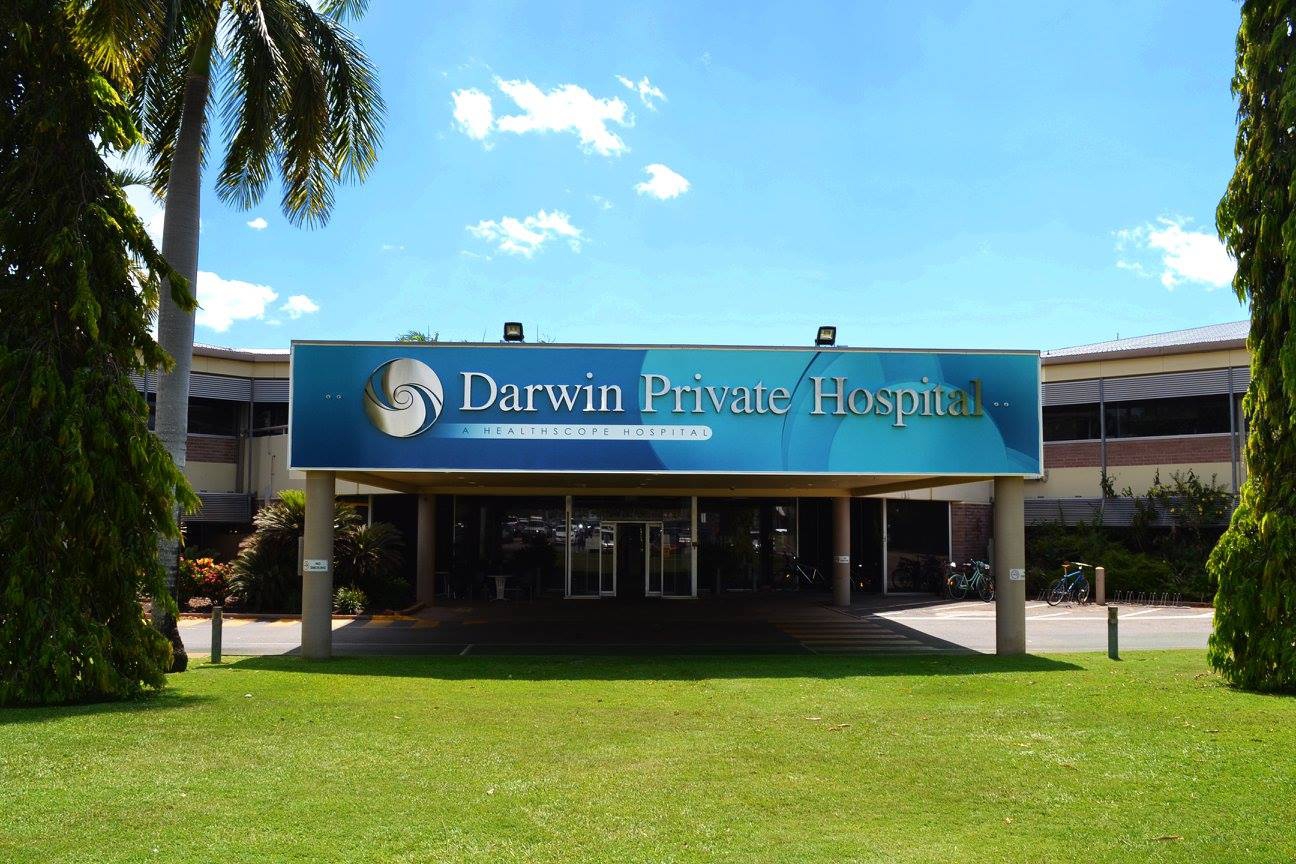
Healthscope's collapse has set off alarm bells with private insurers, who hold major concerns for the future of Darwin Private Hospital specifically.
Darwin Private Hospital is the only private facility in the Northern Territory and it is understood that around 99,000 people have private health insurance in the NT and access private services.
Private Healthcare Australia (PHA) chief Dr Rachel David said insurers are working to ensure those already receiving care or booked to receive care in Healthscope hospitals will be able to continue this without disruption or additional out-of-pocket costs.
“Health funds recognise that Darwin Private Hospital is a very important service because there are no other private hospitals nearby,” Dr David said.
“For this reason, we want it to survive and will do whatever we can to ensure people in the NT retain access to it while ownership is resolved.
“We have already told the federal government that if there are hospitals in a genuine area of need providing essential services where there are none other available, and they are willing to open their books, we will step up to support them.”
The Australian Nursing and Midwifery Federation (ANMF) has said it is “extremely concerned” about the future of Healthscope's hospitals, but that it will continuing working with state and federal governments on the matter.
Federal secretary Annie Butler said the collapse is a reminder of the dangers associated with the privatisation of healthcare services and that “Americanised health care does not work in Australia.”
“For nurses and midwives working at Healthscope, this situation is obviously very difficult and worrying for them and our thoughts are with them. However, we have been assured that their jobs and their patients are secure at this time,” Ms Butler said.
“We have requested urgent briefings with the receiver and with Healthscope management and have been assured meetings will be arranged as a matter of priority.
“We will also be urging the government to review the types of companies they allow to participate in the delivery of health services and prevent unethical and unscrupulous parties, which have no regard for patients or the health workforce, from entering the system.“
The ANMF urges any nurses or midwives who are feeling anxious or stressed about the collapse of Healthscope to contact the Nurse Midwife Health Program Australia (NMHPA) or by phone on 1800 001 060.