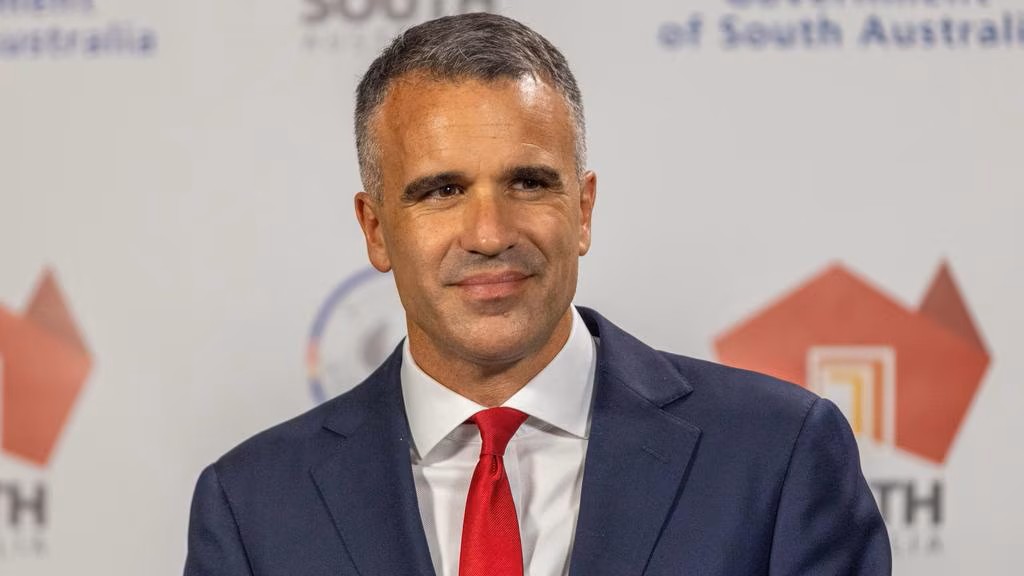
Premier Peter Malinauskas has declared victory in South Australia’s state election as vote counting indicates a Labor landslide of historic proportions.
Taking to the stage at Labor’s election HQ on Saturday night to chants of “four more years”, Mr Malinauskas said he was “humbled”.
“More than anything else, tonight, I’m overwhelmed with a sense of gratitude,” he said.
“A gratitude to so many people who have provided this government the opportunity to be able to continue to serve. To be able to continue our work of making sure that the momentum in South Australia delivers for the people who deserves it most, and those are the people of South Australia.”
What’s promised for health
The Malinauskas government has outlined a broad health agenda for its next term, with major commitments spanning hospital infrastructure, mental health, aged care, women’s health, workforce development and regional ambulance services.
The package is a response to mounting pressure across the system, with Labor promising to ease demand on emergency departments, improve access to specialist care, and strengthen staffing in metropolitan and regional areas of the state.
New Greater Northern Adelaide Hospital
Labor has committed to building a new Greater Northern Adelaide Hospital at Concordia, placing a major health facility in one of the state’s fastest‑growing regions.
The nine‑hectare site has already been secured, with planning to begin immediately and construction expected early next decade, following completion of the new Women’s and Children’s Hospital in 2031.
The hospital is intended to ease pressure on Lyell McEwin Hospital and reduce the number of patients travelling into the city for care as thousands of new homes are built across the northern suburbs and Barossa corridor.
Mental health assessment units next to EDs
The government has promised to build the state’s first dedicated mental health assessment units alongside emergency departments at the Royal Adelaide, Lyell McEwin and Noarlunga hospitals.
The units are designed to divert patients experiencing acute mental health distress or drug and alcohol‑related issues away from the main ED, where noise, crowding and security responses can escalate distress.
The government says the low‑stimulus, well‑resourced environments will reduce Code Black callouts, improve safety for staff and patients, and allow ED teams to focus on other emergencies.
The first unit will be built at the Royal Adelaide Hospital before the model is rolled out to the northern and southern suburbs.
More aged care beds
Labor has pledged to expand aged care capacity by 1300 beds state wide, describing the lack of aged care placements as one of the biggest pressures on South Australia’s hospital system.
The number of older patients medically ready for discharge but unable to access aged care has surged from 60 in 2022 to 291 in August 2025. These are patients who no longer need acute care but cannot safely return home, leaving them stranded in hospital beds.
Labor plans to introduce a $250 million no‑interest Aged Care Loan Scheme to fast‑track construction of 650 new beds. A further 600 beds will be delivered through the redevelopment of the old Women’s and Children’s Hospital site into a dedicated Health and Aged Care Precinct.
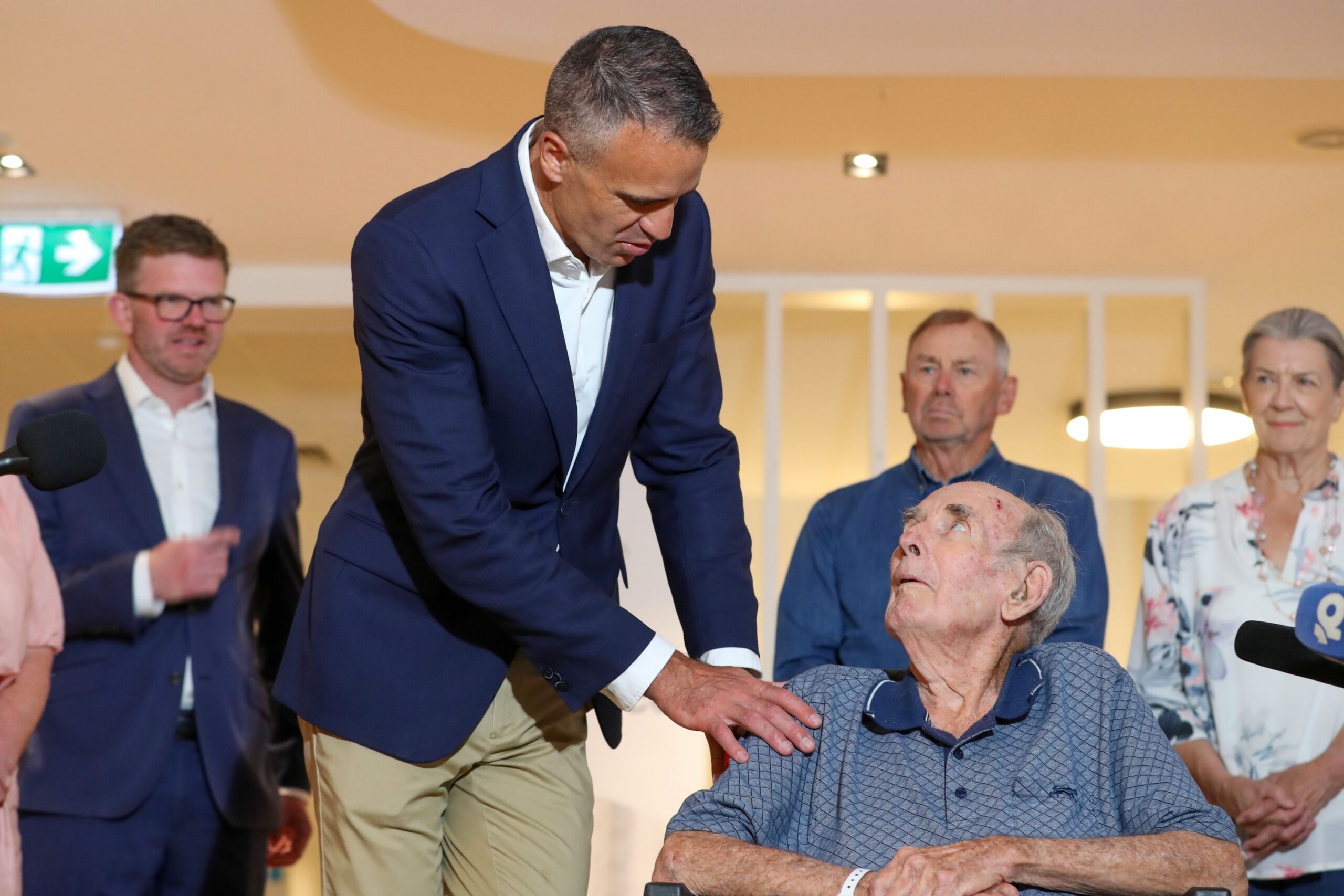
Of the bed block issue, Premier Malinauskas said he wants to “lead a government that sees a problem and then steps up to the plate and does something about it.”
“Every day there are hundreds of South Australians – and thousands across the country – stuck like this because they can’t get a federal government aged care bed,” he said.
“Although it’s frustrating the state government has to step in – we are not a government which sits back and observes a problem; we choose to act.”
The College Grove Aged Care Facility in Walkerville will also be revived in partnership with Amplar Health, adding another 70 aged care beds.
Improved support for women’s health
Labor has committed $33 million to the expansion of women’s health services, arguing that women’s specialist health needs have been historically underfunded and too difficult to access.
The plan includes five free women’s health clinics, South Australia’s first virtual pelvic pain clinic, improved pain management for IUD procedures, a statewide endometriosis awareness campaign and the state’s first publicly funded IVF rebate scheme.
Premier Malinauskas said the package will create clearer, faster pathways to care and reduce the number of women left managing chronic pain or delayed treatment.
A bigger health workforce
The creation of a new medical school training centre in Mount Gambier, designed to boost the regional medical workforce and improve access to care in country communities, will receive a $13 million investment.
In partnership with Flinders University, the centre will double the number of medical students training on site from 60 to 120 each year. Evidence shows students who train in regional areas are more likely to stay and work there.
The facility will support the state’s first fully rural medical degree, giving students the opportunity to complete their entire Doctor of Medicine in regional South Australia, signalling a long‑term plan to stabilise the rural workforce and strengthen access to medical support across regional health services.
Royal Australian College of GPs (RACGP) SA chair Dr Siân Goodson said the organisation is looking forward to continuing its working relationship with the Malinauskas government.
“South Australia, like the rest of the country, is facing significant GP workforce challenges driven by an ageing population, rising chronic disease, and long‑standing maldistribution of doctors,” she said.
“Attracting IMGs [international medical graduates] and enabling metropolitan based GPs to support rural and regional practice are practical steps that can make a real difference for patients who are currently struggling to access care close to home.
“We look forward to working closely with the South Australian Government to ensure these workforce commitments translate into improved access to GP care, particularly for rural, regional, and disadvantaged communities.”
Strengthened ambulance service
Labor has committed to expanding regional ambulance services, in response to many communities still relying heavily on volunteer crews juggling on‑call duties with work and family responsibilities.
It has promised to build a new ambulance station in Millicent, upgrade stations in the Riverland and southern Yorke Peninsula, and continue funding two community paramedics in Ceduna. The Barmera Ambulance Station will also be redeveloped, and Murray Bridge will receive permanent funding for an additional regional medical transfer crew.
The southern Yorke Peninsula will gain a new 12‑paramedic crew, adding to the 151 additional paramedics recruited across regional South Australia since Labor came to office.
Labor also plans to establish a Chief Paramedic Officer to strengthen leadership within the service.