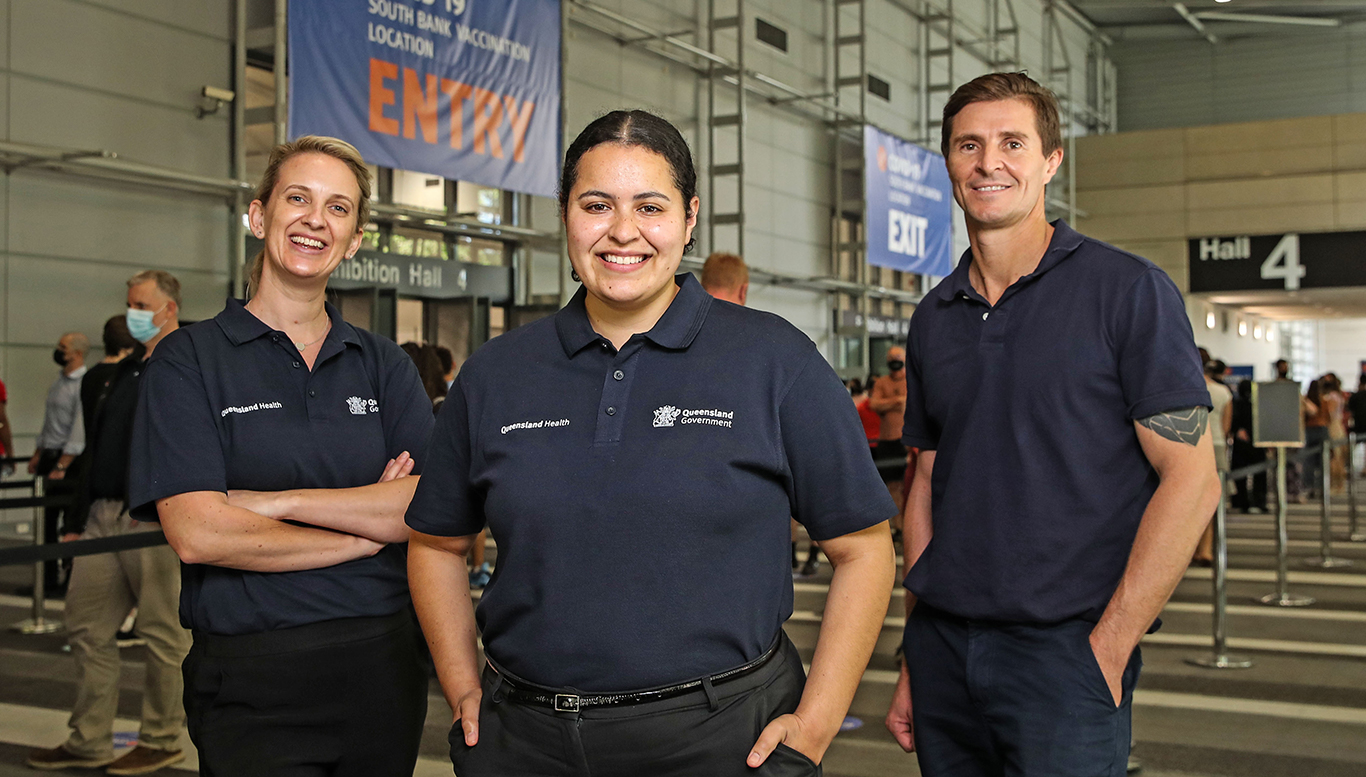
Twenty-six-year-old Gabby Cleophas was in the first semester of her nursing diploma when the pandemic first came to Australia. Just over a year and a half later, she now works in the centre of one of Queensland's mass vaccination hubs.
Three months into the job, she said the experience of helping vaccinate thousands of citizens each day has been a valuable one.
“As a student, I couldn't wait to finish and get out into the community and start helping in some way,” she told Nursing Review.
“I’ve always wanted to help people, especially in vulnerable times when they are sick and unwell.”
Entering the workforce during one of the greatest public health crises in history, nursing graduates and students are critical to the success of Australia’s vaccine rollout.
Around 34 per cent of the entire population has now been fully vaccinated, which needs to rise to 70 per cent before Australia can transition into the second phase of its recovery plan.
As a newly graduated nurse, having access to guidance and mentorship from senior colleagues has significantly helped ease the transition from study into the workplace, according to Gabby.
“I have a great team and a great team leader,” she said.
“I think everyone is really excited to get their vaccination so they can protect themselves and protect members of the community, so that’s the most important thing.
“It makes me feel humbled to be a nurse.”
Helping ramp up vaccine uptake in Queensland's South Bank clinic is 27-year-old Mater graduate Courtney O'Loughlin, who made the decision to enter nursing 18 months ago after she realised "the time was right".
“I always thought, 'I’m too old, I can’t remember anything from school'. I had that mindset," she said.
“Actually going in and studying it, learning everything and graduating, I was like ‘you know what, I can actually do it'.
“Obviously this was meant to be, it’s led me here and it’s such a great feeling.”
Health authorities in Queensland have praised the state's vaccination efforts, after a recent COVID-19 outbreak was contained following a family cluster on the Southside.
Carrying out the vaccination program has come with many rewards and challenges, according to Courtney, who is a mother of two.
“It’s full on, obviously there is that risk and the little thought you get at the back of your head of you don’t know if someone might have COVID,” she said.
“I think people just need reassurance that everything’s okay and this is the best step to go into to get vaccinated.
“Who knows what’s going to happen in the next few months, but I'm happy to just do what we can to smash this thing out and give a helping hand.”

With a long-tailed pandemic ahead combined with an ageing population, changes to residential care, indigenous health and an NDIS rollout, the demand for a strong nursing workforce is higher than ever.
Currently, it is estimated around 20,000 nurses in Australia are due to graduate by the end of 2021.
Mater Education’s executive director Donna Bonney said that the past 18 months has “highlighted the value of the role of nurses” and shifted how students choose to plan their career.
“Certainly what we've experienced has been an increased interest in not only school leaders going into nursing programs, but also change of career or an encore career,” she said.
“I think like everyone, they've had to show a lot of resilience and determination to get through the program during the pandemic, but it hasn't turned people off becoming health professionals.”
Around the country, healthcare students have navigated the banning of face-to-face classes, disruptions to clinical placements and barriers to obtaining employment.
While there have been challenges, preparing early career nurses for the COVID-19 frontlines has formed new opportunities for simulation training, said Bonney.
As one of the global affiliates for the centre of simulation in Boston, Mater Education has helped set up around 30 vaccine locations around Brisbane to provide training for new graduates.
“It’s a physical simulation test where we run through a large number of scenarios on the day with the staff that are going to work in that vaccination location,” said Bonney.
“That gives us a lot of opportunity to put them through their paces in as realistic a scenario as possible in the physical environment they’re going to work in.
“I think that’s been good for us because they’re actually getting that sense of being part of a health service.”
In assisting the recent graduates from theory to practice, Bonney, a retired nurse of over 30 years, said that she is optimistic about the fresh crop of nurses inheriting the country's COVID-19 battle.
"I guess for me, who's certainly no longer delivering clinical care, It really makes me feel confident that we're going to have the workforce we need for the future,” she said.