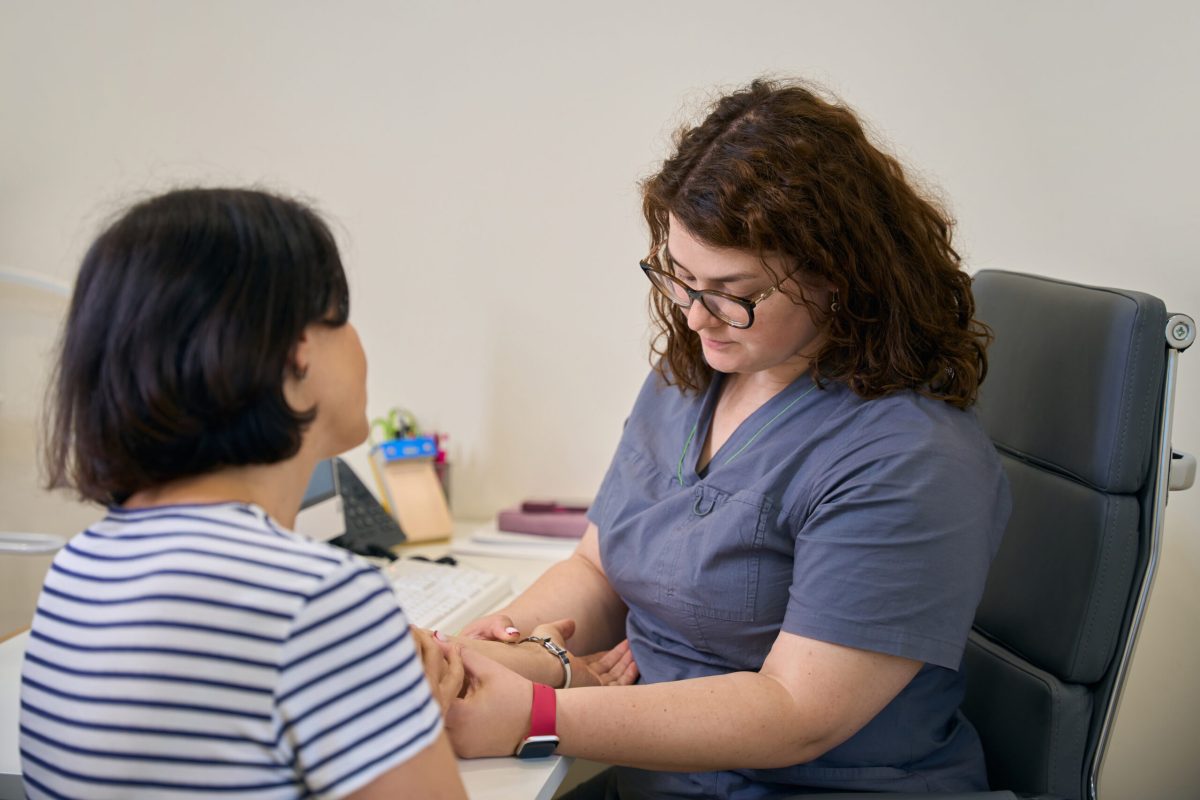
A major international study has highlighted how midwives and nurses continued to go the extra mile to deliver person-centred care in birth units during the pandemic.
The Murdoch Children's Research Institute study examined data from nearly 700 babies in 13 neonatal intensive care units across ten countries, including Brazil, France, and the US, from March 2020 to October 2021.
They found that despite strict infection control measures in hospitals, nurses and midwives found solutions to support mothers and newborns.
"Family-centred care is very much a nursing-led initiative," Murdoch Children's Professor David Tingay said.
"They've shown doctors and other clinicians how important this level of care is, even during the pandemic."
Nursing Review spoke with Tingay how nurses helped women unwell with Covid breastfeed their newborn and how midwives supported one mother separated from her baby due to quarantine for ten days.
NR: How is person-centred care critical during the perinatal period? How was this impacted during the pandemic?
DT: Family-centred care involves breastfeeding, co-habitation and skin-to-skin contact.
As we know, these are critical to the wellbeing of mothers and neonates and to facilitate the start of a strong bond.
Unfortunately, hospital infection control measures led to over half of the mothers in this study being isolated from their babies immediately after birth.
Only 7 per cent of the babies had had physical contact with the mother before separation.
Most babies born to mothers with Covid at any stage during their pregnancy, not just delivery, were separated from their mother after birth, even when the mother and the baby were well.
If the baby was Covid positive, the infection was often mild, and many were asymptomatic.
Maternal breastmilk feeding rates were also much lower (53%) than pre-Covid data, with just 24 per cent exclusively fed with their mother's breastmilk.
We know isolating a baby from its mother is one of the last things you want to do, and the concept was quite difficult for most clinicians.
We know that such a short time could have a massive impact on children.
We can estimate the effect of low breast milk feeding on baby and mother, but we can't make direct causation without a long-term study and data focussing on mother and child's wellbeing.
However, we can raise concerns because we know that when rates of family-centred care are very low, it has significant long-term and short-term effects on the baby and the family.
What were the major reasons clinicians were extra careful with babies and pregnant women at the start of the pandemic?
At the pandemic's start, we hardly knew anything about Covid, particularly among pregnant mothers and babies.
We know that mothers and babies are at higher risk of being negatively impacted by other viruses.
Particularly, the transmission of a virus from the mother to the baby in late pregnancy can be devastating for a newborn.
So, early in the pandemic, it was appropriate to be very concerned about what could happen to babies and mothers after that.
Clinicians were airing on the side of caution and putting good infection control in place to ensure the risk was as minimal as possible.
But when we started to understand that the virus wasn't as dangerous as some other viruses, we began to worry about the impact of safety measures on the mother and baby's wellbeing.
Early in the pandemic, most of our infection control policies and how we managed Covid were based on guidelines from adult medicine.
Many of us know that how you treat an adult in a hospital is very different from how you treat a child or a mother and baby.
So, it took time for us to realise that an adult can generally be more isolated than mothers and babies because they're not necessarily as involved in the interactive care that a child has with its parents.
But an encouraging finding was that family-centred care practices increased as the pandemic progressed, even when the mother was sick.
One reason behind this is that clinicians became more familiar with the treatment and management of Covid.
How did nurses and midwives try to provide family-centred care despite the infection control measures in place?
Obstetric midwifery, neonatal nursing, and medical practitioners started to have a better dialogue with the infection control teams.
They emphasised the importance of family-centred care.
Nurses told us in the ICU how critical family-centred care was.
So, they found solutions by using the hospital design to their advantage.
For example, family-centred care is much easier if there aren't many large, shared rooms that increase the risk of transmission. So, they could have a mother with Covid and her baby in an incubator next to her.
Another example was of a woman who spent ten days in quarantine at home, apart from her daughter, who was born prematurely at 23 weeks and in hospital for 160 days.
The nursing staff supported her through daily video chats and by keeping a diary with photos.
We saw that some critically unwell mothers could still get breast milk into their babies, which tells us that midwives and nursing staff were finding ways to get breast milk from the mothers and feed their babies.
Another example was nurses and midwives allowing mothers to take off their PPE gowns to breastfeed.
So, nurses and midwives got better at looking at more directed and lateral ways to adopt family-centred care and still be safe with infection control measures.
I reckon that's the most positive finding: nurses and midwives came up with strategies to provide family-centred care, even when mothers were really unwell.
What can we learn for future pandemics or emergencies?
We should learn from this study outside of the context of the pandemic.
It didn't matter what part of the world people were in - the problems were the same.
So, we need to consider the baby's wellbeing, even if the mother is very unwell, by trying to get family-centred care in place.
We must consider the mother and her baby as a pair and look at them as such, not just the immediate problem of infection control.
We should also ask ourselves: how do we implement reasonable infection control while respecting the mother and baby?
Nurses and midwives played and continue to play a crucial role because family-centred care has always been a nursing-led initiative.
From my experience as a neonatal medical practitioner, the nurses and midwives have taught the doctors family-centred care.
The outcomes are nursing initiated, and we should support nursing staff to advocate for this.
I hope from this study that clinicians interested in family-centred care will use this to highlight how important it is that we overcome these barriers to family-centred care no matter where they are.