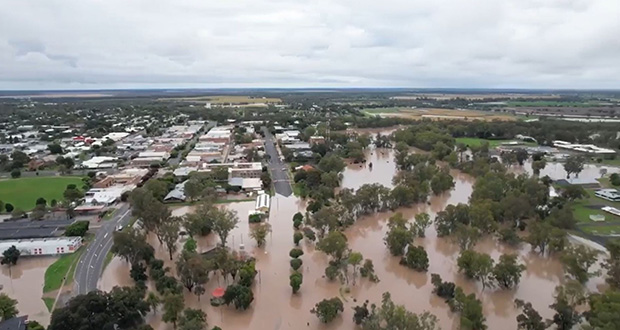
As flash flooding across five Australian states intensifies the community's reliance on emergency services, nurses have been urged to take care of their mental health.
Emergency flood warnings for NSW, Queensland, Victoria, Tasmania and South Australia were issued in mid October as heavy rains battered regional towns and cities.
Registered nurse professor Alison Hutton says nurses working in flood-affected areas face an additional layer of distress during disasters due to their personal connection with their communities.
"It's just the emotional burden nurses have to deal with in these environments," the chair of ACN's disaster faculty told Nursing Review.
"These nurses are helping people they know in their community that's being devastated or flooded.
"They have to push those emotions of distress aside because they have the responsibility of treating their friends, family or peers."
Areas in the South-Eastern sides of Australia have seen one of the nation's worst downpours in history, leading to major flooding of towns and cities.
South Queensland, including Brisbane and the Sunshine Coast, endured significant damage in the first months of 2022, killing 22 people.
In July, large parts of the Central Coast and Sydney were flooded, prompting over 85,000 people to evacuate their homes.
As the weather has moved southward, towns in Victoria, Tasmania and NSW are facing devastation as rivers such as the Lachlan River and Murrumbidgee River are causing floods in the nearby cities.
The affected states have responded by offering a range of emergency payments and placing evacuation and recovery centres with healthcare staff.
Since the flooding started mid-September, NSW state emergency services have responded to 3,874 calls and saved 141 people.
Volunteers received the lionshare of calls (1,008) during the weekend of October 7th, when the southern and western parts of NSW experienced massive flash fooding.
"I've known of many occasions where nurses have been trapped in hospitals and emergency healthcare settings, so they end up staying with the patients, sleeping in the same location all night," Hutton says.
"They can't get to their own family, so they have to find someone to look after their children or their pets or partners."
The main health risks and related deaths during a flood are not necessarily drowning, Hutton says, but the damage caused by the debris.
"People can get injured from debris in the water. They'll get cuts and bruises on their body that can get infected," she explains.
"Then there are snakes, the risks of gastrointestinal infections due to contaminated water and the spread of diseases, such as the Ross River virus, by mosquitoes breeding in stagnant water.
"But there's also just the genuine distress among people that nurses have to navigate – they worry about their livelihoods, properties, families and friends."
Earlier this year, the ACN released an emergency report to provide nurses with guidelines and support during disruptive events like bushfires and floods.
They put forward five recommendations, such as crisis prevention, mitigation strategies and a work plan for nurses to follow during disasters.
For example, the report suggests that during disruptive events, 'all non-nursing duties should be removed from nurses to ensure safe and adequate care can be provided'.
Hutton also underlines that people should acknowledge the critical role nurses play as skilled professionals in improving health outcomes.
"It's really about just giving nurses a scope so they can understand what they should be doing or what they can do in a safe, confident manner," Hutton says.
"I think that nurses are generally prepared because we will use our general nursing skills to help people in a disaster."
A nurse might still be in the same environment they live in during catastrophes, but the circumstances will have changed, Hutton explains. As a result, nurses must rely on their skills and be flexible and creative in finding solutions.
"People will be displaced and in stress. They might not have brought their medication, so a nurse will need to find alternatives."
The resilience of nurses has been tried and tested over the past three years as they provided care for people during bushfire seasons, drought and a pandemic, Hutton says.
She emphasises that it's vital that nurses have someone to talk to about their experience; otherwise, they might face emotional distress in the long term.
"You don't have the resources you usually would have or the staff to help you," she says.
"To have high expectations of yourself in an already stressful environment will only bring on more stress.
"Just being there and doing what you can is the best any nurse can do."