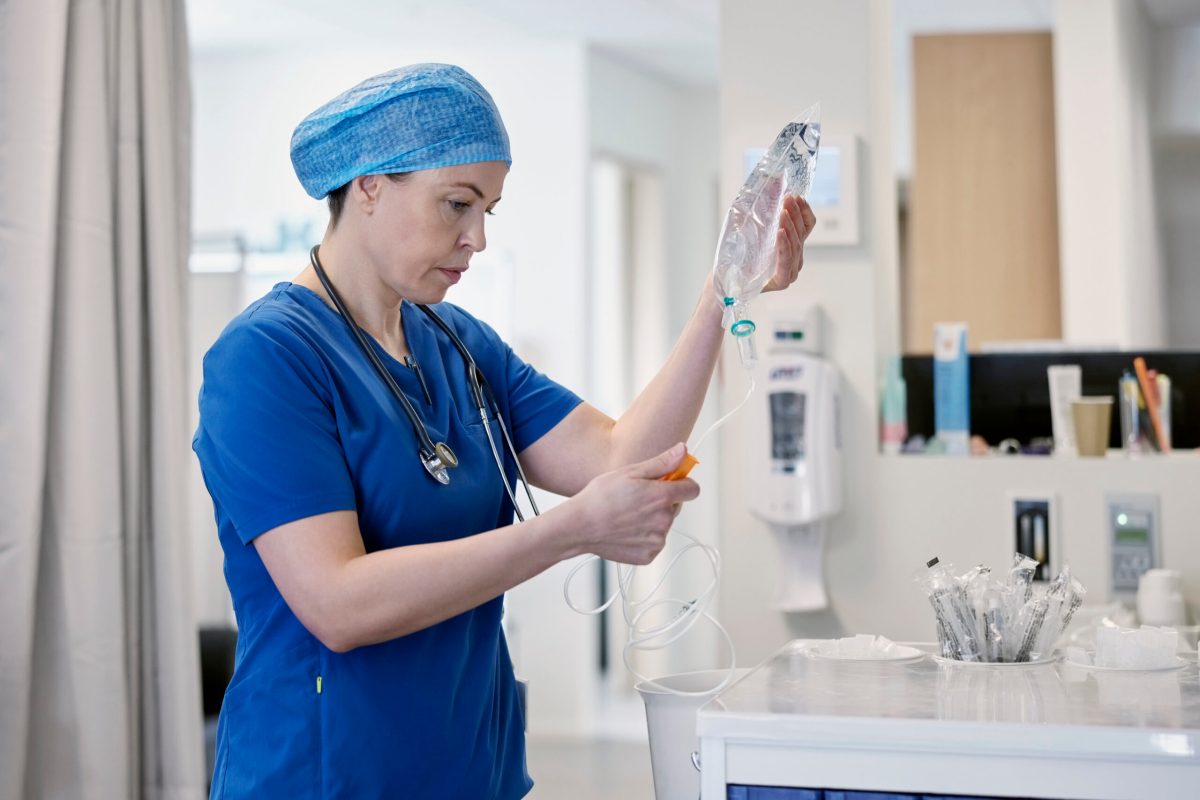
Nursing and public sector unions have urged NSW's newly elected Premier to keep his end of the bargain on removing wage caps for essential workers, with negotiations scheduled for Monday.
NSW Labor leader Chris Minns was elected the state's 47th Premier after Saturday's election.
During its campaign, Labor campaigned heavily on its promise to abolish the public sector wage cap that would raise salaries for essential workers, including nurses and midwives.
The move means that the Minns government will have to amend the Industrial Relations Act with approval from Parliament.
On Sunday, he said he 'probably would to sit with parliament in May.'
"We’ll be having a leadership meeting this afternoon with senior ministers elect in the coming hours," Minns said.
"We need to make sure that we are recruiting and retaining essential workers in our hospitals and our schools, and I’ll be speaking with senior members of both of those departments."
Kos Samaras, a former Labor strategist, told ABC News that public sector workers were 'the dominant cohort in those seats' that led to Minns' victory.
"They have effectively now become, across the country, but particularly in NSW and Victoria, Labor's new working class," Samaras said.
"This particular group, largely females, tertiary educated, are overwhelmingly the biggest supporters of the red side of politics."
The award covering the state's nurses and midwives is due to expire in June this year, and nursing unions have expressed urgency to start pay deal negotiations.
Minns said he planned to swear in the new health and education ministers this week ahead of the remaining cabinet.
The state's Nurses and Midwives Association (NSWNMA) assistant general secretary, Michael Whaites, said the union would push for a wage increase of at least 7 per cent.
"Removing the wage cap would make a huge difference to how we negotiate," Whaites said.
"We look forward to the decade-old public sector wage cap being abolished, and the return of a fair collective bargaining process for our members."
Minns promised a week before the election that public sector workers would receive wages above the current 3.5 per cent by slashing the costs of private labour hire and saving $1.6bn.
Yet, the Perrottet government raised significant question marks, flagging that Labor's promise was a 'miscalculation' and exceeding the state's budget by billions.
Minns defended its policy, telling The Guardian that the Parliamentary Budget Officer found removing the cap could increase the state's award wage 'higher or lower than the government’s target.'
"In a time of higher inflation, it is more likely that the IRC would approve higher wage increases," it found.
"We know we're going into these negotiations with economic principles in mind, but there is a [opportunity] to talk about what we can do in NSW and have a genuine negotiation, as I said during the campaign," Minns told Nine Radio.
"Every other state doesn't have a wage cap in place."
One of Australia's public workers' representatives has made no secret it wants Minns to make good on his promise, saying 'negotiations will start as of Monday.'
"There's no doubt they have a mountain to climb to address the structural issues created over the last 12 years," Public Service Association (PSA) general secretary, Stewart Little, said.
"There are chronic worker shortages and the legacy of a lack of investment, which isn't going to be fixed overnight.
"But there's no question our members will be seeking a fair wage rise.
"It won't be anything like current inflation, but I expect anything less than the realm of upwards of about 4 per cent would be met with concerted opposition from the trade union movement."
While Labor was hesitant to commit to staffing ratios, it pledged to hire 1,200 extra nurses and midwives to the state's workforce over four years.
Chief of the Australian College of Nursing (ACN), adjunct professor Kylie Ward, welcomed the Minns government's 'ambitious target' to employ extra nurses.
"It will be crucial that Labor introduces a framework to ensure there is an adequate workforce with the appropriate skill and skills mix across the new roles to support our profession," Professor Ward said.
"We can only improve recruitment and retention if the government works with nurses to fix the issues plaguing the dedicated but exhausted nursing workforce."
Labor said it would introduce 600 new hospital beds across the state, including a $700m injection into Rouse Hill Hospital to supply 300 beds.
Sydney's Canterbury, Fairfield, Mount Druitt and Blacktown hospitals will also receive an upgrade.
"If you have no nurses to take care of the 600 people laying in those beds, then that money, which could be used for workforce improvements, will be wasted," Professor Ward said.
"This is the moment for the NSW government to lead the charge and make a real difference in ensuring everyone in the state has access to high-quality health care.
"I look forward to meeting with premier Minns to discuss how we can work together to implement the solutions required to recruit and maintain a healthy nursing workforce."