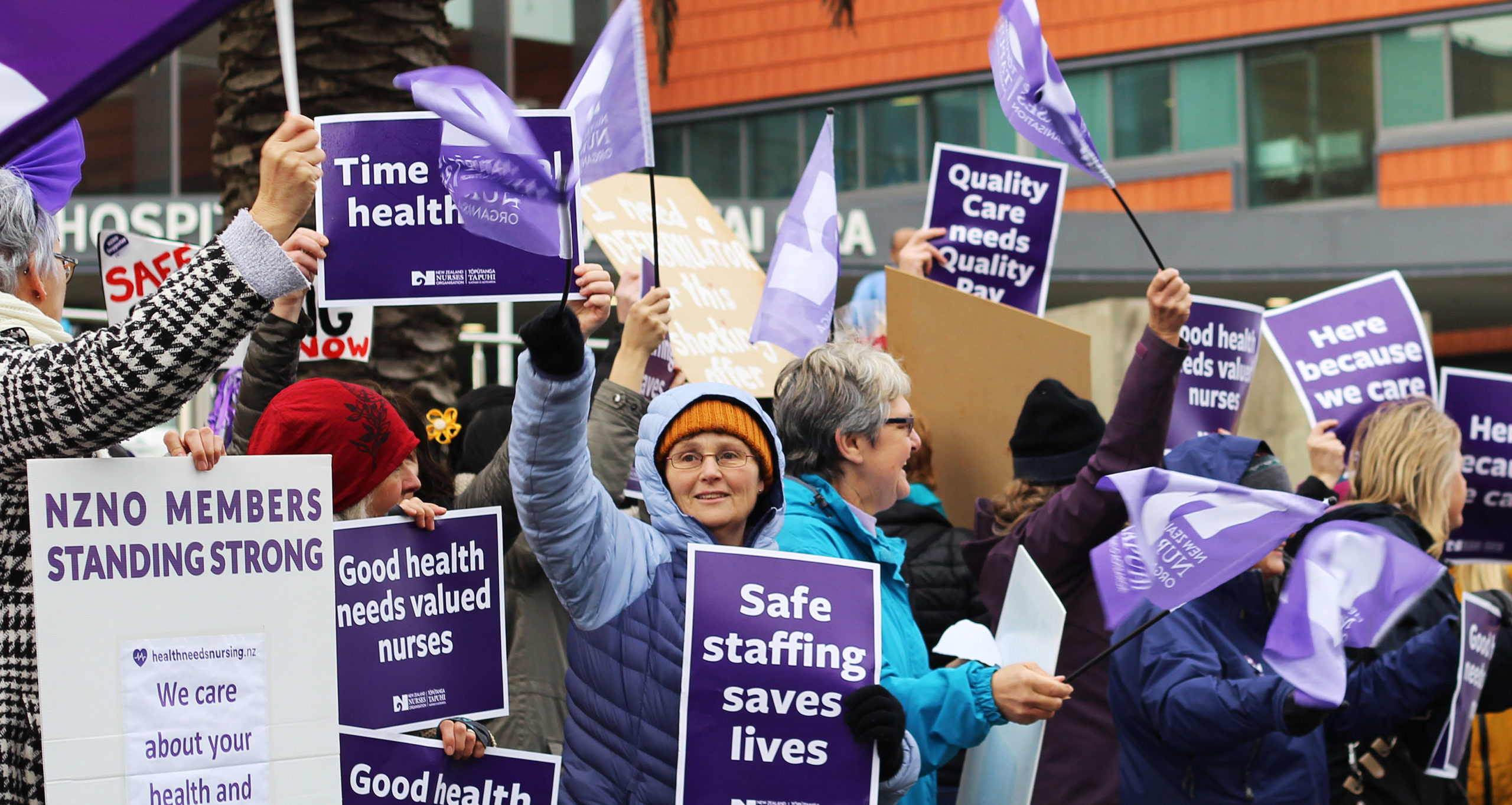
On the frontlines of hospitals and emergency units around New Zealand, nurses and midwives are suffering from deteriorating working conditions.
Nurses claim they are at breaking point, reporting severe exhaustion, dangerous staffing levels and unacceptable pay and conditions.
“People, including myself, we go home from work and we cry,” said registered nurse Nano Tunnicliff, who works in an infusion unit at Kenepuru Hospital in northern Wellington.
“I’ve been in the nursing industry for over 30 years now; it is the worst I have ever experienced in my working life.”
In June, 30,000 nurses, midwives and healthcare assistants, fed up with poor conditions and pay, ran a nationwide strike over eight hours. The movement gained traction earlier this year after the country’s Labour-led government announced a public sector wage freeze.
Future walk-offs have now been called off due to the District Health Boards (DHB) refusal to offer pay changes before the upcoming strike notices were withdrawn. Nano, a former president of the New Zealand Nurses Organisation (NZNO), likened the situation to “blackmail”.
“We’re on the brink of collapse, our system is teetering dangerously towards not being able to survive” she said.
“What we’re now experiencing on the floor is quite dangerous staffing situations.
“Unfortunately we don’t have the protection of patient-nurse ratios in New Zealand, so it comes to what you can do, with the staff you do have,” she said.
With large numbers of home-grown nurses being drawn into COVID-19 vaccination programs and a lack of international workers available to fill the vacancies, already depleted staffing levels are worsening in the country's health sector.
“To be brutally honest, it’s been compounded by covid,” said Nano.
“Today, on our particular unit, we don’t have anyone else that can come and fill in, so you have to make do with the staff you have on the floor and that time we only had three, with 15 patients coming in.
“Tomorrow, in the same unit, we have three staff rostered on and 24 patients coming in.”
Exacerbated by the pandemic, widespread nurse shortages are also being reported across Asia, Europe, the US and Canada.
In New Zealand, there have been increased reports of nurses moving to Australia in search of better pay, affordable living and better working conditions. Australian official health bodies and governments have made efforts to move in on the growing dissatisfaction.
Last month, the Queensland government took out ads in the New Zealand Herald which urged Kiwi nurses and midwives to "ditch the winter chill, expand your horizons in sunny Queensland!".
Many nurses, including Nano, have said they would consider moving if they did not have familial obligations. This has raised future concerns over a potential mass exodus of health workers.
“When the borders opened up recently and the travel bubble opened, many nurses from New Zealand took the opportunity to move to Australia for better working conditions and pay,” said Nano.
“Now we of course can’t replace them because the New Zealand borders remain closed.”
General practitioners in the country have also been forced to return to their working visas due to immigration delays. Consequently, people are waiting up to six to eight weeks to see a general practitioner, causing an overflow in the nation's emergency departments.
Rosie Feliuai, 42, is a duty nurse manager at Hawke’s Bay, on the east coast of New Zealand’s north island. A mother of four, she also works as an emergency department nurse.
She reported that emergency departments are over capacity each week, with workers unable to manage the floods of paediatric admissions caused by a recent outbreak of respiratory syncytial virus, or RSV. Nurses are having to take more days off to care for their own sick children.
“From an ED point of view, we have 19 beds, including three resus beds. We see up to 180 patients a day, and in the wards – not last week but the week before – we were 95 nurses short," she said.
“I’ve never been so worried for patient safety in my career.
“It’s been bad for probably about five or six years, but it's certainly been dangerous this year.”
Working over 40 hours a week, Rosie told Nursing Review that the government has been unreceptive to considering the needs of families.
Rosie and her husband, who also works in healthcare, are currently unable to afford a property to live in. She says high rates of renting are common amongst those working in the sector.
“There's not really any point in having recruitment drives when there's no houses, our hospitals are full, there’s nowhere for people to live.
“I’d probably say about 40 per cent or 50 per cent of nurses are trying to buy, but can’t.”
Many nurses say they feel as if the public, the government, and their family and friends are not aware of the urgency of their workplace situation. Both Nano and Rosie said that despite the abusive conditions that they face, they will continue to work in the profession in which they love.
“I’m just doing the best that I can possibly do for my patients and their families,” said Rosie.
Negotiations between the NZNO and the DHBs are ongoing, with the demands around the last negotiations around pay equity expected to be resolved in November.