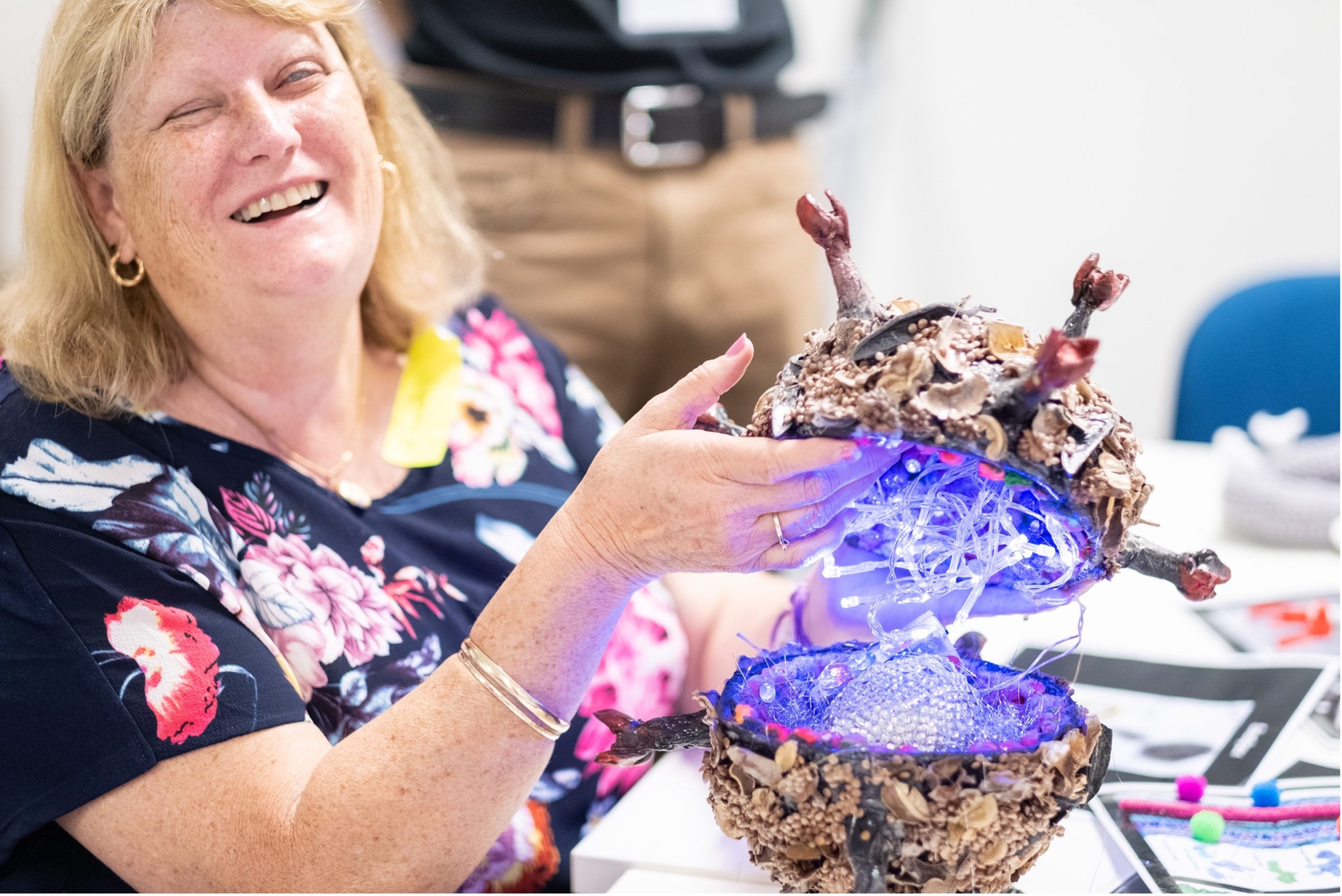
Melbourne-based artist and researcher Dr Erica Tandori has enabled people with low-vision or blindness to touch, feel and experience the world of infection, immunity and nutrition in a new exhibition.
As part of Science Week 2021, Monash University’s Rossjohn lab exhibited a suite of multisensory, interactive science books, which explore the digestive system and role of immunity in a healthy diet.
Dr Tandori, who lost her vision in her early twenties, said the exhibit, titled ‘My Goodness’, would allow people of all ages, abilities and diverse needs to learn about the wonders of microbiology.
“Science is about us, it's about our world,” she said.
“It belongs to all of us, not just to the scientists, and not just to the people who can see it.
“We should all have access to it, and equal access to it.”
The exhibit was launched in a collaboration between Monash’s Biomedicine Discovery Institute’s Rossjohn Laboratory and Swinburne University’s Interaction Design Lab.
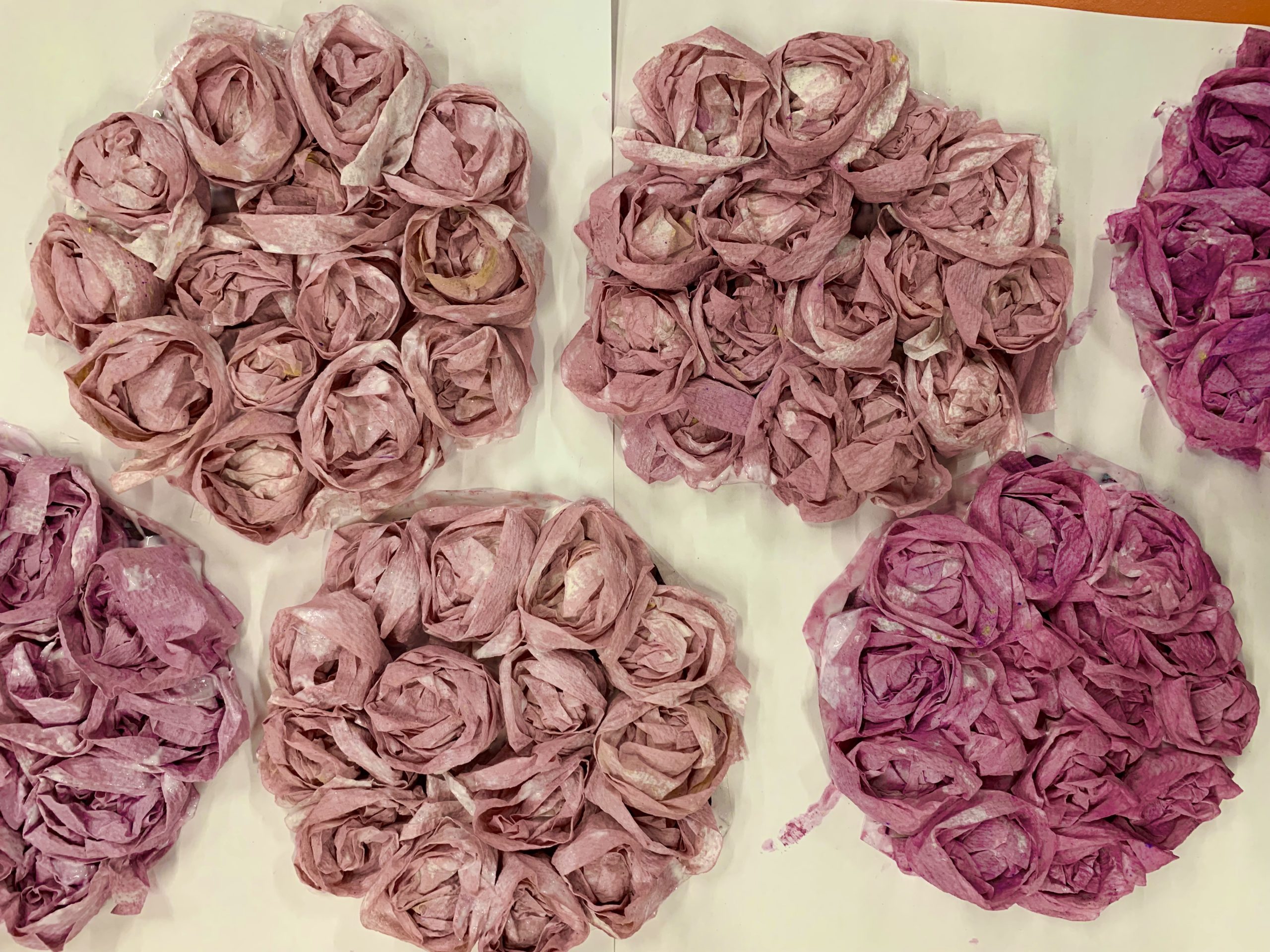
Using large print text, braille, tactile artworks, haptic and 3D audio, visual tracking and sensor technologies, Dr Tandori said the books will offer an immersive reading experience.
“I was inspired by some kids books that were really exploratory, and also inspired by books in themselves, like being a kid and sitting by the fire with my huge Reader's Digest Book of the Universe.
“I thought, wouldn't it be lovely to have kids being awe-inspired about books again? But what happens when you actually have blindness, like I have now? How do we deliver these books to kids with low vision?”
Over half a million people in Australia are estimated to live with blindness or visual impairment. A lack of accessible health information and service design continues to be a significant barrier facing visually impaired communities, according to Blind Services Australia.
By using art to describe her loss of vision to healthcare professionals, Dr Tandori said she has become empowered to guide the management of her condition.
“It is honestly the best way to describe this disease, because I always realised that ophthalmologists can look into my eyes.
“They've got thousands of dollars worth of equipment, they're specialists, but they don't know what the world looks like from my perspective.
“In this way, the patient becomes part of the dialogue, not just the recipient of what they're being told in the healthcare setting.”
A life in art
Growing up in the heart of Armadale’s contemporary art precinct, Dr Tandori said her journey into artistry began when her family opened a gallery after migrating from Europe during the 1960s.
Her talent for drawing and painting was fed at an early age, framing iconic paintings and chatting with famous Australian artists who would visit the High Street gallery.
“It was such a fortunate education, and then I could walk up the street and see all these amazing galleries that were opening up, so I was really, really lucky,” she said.
“And I remember selling my first paintings at age 11 or 12.”
After obtaining a philosophy degree from Melbourne University, Tandori began noticing a decline in her vision. She was then diagnosed with Stargardt’s disease, a form of muscular dystrophy, shortly after she enrolled in art college.
In later years as her eyesight began to deteriorate, she discovered the power of sculptural design after landing a job at the Rossjohn Laboratory at Monash University.
Her past works have since used chicken wire and couscous to make a model of the HIV virus, and taken oats, dough and flour to form a sculpture of a yeast cell.
She said her interactive exhibitions have had extremely positive reactions from the low vision and blind community.
“When it's all said and done, it's about really communicating and inspiring these people who are so often left without anyone taking any notice of them at all, or including them in dialogue.
“This is the way, I think, that we do it, through engagement with multisensory modalities.
“If we do that for people with blindness and low vision, it seems to me that we will then be able to engage and include just about everyone. It almost makes it like the baseline for universal design."
The online 'My Goodness' exhibition premiered on Friday, and Tandori has plans to take it on a roving exhibition to rural and regional Australia in the future.