Labor's "closing loopholes" industrial relations bill has passed the Senate following deals with the crossbench, including the insertion of a Greens amendment to create a right to disconnect from work.
The Greens announced last Wednesday that the Albanese government had accepted the right to disconnect, which would prevent employees from being punished for refusing to take unreasonable emails or calls in their unpaid personal time.
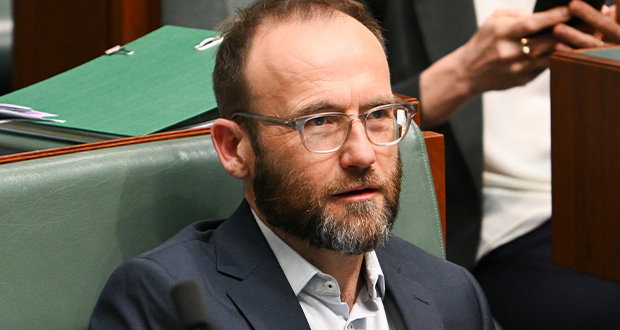
“Whether you’re a nurse, teacher, or hospo worker, the Greens believe you shouldn’t have to answer calls or texts from your boss on your day off or after hours if you’re not being paid for it,” Greens leader Adam Bandt said.
Many employees see the law as a huge win; however, Australian Nursing and Midwifery Federation (ANMF) secretary Lori-Anne Sharp said it may not be widely used.
"I guess with nurses and midwives and carers – because the nature of our work is shift work – it might not be as widely used as the broader community," Ms Sharp told Nursing Review.
"This is a protection that allows employees the right to disconnect or refuse to read or respond to an employer in any related matters after their working hours so they can have a proper break and feel rested before the next shift – which is a really important and critical thing.
"It's a very good idea, and it's a really good initiative."
The amendment would be phased in over six months to give employers time to "adapt, listen, and learn", with Ms Sharp saying ANMF would educate its members and it would be interesting to see what the law would mean for the sector.
"How it is going to play out in our sector is yet to be evidenced because of the nature of our shift work," she said.
"[The effects of it] might not be as great as a nine to five because, in shift, someone replaces the next person."
Associate professor of work and organisation at the University of Sydney Chris Wright said the amendment would show up for sectors such as nursing in the long run.
"What I expect will happen is that in the Fair Work Commission review, it's going to make more tailored arrangements for specific sectors and occupations," Mr Wright said.
"So regarding the nurses' award, for example, I expect that there'll be some more tailored, more bespoke arrangements around the right to disconnect in that award and in any enterprise agreements that are established as well."
Opposition leader Peter Dutton has sworn to repeal the laws and said the laws would instead be damaging to employer-employee relationships.
"If you think it's okay to outsource your industrial relations or your economic policy to the Greens, which is what the prime minister is doing, then we are going to see a continuation of the productivity problem in our country," Mr Dutton said on Sky News.
"And as the Reserve Bank governor pointed out, if you don't address it, you'll see interest rates continue to climb, or you'll see them stay higher for longer."
Mr Wright, however, said he felt frustrated to hear these "evidence-free claims".
"Workplace laws actually have a pretty small impact on productivity, so for the opposition leader to say that this is going to be terrible for productivity, well, show us the evidence," he said.
"[The laws are] going to have a marginally positive impact on productivity and will help to strengthen relationships between employers and employees because it's going to provide a guardrail that is going to mean that when people are at work, they're at work.
"I mean, I'm sure we all know the experience of feeling overwhelmed at work and how that can actually make us."