A '90s cartoon inspired nurse Claire Lane to set up a for-purpose organisation that collects usable medical supplies from hospitals and ships them to developing countries and war-torn areas like Ukraine.
Brisbane-based charity 'Save our Supplies' furnishes hospitals with a bin for staff to place medical equipment in, which Claire then sorts into boxes ready for transportation.
While the charity took shape in 2019, the seed was planted when watching the 1990 environmentalist cartoon 'Captain Planet' as a child. The show revolves around a team of planeteers fighting the evil Captain Pollution to protect Earth from its destruction.
"That show changed me as a person when I was a kid," Claire recalls.
One day at work, when she had to throw away three packs of medical equipment because they passed the expiry date, she thought back to the planeteers.
"[Throwing away those packages] really frustrated me," she says.
"I went to all the managers and supervisors and asked, 'what do we do with this?' And they told me to throw it in the bin and to stop asking questions.
"They said, 'that's the way it's always been done'. But there was absolutely nothing wrong with the equipment."
It's estimated that Australian hospitals produce over 260,000 tonnes of medical waste every year, according to Global Recycling.
While most of the waste is made from plastic materials that can be recycled, up to 90 per cent is incinerated instead.
The healthcare system has been called out to reduce its environmental footprint, since it's responsible for 7 per cent of Australia's carbon emissions.
And as the pandemic has increased the sector's reliance on plastic medical supplies, ranging from PPE to prepackaged medical kits, more healthcare workers have voiced their dismay at supplies going to waste.
"I saw whole pallets of gowns and gloves being thrown away because they passed their expiry date," Claire says.
"And I understand, because of Australia's high standards, that we do have to write an expiry date on them, but they're still perfectly usable in so many different environments that aren't a hospital."
Claire has recently sent medical supplies to Ukraine, which has been at war with Russia since February this year and desperately needs emergency support.
Bordering countries such as Moldova, the Czech Republic and Hungary have seen an influx of Ukrainian refugees and their respective Ministries of Health have released a list of medical supplies they're short of.
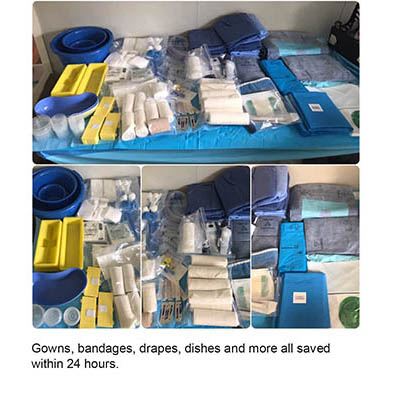
Items such as gowns, syringes, scalpels, gloves, catheter packs and gauzes are just a few of the supplies Claire collects from her bins scattered across 13 Brisbane hospitals.
Only last year, she saved over $1.2 million worth of stock going to waste.
"I had 18 pallets of hand sanitiser last year that got sent over to Fiji worth about $800,000," she says.
"We're trying to send the supplies to where they're needed. The next shipment is going to East Timor, but we've also sent to local regions affected by floods or bushfires."
Claire works three days a week in an operating theatre, but the remaining four days are booked in for Save our Supplies.
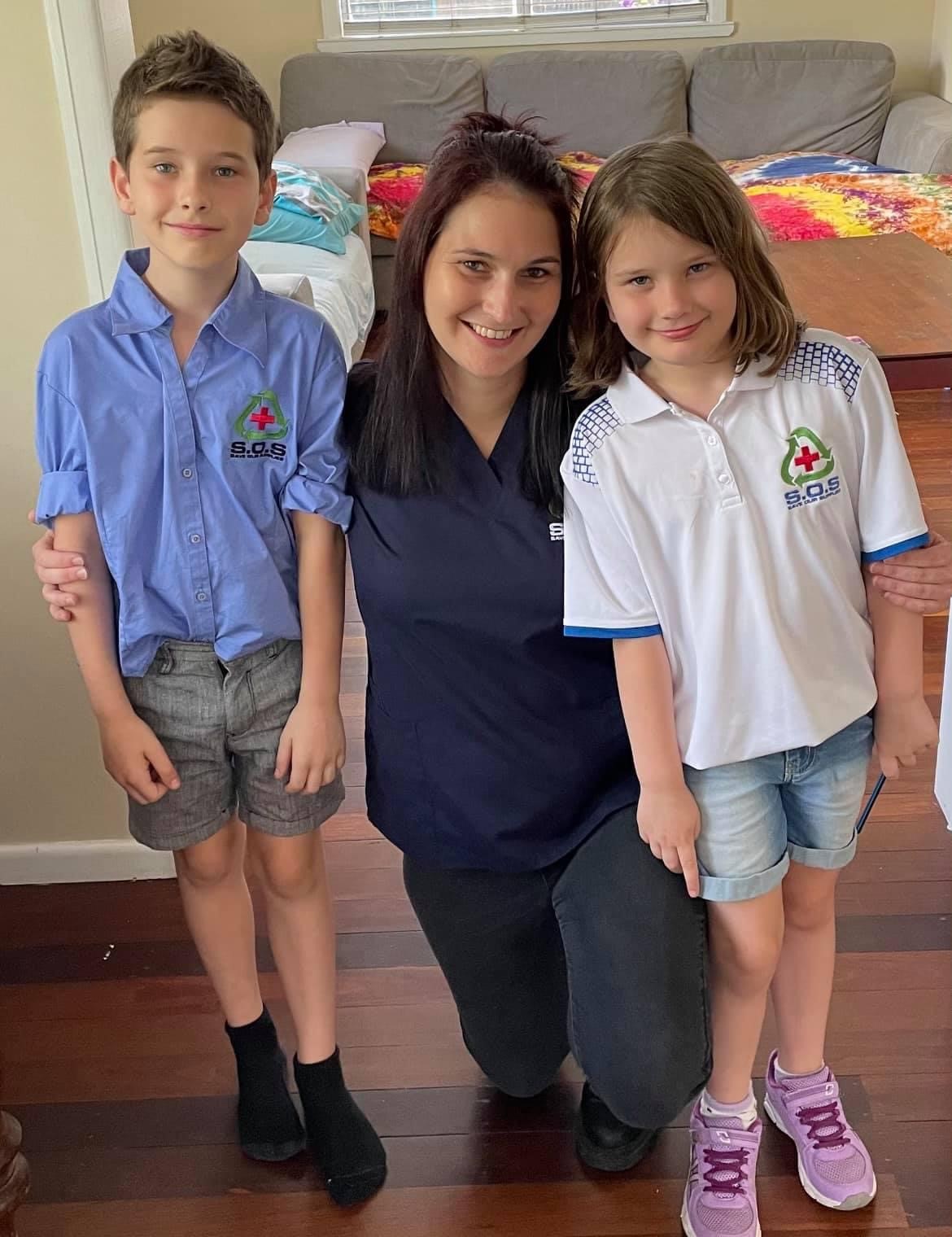
Armed with her two children and fellow nurses, Claire has moved her charity out of her house to the Rotary warehouse, where she sorts out the supplies and packs them in boxes.
"I would love to try and get funding for this and do this as my full-time job," she says.
"Because if I can do this as a job, I'd get it all through Australia really quickly. But as a single parent, I have to pay rent and feed my children, of course.
"My end goal is to have our bin in every hospital in Australia."
Claire recently had the honour of receiving the 2022 Health Minister's Award for Nursing Trailblazers from the Australian College of Nursing.
The national award "recognises nurses whose leadership has led to innovative solutions addressing key challenges facing our health and aged care systems".
ACN CEO Adjunct Professor Kylie Ward was one of the first to congratulate Claire on becoming the third award winner from Queensland.
"Claire is an exceptional woman and nurse who has used her leadership, expertise and passion for social impact – characteristics our profession prides itself on – to make the world and future a better place," Ward says.
"She not only created an innovative solution to address one of the biggest challenges facing our healthcare systems but has gone above and beyond to use it to improve people's health across the world."