Nurses play a crucial role in detecting, preventing and helping those experiencing domestic violence (DV).
DV involves complex patterns of physically and mentally abusive behaviour and is still shockingly common in our country.
For instance, one in six women and one in 16 men in Australia have experienced physical or sexual abuse by their partner.
Women are twice as likely to face DV than men and the consequences tend to be more significant and chronic.
"Nurses are often the first point of contact for people seeking help", says Jane Curry, a nurse practitioner and associate professor at the Queensland University of Technology (QUT).
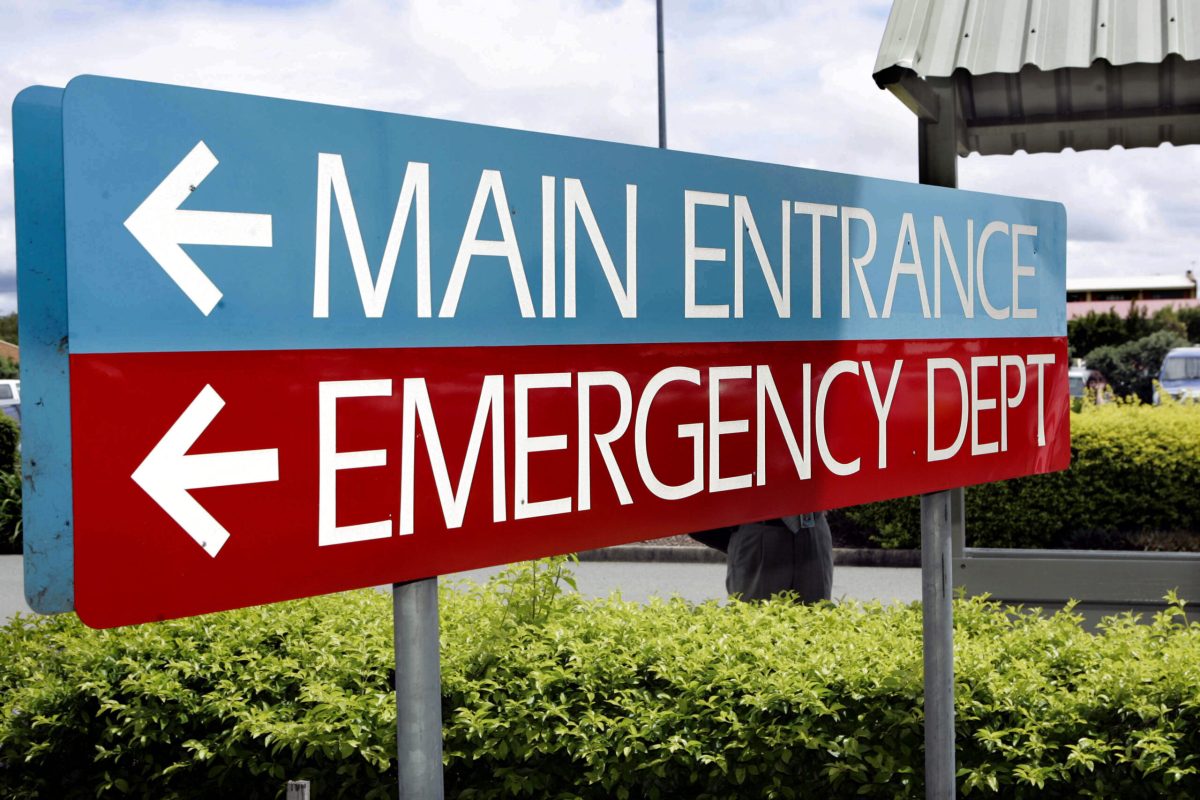
"Emergency departments are open 24 hours a day and the lights are always on, so people in distress end up seeking help from an ED," Currie says.
"Nurses are often in the ED, so they're the first person that someone experiencing DV will meet.
"Nurses have this golden opportunity to encourage trust in that person seeking help; to be with them, and show kindness."
However Jane says that, initially, not everybody is prepared to speak up.
In fact, people typically tolerate up to 35 episodes of violence before reaching out to healthcare services.
"People experiencing domestic and family violence are often ashamed of disclosing that this is happening to them," Jane says.
"If they see a doctor, they might fabricate how they got that injury because of fearfulness that the perpetrator will find out or that they're not in a safe environment.
"But some people never say and they just survive."
Jane says other obstacles that prevent people from seeking help can be of a practical nature.
For example, the perpetrator might assert coercive control, such as financial pressure, to prevent someone from accessing healthcare facilities.
"Maybe they physically can't get out of the situation without their partner knowing, and if they do go for an appointment, their partner might insist on coming along with them," Jane explains.
"Transport seems to be a huge problem. We've discovered several women that don't have the transport they need to get to an appointment.
"The number of barriers can be very individual, but they're so complex."
According to Jane, the positive public image of nurses might help them break through those unique barriers.
An Australian survey found that nurses attained a high degree of respect from the population, who rated their ethics and honesty the highest.
They also continue to be the largest workforce in Australia's health sector, with almost 60 per cent of healthcare workers being registered nurses.
Jane says that "because of their number alone, everybody will see a nurse when they come to seek health care".
"There'll always be a nurse around," she says.
"We know that nurses are very well-trusted by the general public and trust is probably the main factor in people disclosing to another person that something dreadful is happening to them.
"We need that trust for that person to actually give that information and nurses are in a great position to do that because of our training."
The modern holistic approach to healthcare in a nurse's training might contribute to their compassionate and empathetic skills.
Associate professor and nurse and midwife Leesa Hooker from La Trobe University agrees that nurses have a trustworthy image.
However, she emphasises that more training is needed to back up nurses when helping people experiencing DV.
"Every day, nurses see patients experiencing domestic and family violence," she says.
"All nurses should be able to do some basic identification and support, but that's not the case yet since there's no national education approach.
"They need specific training to provide that clinical care and support."
A meta-analysis showed that nurses often feel educationally unprepared to help someone experiencing DV.
The report indicated barriers such as not knowing what external parties to refer to or how to initiate the conversation.
Leesa says they frequently inquire about DV in high-risk groups, such as women in sexual health clinics, but that not every situation provides the opportunity.
"A sensitive enquiry or a soft entry into something like: 'How are things at home for you?' can work," she explains.
"While also picking up on body language and cues around how they're presenting and what they are telling you."
Leesa, who has a specialisation in improving health system responses to addressing DV, says that "education is the core".
"Secondary prevention is about better identification, whether we ask directly or are alert to cues and use the WHO's acronym 'LIVES' response."
"If all nurses could do that, that would make a huge difference."
Clinical domestic violence nurse, Talay Quinlan, echoes the need for better education and adds that the stigma around DV should change.
For instance, one in five people still believes that DV is a normal stress response and that violence can be excused if the perpetrator later apologises.
Fourteen per cent of the Australian population considers DV a private affair.
"There is a big stigma I know many healthcare professionals hold when it comes to even talking about domestic violence," she says.
"But there is no stigma – it's about being natural in the conversation.
"If you feel the stigma, then the patient will feel that as well."
Talay (and Jane) work at Micah Projects in Brisbane, where she responds to the health needs of women and children experiencing homelessness and DV.
She says her biggest challenge is finding them within the community.
"Most of my women are very transient in nature. So they're always in this crisis state," Talay explains.
"They go in and out of homes. They've got different mobile phones, even different names sometimes.
"So when I see them, I do everything in my power to help them that day in case I never see them again."
Talay encounters other obstacles in the funding of the healthcare system, hospitals that often don't respond on time or general communication issues.
Likewise, workforce shortages have affected a nurse's personal care for a patient.
"I can feel we are struggling," Talay shares.
"Many of our domestic violence support workers can't provide the one-on-one support needed because of the high caseload.
"It comes down to allowing us to have more resources and more staff."
Still, Talay strives to provide the best care for her patients and finds her work very fulfilling.
"It's all about helping women and children change the course of their lives.
"It's just their growth and breaking the cycle of violence."
Jane, Leesa and Talay all agree that breaking the cycle of (domestic) violence starts with how gender inequality is addressed as a community.
"There's always a sense that the female is the weaker and I think we need to change that fundamentally," Jane says.
"I think the only way to do that is through education and how we talk about gender – what it means and what expectations we have of each gender.
"If we educate differently, then we'll be able to shift some of the historical hierarchical relationships between the genders."