The Prime Minister has promised the largest single investment in Medicare in its 41 years, tripling the current bulk billing incentive but the opposition has said it will match it.
Labor announced the major $8.5 billion investment over the weekend, promising to cover 90 percent of Australians' GP visits.
The funds will add an extra 18 million bulk billed GP visits annually, whilst also bolstering the workforce, according to the Albanese government’s estimates.
Mr Albanese said the policy “lifts up our entire nation and ensures no one is held back, and no one is left behind”.
“I want every Australian to know they only need their Medicare card, not their credit card, to receive the healthcare they need,” the Prime Minister said in a statement on Saturday.
“No Australian should have to check their bank balance to see if they can afford to see a doctor.
“That is not who we are. That is not the future we want for Australia.”
Of the $8.5bn, $617m would go toward strengthening the workforce, including $265.2m to expand GP training by 200 placements per year and $204.8m to incentivise junior doctors to pursue general practice.
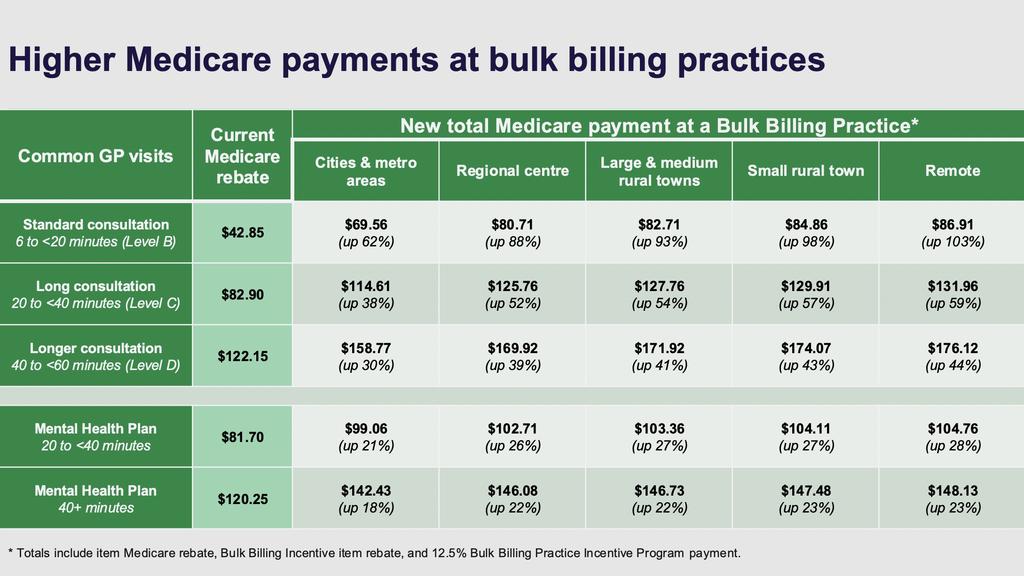
The remaining $7.9bn would go into tripling the bulk-billing incentive for all Medicare patients, building on a 2023 expansion targeting younger and older Australians.
The Albanese government has already pumped billions into bulk-billing incentives – a move that appears to have arrested the plunging rates but not managed to bring them back up to 2022 numbers, or indeed the 2020 high.
Official data published last year showed working Australians were somewhat left behind, with patients aged 16-64 getting about 69 per cent of their appointments bulk-billed, as of October 2024.
The new cash injection would create an incentive for practices that bulk bill all patients – a move the Albanese government has estimated would increase the number of fully bulk billed practices to around 4,800 nationally and save patients $859 million per year by 2030.
Related: Albanese's big health pledges: $1.7bn for public hospitals, $573m for women's health | Hospitals will get $1.7 billion more federal funding. Will this reduce waiting times?
The Coalition returns serve
The Coalition has matched Labor’s $8.5bn election pledge to boost bulk billed GP visits and raised it by another half a billion dollars.
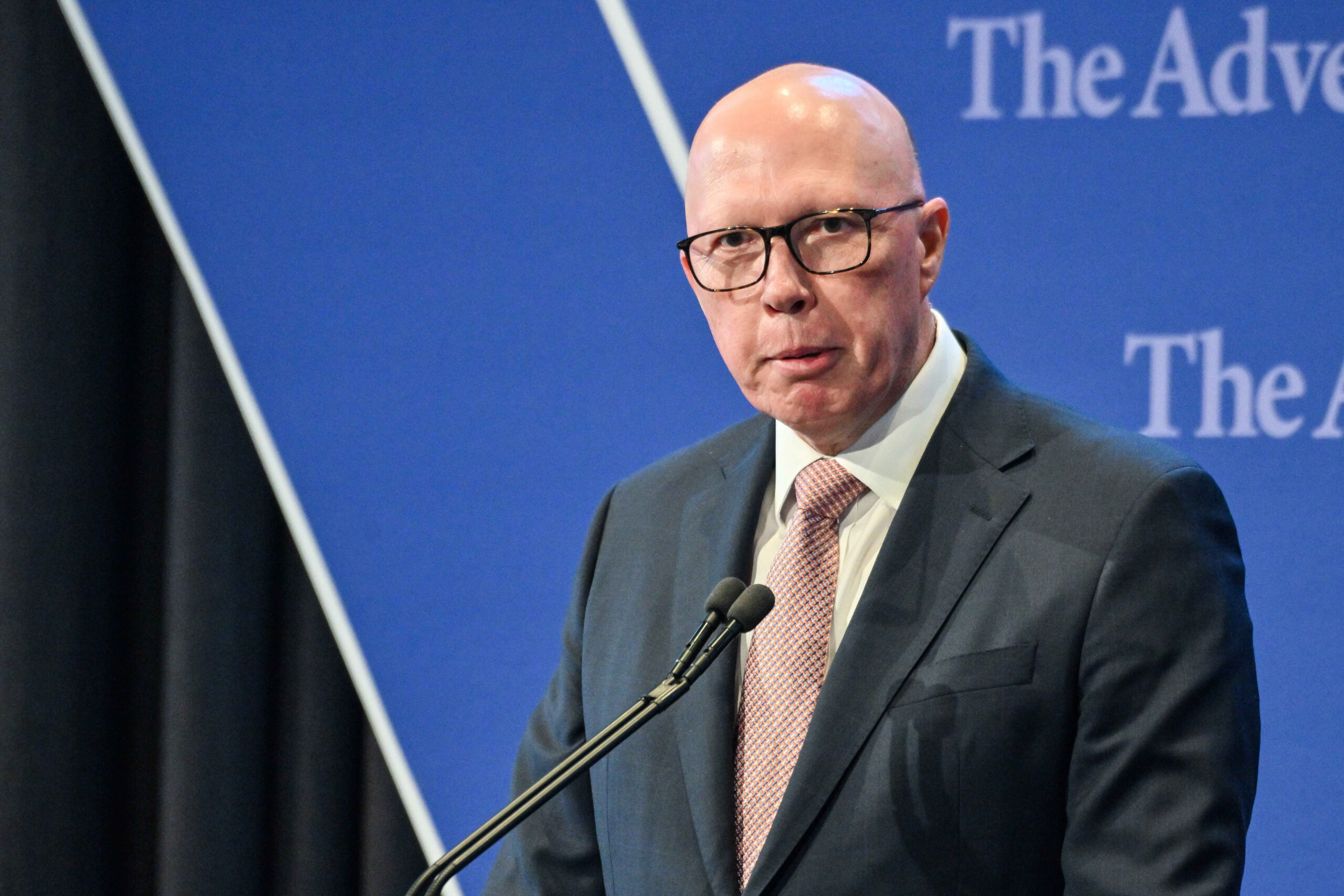
Peter Dutton and opposition health spokeswoman Anne Ruston unveiled the counter-pitch as Anthony Albanese was on-stage at a rally formally announcing his government’s Medicare promise to party faithful in Launceston.
The Opposition’s promise includes a previously announced $500m for bulk billed mental health appointments.
“An elected Dutton Coalition government will invest an historic $9 billion into Medicare to fix Labor’s healthcare crisis and ensure all Australians have timely and affordable access to a doctor,” the Opposition Leader and Senator Ruston said in a statement.
“The Coalition recognises the urgent need for better access to bulk-billed services in the middle of Labor’s healthcare crisis.
“That is why a Dutton Coalition government will match the $8.5 billion investment into Medicare dollar for dollar to fix Labor’s mess and restore bulk billing back up to Coalition levels.
“This investment builds on the $500 million commitment already announced by the Coalition to restore critical Medicare funding for mental health support, after it was slashed in half by the Albanese Government.
“We continue to call on Labor to match this funding and support vulnerable Australians with more complex or chronic mental health conditions.”
The surprise move not only takes the wind out of a key Labor election policy, but also challenges the Albanese government’s arguments that Medicare would be worse off under the Coalition.
'Critical workforce shortages'
Health Services Union (HSU) national secretary Lloyd Williams strongly endorsed the Prime Minister's plan in a statement on Sunday, adding that "accessing healthcare should depend on your Medicare card, not your credit card.”
“Our members see first-hand how rising out-of-pocket costs force people to delay seeking medical care. This comprehensive reform package will make an immediate difference by expanding bulk billing access to all Australians, not just concession card holders,” Mr Williams said.
“The tiered payment structure recognises the unique challenges faced by health workers and patients in regional Australia. This package will help address critical workforce shortages across the country.”
The promise that such a significant cash injection could help to address the sector's workforce issues has elicited hopeful reactions from industry bodies but not without a healthy dose of skepticism.
“The evidence is clear: nursing care today saves a hospital bed tomorrow,” Australian College of Nursing (ACN) chief Adjunct Professor Kathryn Zeitz said.
“Immediate solutions to make a GP visit more affordable are welcome, but we cannot lose sight of the long-term reform that is needed to fix the sector.
“Despite being 54 per cent of the health workforce, nurses, nurse practitioners, and midwives are not being used to their full extent.
“One-third of nurses and midwives in primary health care rarely use all their skills to care for patients.
“Australia is going to need almost 80,000 more to fill the gap by 2035, unless we change course.”