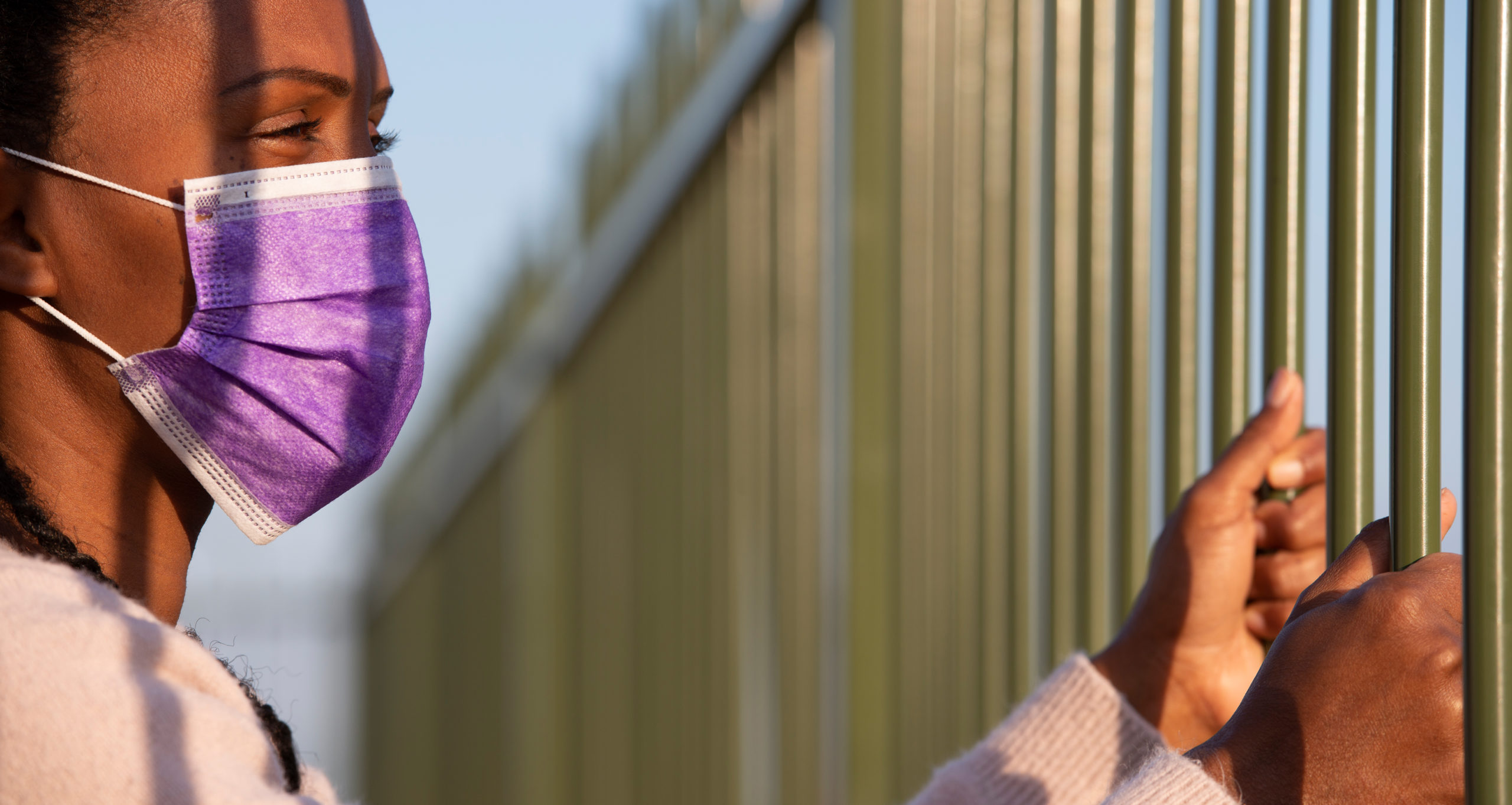
Correctional nursing is a tough beat. All nursing has its hard parts, but this is a speciality job, looking after a high-risk community in a residential style setting.
Correctional nurse Donna-Marie Bloice has seen a lot in her time at Townsville Women's Correctional Centre, including illicit substance withdrawal, intimate partner abuse, blood-borne viruses, mental health issues and pregnancy.
Bloice and her colleagues look after approximately 200 female inmates and take care of health issues across the spectrum, from dental health to podiatry, while about 60 to 70 per cent of them are on one form of medication or another.
The caregiving itself can be a challenging experience for a nurse new to the system. Bloice, who has been a correctional nurse for a decade, remembers her first days in the prison as eye-opening.
"It was quite daunting, as you'd imagine. I remember passing some offenders on the walkway and saying, 'Am I allowed to talk to them?' Because I didn't know the rules, which seems, obviously, a really stupid thing to say now, but at the time, you just don't know what you're allowed to do.
"There's lots of nurses I've worked with over the years who've come and had a go at working in correctional health, and they're too tactile.
"As a nurse you're used to touching people and hugging them in their worst moments and helping them through that social stuff, but you're just not permitted to, you can't be embracing them, you can't be giving them a lolly or all that kind of stuff. There are strict boundaries, which is really difficult when you're a caring, nurturing person: to suddenly go into this environment where it's taboo to give someone a hug."
It is an environment that can harden you as a nurse, Bloice says.
"When you have a woman who comes in you're asking her some very intimate health questions. It's all subjective, it's what she tells you. If she doesn't want to tell you, you don't know about it, but you're trying your best to get as much information out to make a plan of care for her.
"If she's come from an abusive, violent relationship, she's bearing bruising or she's been sexually assaulted or she's just had child services remove her child or her children from her. I'm still a woman at the end of the day.
"But, whether I'm a woman or a nurse, you've got to try and bury those emotions and be professional in front of these people, even though your heart's breaking for their situation.
"You have to be tough. Because then on the next day you go down to see another woman who's maybe been using drugs and she's high and she's screaming at you, 'You need to do this for me. You need to do this. You have a duty of care to do this'.
"You've got one extreme to the other, you've got the women who have poor health literacy. They don't understand their body, so they're talking about something that, to them is the most important thing, because that's all they've been able to think about because they've been locked down for 14 hours; they don't see anybody until the very next morning."
There is often the "clash of care and custody" as she puts it.
Another example might be if someone becomes unwell and needs surgery or hospital treatment. Unlike in the outside world it can be quite an arduous task to get a prisoner to a hospital in an emergency. Forms must be filled out and legislation followed before anyone can be considered for a trip outside.
"Because you can't just stick someone in an ambulance or an Uber, they've actually got to be legally permitted to go in a vehicle and go to the hospital.
"Of course, they've got to have two staff with them as well, if they're a normal prisoner. If they're a high risk of escape, that's a whole other gambit. They could have two officers and a dog handler and someone who's armed with them as well, if they're a high risk of flight.
"From my point of view, I might say, 'They need to go to hospital now.' Corrections will say, 'We've got no staff, can they wait?' Well, no, they've got cellulitis on their lower legs from injecting, it can't really wait. They really need to go and have that. Or Maybe it's a boil and it needs to be washed out in theatre and they need antibiotics.
"Corrections will just take their sorry time and gather the staff. They take their time about it, sometimes you're up against that kind of thing."
It is these insights and experiences that Bloice wants more of as she embarks on her PhD. Bloice wants to use nurse stories to try and keep people out of prison and ultimately, stay healthy.
"As a nurse who's been there for a long time now, I'm seeing the same familiar faces coming back into prison. When they leave they're only given seven days worth of medications, and the expectation is 'you're now a mainstream person, you can go to your own GP and fill your script'.
"Off they go, out into the world, and let's face it, often these people can't cope with it. They don't follow-up, they don't go and get medication. They fail to attend their outpatient appointments. They end up in emergency because it deteriorates and that's what you do.
"I would like to keep them out of prison, but most of all I'd like to make them healthier. I'd like to make sure that they have a good discharge plan. My research to date is leading me to the nurse navigation model or the case manager model, whereby they're assigned someone in the weeks leading up to their discharge, where we have a chat, get a forwarding address, maybe a mobile number – a lot of these people don't have credit, don't have mobile numbers – just so we can keep in touch with them, so that somebody can say, 'Now, you remember, you've got a cardiac investigation' or 'you've got an echo'.
"They often fail to attend, but if this navigator, case manager was to follow them up, pick them up even, take them to the appointments …"
While the study was originally focused on the direct experiences of women who have been in prison, Bloice explained that a new perspective around health care workers will assist in creating sustainable corrective health service models.
“My research journey took a turn when the barriers became insurmountable to interview women directly. My supervisor suggested that I ask navigators to be participants and to seek their experiences of caring for the women rather than the women themselves.
“This led me to a new focus whereby I hope to gain insight into the lives of women as experienced by the navigators,” she says.
Bloice believes the research will be life-changing for some women with additional support in place once they are released from prison.
“Health services will be able to improve the women’s transition back to the community and aims to improve on the current model of care.
“I hope that all women prisoners leaving prison will benefit from support for their health and therefore reduce emergency department or hospital admissions, avoid missed care or follow up appointments.”