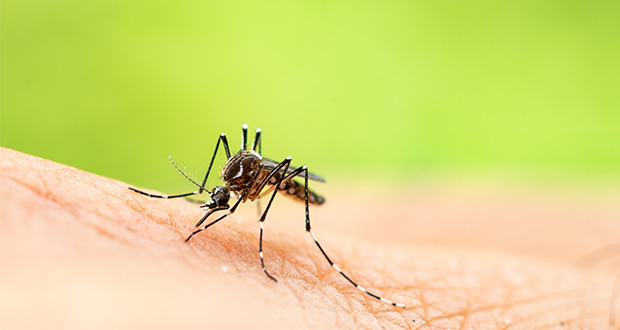
Mosquitoes carrying anti-viral bacteria have dramatically reduced the spread of dengue fever in Australia due to research carried out by a team led by Dr Perran Ross at the University of Melbourne.
Researchers spent a decade studying the Wolbachia bacterium that decreases the ability of many viruses to replicate.
Ross said they aimed to control the mosquito population that spread vector-borne diseases, such as dengue fever.
"Globally, hundreds of millions of people get infected with the dengue virus every year," he said.
"Because it's on such a large scale, it makes people quite sick and you have a lot of economic costs from people missing work.
"In rare cases, people can get hemorrhagic fever and severe symptoms and you can die from it as well. So anywhere in the tropics, it's still a huge concern."
Wolbachiais a bacterium found naturally in insects, such as bees, moths and butterflies.
A mosquito that's host to the bacterium can no longer transmit dengue fever to humans.
"When a mosquito picks up the dengue virus from a human who's infected and they carry the Wolbachia bacteria, then that virus is less able to be transmitted to another person," Ross said.
"It blocks the virus transmission, but it also has other effects on the mosquitoes.
"One thing it does is that when a male carries the Wolbachia and mates with a female that doesn't have the Wolbachia, they don't produce offspring."
Rising urbanisation also raises the number of mosquitoes, leading researchers to look for a way to control the population.
Ross explains that a mosquito's existence is highly dependent on humans for its reproduction.
"Anywhere humans live, if the climate's suitable, then this mosquito will be there too," he said.
"It lays its eggs in man-made containers, so things like buckets and discarded tyres and roof gutters. It also has a very strong preference for human blood.
"Those two things make it very closely associated with humans, especially in urban locations where there are lots of habitats for it to breed."
Queensland used to have regular dengue fever outbreaks – in 2009, almost a thousand cases were reported.
During the research, the incidence of dengue fever has reduced by 96 per cent in Cairns and nearby towns since 2011.
"Pretty much all of the mosquitoes that spread dengue in Queensland are now carrying Wolbachia," Ross said.
"It used to be a huge problem in Queensland, but since we've done these all back year release programmes, it's basically a thing of the past now."
"We're really hoping that we can expand this technology, not just to mosquitoes, but also to other pest and disease vector insects."