Overseas visas will be processed faster and foreign students will be able to work in the country longer under a plan to attract ‘thousands’ of nurses into Australia.
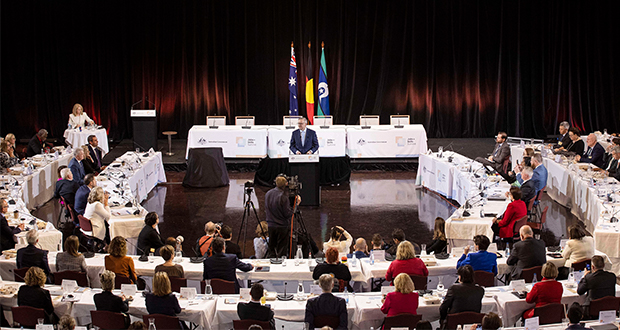
The federal government’s Job and Skills Summit, held last week, saw peak nursing unions and advocates address ongoing skills and labour shortages in the health system.
Major changes to Australia’s permanent migration cap were announced on Friday, with numbers set to increase from 160,000 to 195,000 as of this year.
Prime Minister Anthony Albanese said the government had yet to decide on the “mix” of temporary and permanent migration pathways.
“I say very unashamedly that my starting point is in favour of giving people the security that comes with a path to permanent migration, a path to being an Australian citizen,” Albanese told reporters.
“It makes no sense for example to bring in a nurse for two years, three years, and then see them leave, then try to find another nurse to take that place, have them train, have them adapt to Australian conditions as well.”
Along with the 35,000 extra skilled migrants to be allowed in each year, the government will also expand post-work rights for international students – allowing them to work for two years after finishing their courses.
Home affairs minister Clare O’Neil said the reforms were a “turning point” for Australia.
"Based on projections, this could mean thousands more nurses settling in the country this year,” she said on Twitter.
Around 33 per cent of Australia’s nursing workforce were born overseas, according to the latest ABS data.
Research from Health Workforce Australia predicts that due to rising rates of chronic disease and an ageing population, the country could face a shortfall of around 100,000 nurses by 2025.
According to the NSWMA, NSW only had 2,800 graduate nurses and midwives in the public sector this year alone.
On the first day of the jobs summit, the state’s nurses and midwives took strike action to draw attention to short-staffing and unsafe working conditions.
“Nurses and midwives are leaving in droves because the health workforce has been neglected, the conditions are abhorrent, and the staffing system needs an overhaul,” said NSWNMA assistant general secretary Michael Whaites.
“We need safe staffing ratios in every ward, on every shift, in every hospital and health service.”
The Perrottet government offered striking nurses a pay increase of 3.0 percent back in July, along with a ‘thank-you’ payment of $3,000.
Both the NSW government and state opposition have yet to agree to introduce a new ratio system.
Aged care at 'crisis point'
Securing Australia’s future aged care workforce emerged as headline issue during the two-day jobs summit.
In her keynote address, Grattan Institute chief Danielle Wood laid out the confronting reality facing the industry.
She quoted recent CEDA estimates that Australia would need an additional 35,000 care workers annually to meet future care needs.
“This problem has been a long time in the making,” Wood said.
“High workloads and low pay are pushing people out of these sectors and making it unattractive for others to enter.
“Properly remunerating care work is going to be critical to providing the quality and quantity of health, disability, and aged care services that our older population will need.”
Sue Gordon, a professor of healthy ageing at Flinders University, said aged care was at a ‘crisis point’ with around 70 per cent of providers losing money.
She said better training for workers was crucial to meeting increased demands for specialised care.
“We do not have an adequate workforce in numbers or capability to meet the needs of older Australians,” she said.
“We can no longer have these silos of aged, primary and disability care. It isn’t working for us. We need to provide flexibility.”
Overall, the summit delivered 36 'concrete' plans to tackle Australia’s economic challenges.
This included an additional $1 billion in joint federal-state funding for fee-free TAFE, amending the Fair Work Act to strengthen access to flexible working arrangements, and improving access to jobs and training pathways for women.
In wrapping up the event Treasurer Jim Chalmers said the summit had "exceeded even our most optimistic expectations".