

Australia has been quick to embrace artificial intelligence (AI) technologies to enhance patient care and improve overall health outcomes.
For instance, virtual reality (VR) has been one mode, with NSW rolling out VR training for nurses to help with stroke care, and Queensland health using it to help rural midwives upskill their maternity abilities.
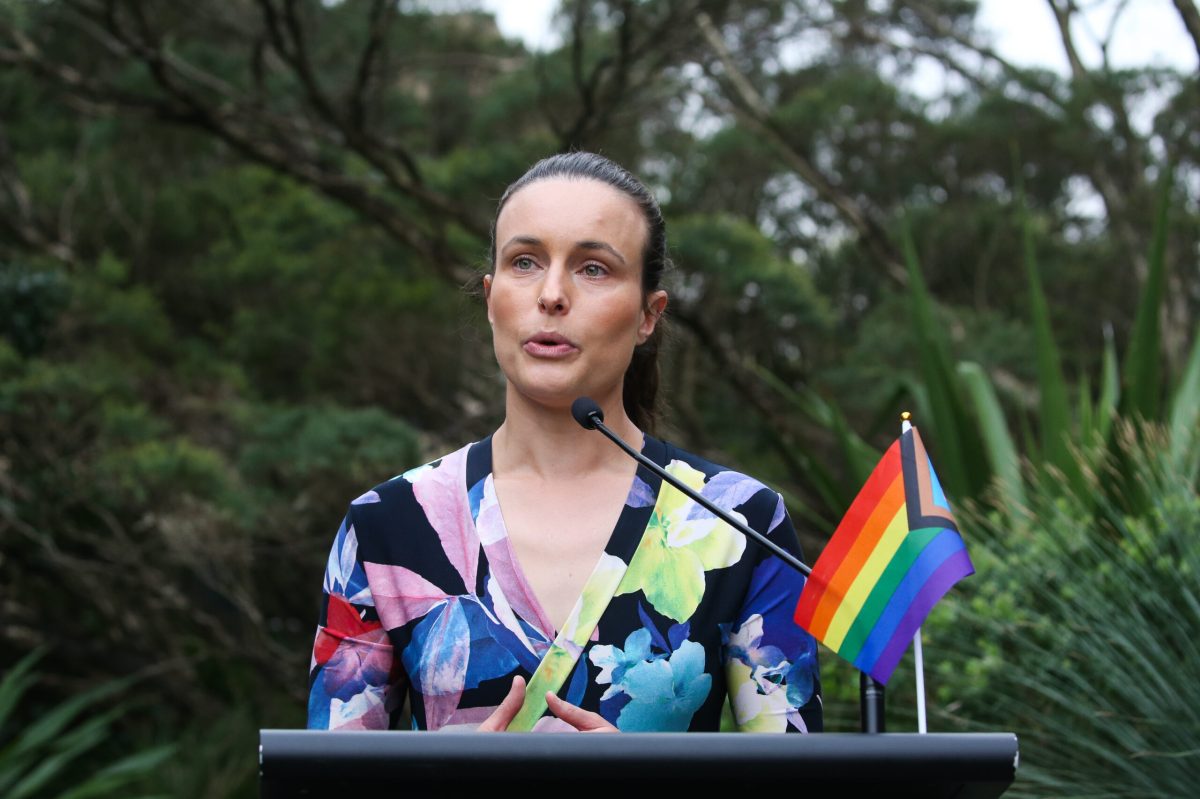
With a background as an intensive care (ICU) nurse, Dr Lucy Shinners is currently the course coordinator of the Bachelor of Nursing at Southern Cross University. She recently completed her PhD on the perceptions of AI in the healthcare industry, which has led to some of her work being used in over 15 countries.
Nursing Review spoke with Dr Shinners about how she got to this point in her career, and what AI means for the healthcare system.
Nursing Review: You went from being an ICU nurse to an academic coordinator to receiving your PhD and having your work used globally, congratulations!. Can you tell me why you became a nurse in the first place, and what it was that motivated you and inspired you to take the next steps in your career?
Lucy Shinners: I was led to nursing because I have a heart for people. Serving others through care just seemed the right thing for me. Working with and for people is such a fascinating and complex space to be in, but I never get tired of it.
With each transition, I am taught new ways to positively impact people’s lives. I think that I am a naturally inquisitive person and I tend to lean into the directions that intimidate me the most. At one stage ICU seemed like the most unachievable goal, but with postgraduate study and mentorship, I have now worked in that space for 15 years.
I was always involved in nurturing new graduates so university tutoring was a natural progression. When the opportunity to help design a course for overseas-qualified nurses presented itself to me, I went for it, and so began my journey through academia.
The research space is an entirely new area, and completing a PhD has given me a new set of skills that I am now on a mission to use in a positive way. Mentorship from others has enabled those shifts. Health is full of people who want to invest in your life.
How do you balance your nurse, educator, and researcher responsibilities?
LS: It’s not a perfect science, but I love what I do, which helps!
The three parts of my professional life are very interconnected. I often observe things in my professional practice that I interrogate as a researcher and this influences my teaching. My research also applies to my professional practice as a nurse and my work as an educator. There’s a lot of crossover.
AI has become a huge part of life, especially in the health sector. Why did you decided to do your thesis and research on this, and what have you found?
LS: I was attending professional events, like conferences, and AI kept coming up. As an ICU nurse, I am surrounded by technology and use it to augment my decision-making. That got me thinking about how AI was influencing our practice as nurses and how it would influence healthcare in the future. That led to my research topic
The potential for AI’s application in healthcare is mind-blowing. The world’s healthcare settings are now creating millions of terabytes of data, which AI technology can use to support diagnosis, offer insight into care interventions, and even automate human tasks, among other things.
How do healthcare professionals feel about this rapid technological change and its ethical implications?
LS: We really have very limited research on exactly what those perceptions are, so that’s what I set out to discover. We often fear what we don’t understand, and that sets up an enormous barrier to the successful implementation of AI in healthcare.
My research found that professionals feel AI will affect their role but they do not feel prepared for its use, highlighting the urgent need for education and preparation to maximise AI's potential in healthcare. Without education, this crucial opportunity to engage the workforce will be lost.
The key to success will be to empower health professionals to come up with the ideas and to be leaders in AI development and implementation.
The work from your PhD led to the creation of the SHAIP tool, with 15 countries currently using it. What is it, and how is it being used?
LS: If we can gain an insight into the workforce’s perception of AI, we can identify potential challenges we will face in the introduction of this new technology.
Shinners Artificial Intelligence Perception (SHAIP) is effectively a questionnaire that was developed with input from Health and IT experts across four states to act as a baseline measurement in relation to healthcare professionals’ perceptions of AI’s impact on their professional role and their preparedness for AI.
To establish its reliability and validity, the tool was piloted in a single regional health district, before the questionnaire was distributed to multiple NSW health districts.
A positive flow-on effect was that the questionnaire prompted organisations to begin a conversation about AI.
We published the studies in open-access journals so that the public could access it easily, and I have been talking about my work in conferences, webinars and to whoever will listen!
During the three years of my PhD, the research interest about how AI will impact the workforce has grown enormously. Other researchers now reach out in response to my work to request the tool and develop collaborative projects.
The tool is being validated in other languages and health settings, so it will be interesting to see the similarities and differences as this work is published.
Can you share any notable insights or trends from the data collected with the SHAIP tool?
LS: What was very evident from the SHAIP questionnaire was that a majority of respondents (67.3 per cent) thought ‘workforce knowledge’ posed the greatest challenge to implementing AI, while cost was also a major concern.
The study showed that healthcare professionals currently using AI and those seeking education were more inclined to believe that AI would influence their professional roles.
In comparison to non-clinical participants, nursing and midwifery professionals felt less equipped for AI, with this feeling intensifying as healthcare professionals age.
How do you perceive the current challenges and perceptions that healthcare professionals have regarding AI when it comes to the delivery of care?
LS: Some healthcare professionals perceive AI as robots, others believe that it is a computer technology that can think and act like a human being with emotions, insight and intention; for others, it is just a piece of technology that sits in the storeroom.
AI has stormed into the health sector – as it has in many fields – from assisting in the diagnosis of melanoma through to supporting the delivery of medical support in remote communities.
Bias has been a problem, particularly when the models used to train many health algorithms have been based on data sets from developed Euro-centric countries. Understanding the bias in many algorithms, I think, remains a problem for many of our colleagues.
How can healthcare professionals be empowered to contribute to the development and application of AI in healthcare?
LS: There are a lot of trust issues for our colleagues, and this often comes down to understanding just how AI works.
Workforce education is key. People need to know how AI actually works in each specific use case, making professionals more likely to engage with the development of the technology in their specific field. Even if you are not very literate in IT, understanding how AI diagnostic tools get trained, for example, can be very empowering.
Similarly, if you understand how it can help your work, that can be a great incentive to engage with the development of it.
Where do you see the intersection of healthcare and AI heading in the future? Do you envision AI positively impacting healthcare delivery in the long term?
LS: There will not be an area of healthcare untouched by AI technology in the future – from prevention, patient access to care, diagnosis, treatment and surgery, post-treatment care, to the pharmaceutical industry, and administration.
AI potentially has huge benefits for patients, particularly in rural and remote communities, through the use of diagnostic smartphone apps and health data collection from wearable biometric sensors.
Wearable and smartphone technologies also have great potential to reduce the need for appointments and the length of hospital stays in some of our busiest city hospitals.
In areas of health where we have long been dependent upon patient history to predict outcomes – for example, during pregnancy – AI algorithms will be used to support clinical decision-making, potentially reducing unnecessary interventions and alerting doctors or midwives to problems earlier.
Generative AI will start to help us with our administrative and labour-intensive tasks. Given that we have an ageing workforce and workforce shortages, using this technology will be crucial to high-quality care delivery.
What steps do you think are crucial in preparing the health workforce for the evolving role of AI in healthcare, and how can educational institutions better prepare healthcare professionals for the integration of AI?
LS: Australia is well placed to benefit from this industrial revolution, with innovative higher education leaders – such as Southern Cross University academics, researchers, students and alumni – set to be at the forefront of technology development and re-training our current workforce.
Collaboration is essential. When you have people in higher education like me very much in touch with the healthcare workforce, we can work together with the sector and governments to find the best way to address these education needs.
The combination of academic rigour, investigation, and integration of research into teaching is essential to prepare our students for the challenges they will face when they enter the workforce. They will be the healthcare leaders who will be implementing and driving change in the future.
We must understand the specific education needs and unique challenges of the different areas of health to ensure we deliver education that is meaningful and accessible. I’m trying to do my part by continuing to identify those specific needs and challenges.


1 Comment
janetroden@gmail.com
Amazing interview thank you. i understood that already with regard to measuring patients observations this could be achieved by patient devices applied and monitored remotely. So was this the start of artificial intelligence (AI) used in the health sector? Already health professionals provided me with a algorithm that determined what treatment I needed when I had breast cancer. I am commenting here about doctors and midwives being able to check their clinical decision making through algorithms for certain pregnant women…isnt this the same thing that happened for me 7 years ago when I had to determine my treatment options? We’ve obviously had AI for quite some time…it isn’t as new as we are meant to believe! Thank you for the opportunity to comment on Dr Lucy Shinner’s interview.