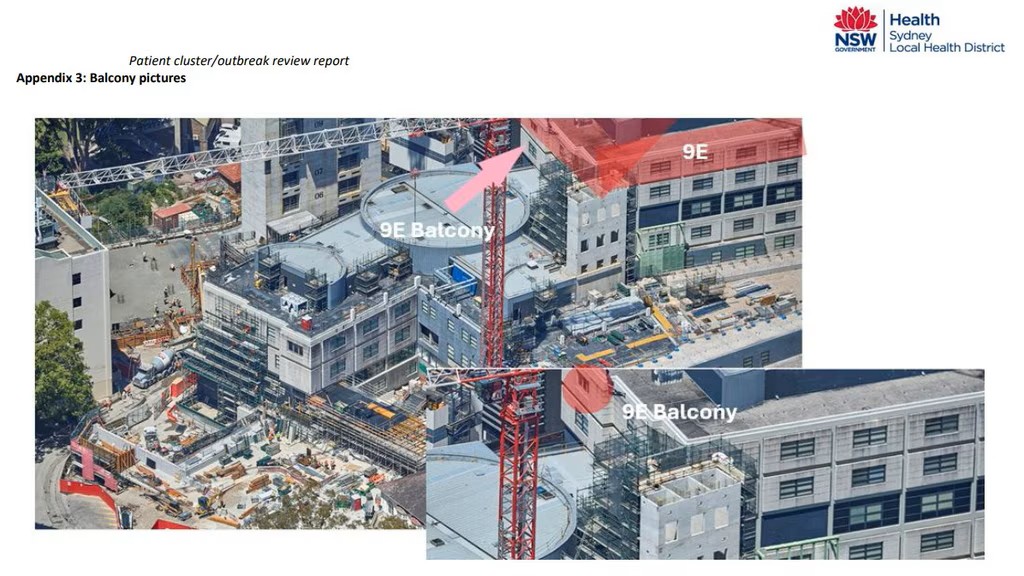
Mould that got into a Sydney hospital’s transplant unit, leading to the death of two people, likely entered through a balcony undergoing construction work. Four other patients also became seriously ill.
The final report on Royal Prince Alfred Hospital’s deadly fungal outbreak was released on Friday, revealing the fourth person who became seriously ill remains in intensive care four months on.
The Sydney Local Health District says it has given the affected families the chance to discuss the findings with doctors and hospital management.
The patients were exposed to the common Aspergillus mould between October and December 2025.
Speaking to reporters on Friday, Sydney Local Health District chief executive Deb Wilcox said the fungal infections contributed to the two deaths.
“The Aspergillus infection did impact on two patients directly who passed away, the panel is clear on that,” she said.
“We will never absolutely know the cause [of death], it’s not possible to do so and it’s really just on the balance of the facts in front of us.”
The transplant ward is considered an “extreme risk area” requiring heightened cleaning, and in October the cleaning benchmark “failed” to be met, the report says.
“While the investigation team was unable to determine a single conclusive cause of the outbreak, the balance of evidence indicates the balcony and nearby construction activities posed the greatest exposure risk rather than the water ingress in September 2025,” a Sydney Local Health District (SLHD) spokesperson said.
Aspergillus is a mould commonly found in soil, and there are well documented links between construction and invasive fungal infections caused by disturbed soil and airborne spores.
“SLHD extends its deepest condolences to the families of the patients who died and sincerely apologises to all patients and families affected by the outbreak,” the spokesperson said.
“Upon confirming the cluster, SLHD acted as quickly as possible to address the risk posed to patients.”
Five of the patients who were infected had received a new liver, and one had previously had a kidney transplant.
Patients in the transplant ward could get out to the balcony facing the hospital’s $940m redevelopment being constructed next door.
The report found the construction managers, CPB Contractors, monitored the airborne emissions on the boundary of the construction site but did not assess the risk of patients’ access to balconies above or next to the construction.
“The fungi monitoring program was not implemented in accordance with CPB Contractor Infection Control Management Plan reviewed by facility staff in 2023,” the report said.
CPB Contractors has been approached for comment.
The review team found the responsibility for assessing risks outside the construction site boundaries was not clearly defined.
“In the absence of baseline or ongoing surveillance testing, the review team were unable to quantify the exact risk posed to the patients by the construction works,” the report says.
Originally published as Cause of deadly Sydney hospital fungus outbreak revealed