
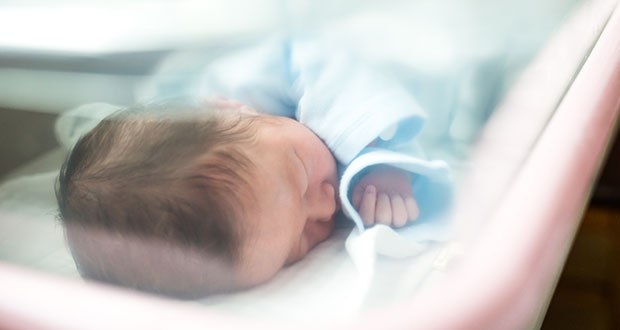
Dr Karleen Gribble, associate professor at Western Sydney University, has spent the last year studying the different COVID-19 separation policies in maternity wards across the globe.
According to her research, the impact of changing health advice and an absence of skin-to-skin contact has led to severe health implications for both mothers and newborns.
As the pandemic continues, routine mother-baby separation continues to occur in maternity wards across several countries, including the United States, China and Indonesia.
“We know that there have been thousands of infants die because they've been separated from their mothers unnecessarily," she said.
“They estimated in low and middle income countries that you would get at least a hundred times more deaths from separating mothers who had COVID-19 from their infants.”
To date, there is little evidence to suggest that newborn babies are harmed when born to women who have or are suspected of having contracted the virus.
Researchers have indicated the serious effects of early maternal separation, which is projected to continue with the global spread of COVID-19.
“The biggest implication is for the mother-infant relationship,” said Dr Gribble.
“We know that when mothers and infants are separated it makes it really difficult for the mother emotionally, but also that interruption of that early bonding and early relationship building can be quite significant.”
Mothers with a history of early trauma, child abuse or substance abuse are placed further at risk of developing postnatal depression, with their children susceptible to higher rates of neglect.
A rise in child abuse cases in other countries during lockdown has drawn attention to the vital role of stable relationships and familial bonding practices.
“I did find last year in the UK, because they had such a big wave early on, that separation was happening and all sorts of terrible things,” said Dr Gribble
“They had increased reports of infants being physically abused, and a 20 per cent increase to their child protection services.”
Currently, in Australia public maternity wards do not recommend separating mother from child after birth.
During the beginning of the pandemic some private hospitals in the country did encourage separation which has raised concerns for the children born during that period.
“One of the private hospitals in Victoria during the lockdown last year was only allowing two one hour visits a day, so that sort of restriction is really significant in terms of breastfeeding and maternal mental health," Dr Gribble said.
“There have been situations where just because of social distancing requirements, where there was quite severely restricted access of mothers to their infants in neonatal intensive care units and nurseries.
“That’s been one of the more distressing situations, when you’ve got an already ill baby who needs to be in hospital and their mother not necessarily able to be with them”
In a recent global survey, two-thirds of healthcare workers stated they would not permit mothers who have or are suspected of having COVID-19 to touch their newborn babies.
Nearly one-quarter of respondents stated that they would not allow breastfeeding, even by an uninfected caregiver.
As a crucial pillar of early health, the process of breastfeeding has become riddled with challenges for mothers visiting maternity wards around the world.
Policies prohibiting immediate skin-to-skin contact within the first hour of birth have led to significant challenges in newborn healthcare.
“When babies are sick and you're staring at a nursery, a special care nursery or a NICU, and access is restricted, then you're really jeopardising breastfeeding.
“It's a difficult enough thing to have a sick baby, but to have a sick baby and be separated from them and trying to produce milk manually because you can't be there with your baby, I mean, it's tough.”
Other than the key physical benefits it provides, most studies show that breastfeeding plays a critical role on early development of a baby’s cognition, behaviour and overall social and mental health.
In Australia, hospitalisation rates for infants that are fully formula fed from birth are three to five times greater versus those that are fully breastfed.
According to Dr Gribble, women are also reporting having increased difficulties accessing postpartum support, which is further disrupting these critical early bonding practices.
“They've been wanting to get women out of hospital as quickly as possible once they've had their baby, for good reason.
“But sometimes they're then being discharged into situations where they can't actually access support."
“During the early stages of the pandemic last year, the Breastfeeding Association was getting way more calls than usual for women who were really in need of assistance.”
Pregnant women in Australia have reported higher levels of stress and isolation as a result of inflexible care practices in maternity wards.
Constantly shifting health policies, compounded with severe staff shortages have further exacerbated struggles in maternity care, said Dr Gribble.
“The other concerning aspect of this is that where you don’t have visitors, where infants don’t have mothers, that means that unless the hospital increases staffing levels those infants aren’t going to be getting the same interaction with an adult.”
Midwives, nurses and healthcare workers play an integral role in providing care to mothers and babies before, during and after birth.
The best course of action for practitioners in situations where babies are separated from their mothers, according to Dr Gribble, is to initiate and promote skin-to-skin contact.
“First of all, do everything you can to avoid them being separated in the first place.
“When mothers and infants are being separated, the best thing health workers can do is to support them when they are reunited," she said.
“I also think normalising their experience is also really important to actually recognise that what they've experienced has been a trauma and a loss, and that it can take some time to recover and that's quite normal.”


1 Comment
avaje@iprimus.com.au
A really valuable read, but heart breaking! One of the drastic side effects of this this pandemic, and one we must learn to get around as best we can.
Dr Gribble’s closing comments are crucial to how we manage mothers and their newborns moving forward in this ongoing Covid- 19 era.