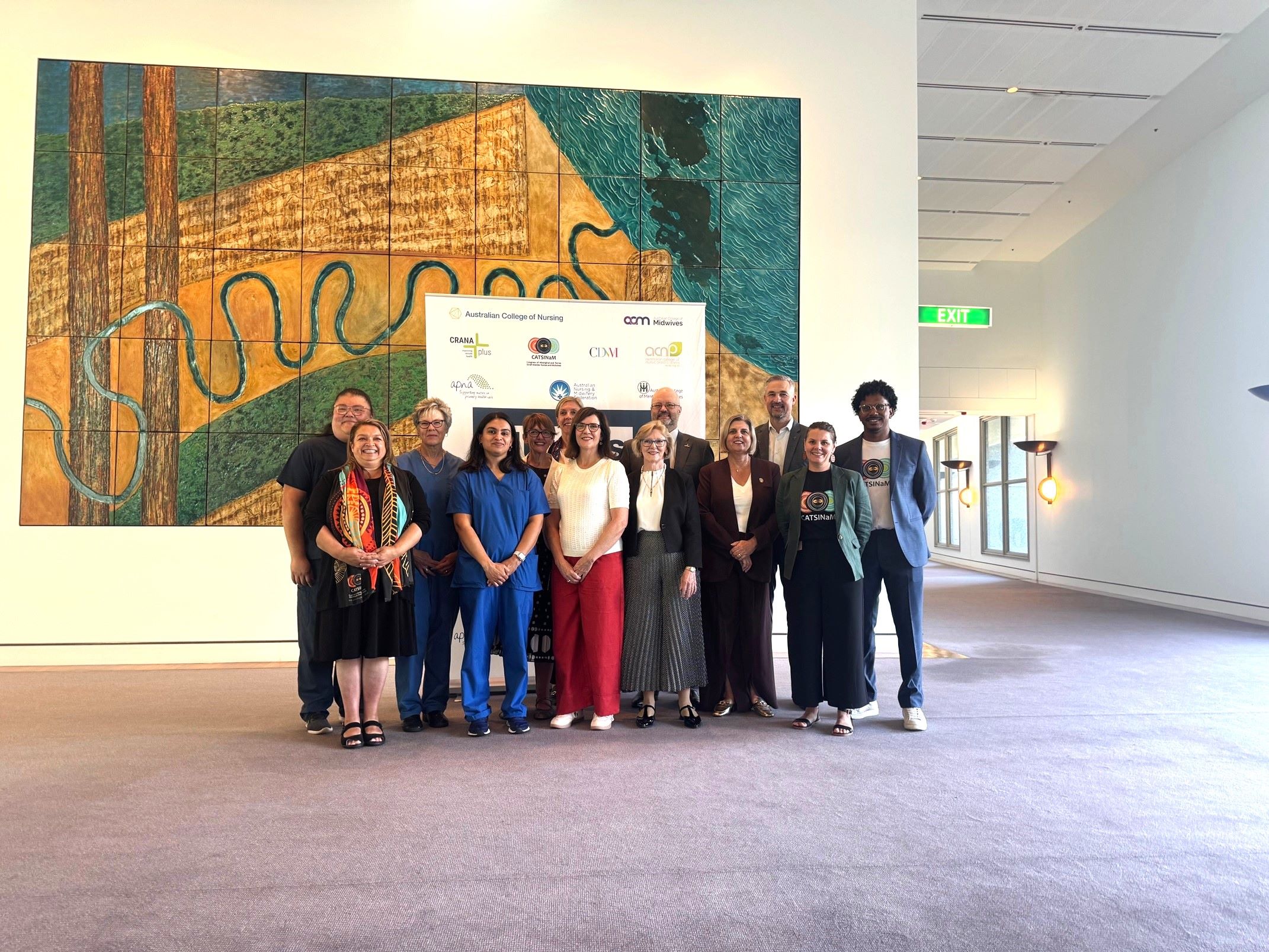
Nine nursing and midwifery organisations are coming together to advocate for better utilisation of the nursing workforce ahead of the upcoming federal election.
In a move reminiscent of the push to professionalise the roles some 40 years ago, nine of the country's peak groups have presented a united front to the federal government, demanding nurse-led reform.
The bodies are:
- Australian Primary Health Care Nurses Association
- Australian Nurses and Midwives Federation
- Australian College of Nursing
- Australian College of Midwives
- Australian College of Nurse Practitioners
- Council of Remote Area Nurses of Australia
- Congress of Aboriginal and Torres Strait Islander Nurses and Midwives
- Australian College of Mental Health Nurses
- Council of Deans of Nursing and Midwifery
Their joint election statement, released on Friday, details a seven-point action plan that the industry bodies say will “improve care, reduce waiting times, and deliver better health outcomes with minimal budget impact.”
“For too long, our highly skilled nurses, nurse practitioners, and midwives have been held back by outdated regulations, restrictive funding models, and professional silos,” the statement reads.
The Peaks are calling for commitments to:
ACTION 1: Enable Nurse Practitioners and Endorsed Midwives to directly refer patients to relevant specialists, reducing waiting times for care.
ACTION 2: Introduce funding and regulatory reforms that support nurse and midwife-led clinics and innovative care models, particularly in rural, remote, and underserved communities, enabling nurses and midwives to take leadership roles in delivering community-based primary care.
ACTION 3: Work with State and Territory Governments to pass laws to support qualified Registered Nurses in every State and Territory to prescribe approved medications under the Pharmaceutical Benefits Scheme.
ACTION 4: Increase the Workforce Incentive Payment Practice Stream to cover up to seven healthcare professionals, and tie payments to higher scope clinical care.
ACTION 5: Authorise Nurse Practitioners, Endorsed Midwives and qualified Registered Nurses to order diagnostic tests such as mammograms, X-rays and DEXA scans. For Endorsed Midwives, this includes tests such as NIPT, pelvic ultrasound, multiple pregnancy items and iron studies.
ACTION 6: New and amended Medicare Benefit Schedule items for Endorsed Midwives to support pre-conception counselling, primary sexual and reproductive health, intrapartum care outside of a hospital setting (homebirth), and a general consult item for women’s health.
ACTION 7: Implement a primary healthcare workforce development strategy to unlock 15,000 extra education and training places for Registered Nurses, Nurse Practitioners and midwives in the places and settings that need them most.
Nurses are the solution
Nursing Review sat down with Australian Primary Health Care Nurses Association (APNA) chief Ken Griffin to hear about the collective's goals and his vision for future of nursing and midwifery.
“We've got data from the APNA workforce survey that shows in primary health care, 30 per cent of nurses say that they only worked to their full scope of practice rarely or never,” he said.
“They're skilled, they're experienced and trusted. But they're under utilised.”

Picture: Supplied/APNA
Nurses and midwives represent 54 per cent of the country's health workforce and are the profession with the best geographical spread – not to mention the average Australian nurse has 21 years of experience.
The collective's argue that the expansion of the scope of practice for nurses and midwives, such as allowing them to prescribe medications, will significantly improve access to healthcare and reduce pressure on the system.
The Department of Health and Aged Care's Scope of Practice Review, released in October, proposed a new national skills and capability framework aimed at removing the red tape preventing health professionals from delivering the most accessible and efficient care possible.
“Seventy-six per cent of Australia's nurses are registered nurses. Imagine if even half of them had a script pad and were able to continue the benefit of a health consultation by prescribing medications in a safe way. That would be do much for access and decreased pressure on the system,” Mr Griffin said.
Raising our voice
The average Australian nurse holds 2.1 memberships to a nursing peak body, yet collaboration between those bodies is rare.
“The nursing voice hasn't always been heard as loudly as it should, and it hasn't necessarily been as unified as it should,” Mr Griffin said.
“The peaks are really working together because we believe it's time.”
The joint election statement is a powerful message to government that nurses and midwives are united, organised and demanding to be heard.
There is precedent that collaboration like this creates real and lasting change.
In the mid-1980s, shortages of nurse educators in some of the country's biggest hospitals led to a group of peak bodies to push for nursing education to formally transition from hospital-based training to university qualifications, laying the foundation for the professional recognition of nurses and midwives nationwide.
In a sector as complex as the health system, it is crucial that reform is led by a unified force.
The future of nursing
Mr Griffin said there needs to be a shift in the way nurses and midwives are educated and utilised to increase access to safe and effective care for all Australians.
“Australia trains really amazing health care professionals. They work hard and there is demand all over the world. And nurses and midwives are no different,” he said.
”It doesn't make much sense to be training them with all these great skills and then not actually letting them use those skills once they're in the position to increase the health of Australians.
“We need to make sure that we are educating nurses and midwives in more of the preventative end of the spectrum, and make sure that they're prepared for that really vital role in primary health care.
“Part of that is we need our university degrees and our TAFE diplomas making sure nurses learn in the full range of clinical settings that nurses can work in. Because at the moment they tend to focus more on the hospital environment where 70 per cent of the workforce is.
"But we know that the primary health care workforce is going to become a larger percentage of the overall nursing workforce in the coming years,” he added.