The Minns government's first NSW budget released Tuesday afternoon includes $3.6 billion into fixing essential services and the largest wage increase for healthcare workers in a decade.
Calls for more investment into the nursing industry have been heard by the government for months and this budget has labelled nurses and other frontline workers as its 'winners'.
What's in it for nurses
Overall, $2.5 billion will be allocated to the health sector to recruit and retain workers, including $170.8 million into salary packaging benefits and the abolition of the public sector wages cap.
The government aims to deliver 2,312 more nurses and midwives along with a flat rate pay rise of $3,500 for 50,000 healthcare workers, which includes lower-paid staff who will receive a pay increase of up to eight per cent.
Just over $419 million will be invested to hire an additional 1,200 nurses as part of the Safe-Staffing levels reform. A further $572.3 million will be spent over three years to allow the 1,112 full-time nurses and midwives, who were previously funded temporarily to June 2024, to be made permanent.
Study subsidies will be given to 12,000 healthcare students at a cost of $121.9 million over five years, including a $4,000 scholarship for each year of study, with existing students receiving a one-off payment of $8,000.
Investment into western Sydney hospitals
Infrastructure such as hospitals will be 'treated as assets' instead of liabilities in this budget, with $13.8 billion set aside for improving and building hospitals.
This is part of the much larger $116.5 billion Essential Infrastructure Plan, which invests in schools and hospitals without privatising public assets.
Western Sydney is a winner overall in this year's budget, especially in its hospital and infrastructure funding, which will cost the government $13.8 billion overall and build 600 new hospital beds in the region.
Blacktown and Mt Druitt hospitals will see $120 million to increase bed capacity, and Fairfield hospital is receiving a $550 million investment to increase its bed capacity in emergency and critical care services.
There is $1.3 billion to rebuild Bankstown hospital on a new site, while the already $400 million that has been put into the Rouse Hill hospital development will see an additional $700 million of funding.
The Royal Prince Alfred hospital in the Inner West also has a $190 million investment for upgrades.
Investment into regional hospitals
Infrastructure in regional communities will see a $3.8b fund, with $7.5m going to the Milton and Ulladulla hospitals, to include upgrades to their Community Cancer Service Centre.
Bathurst Hospital will get $200 million to improve health needs of the central west, and the south coast is receiving a new 'sustainable and modern' all-purpose hospital in Eurobodalla with a $260 million price tag.
Albury Wodonga Regional Hospital is receiving a $538 million investment to improve patient safety and increase its capability to match rising health demands.
Overall, $19 million will be spent to support free parking at rural and regional hospitals.
Women's health and wellbeing
Female-dominated essential workforces like nursing are hit the hardest by cost-of-living and inflation pressures, and 66 per cent of 400,000 public sector workers are women; and this budget hopes to address that impact through its wages cap abolition and pay rises.
Also, there is increased funding for women's health services such as the $18.6 million investment into 28 new and eight existing McGrath Foundation breast cancer nurses in the budget's $100 million spend on improvements to women's healthcare and wellbeing services.
Additionally, a $34.3 million boost to Women's Health Centres will provide general and mental health services to women, along with employing 48 new sexual assault nurse examiners and medical and forensic officers aims to fill gaps in sexual assault healthcare services for victims with $52.7 million.
Essential Services Fund key to strengthen public sector
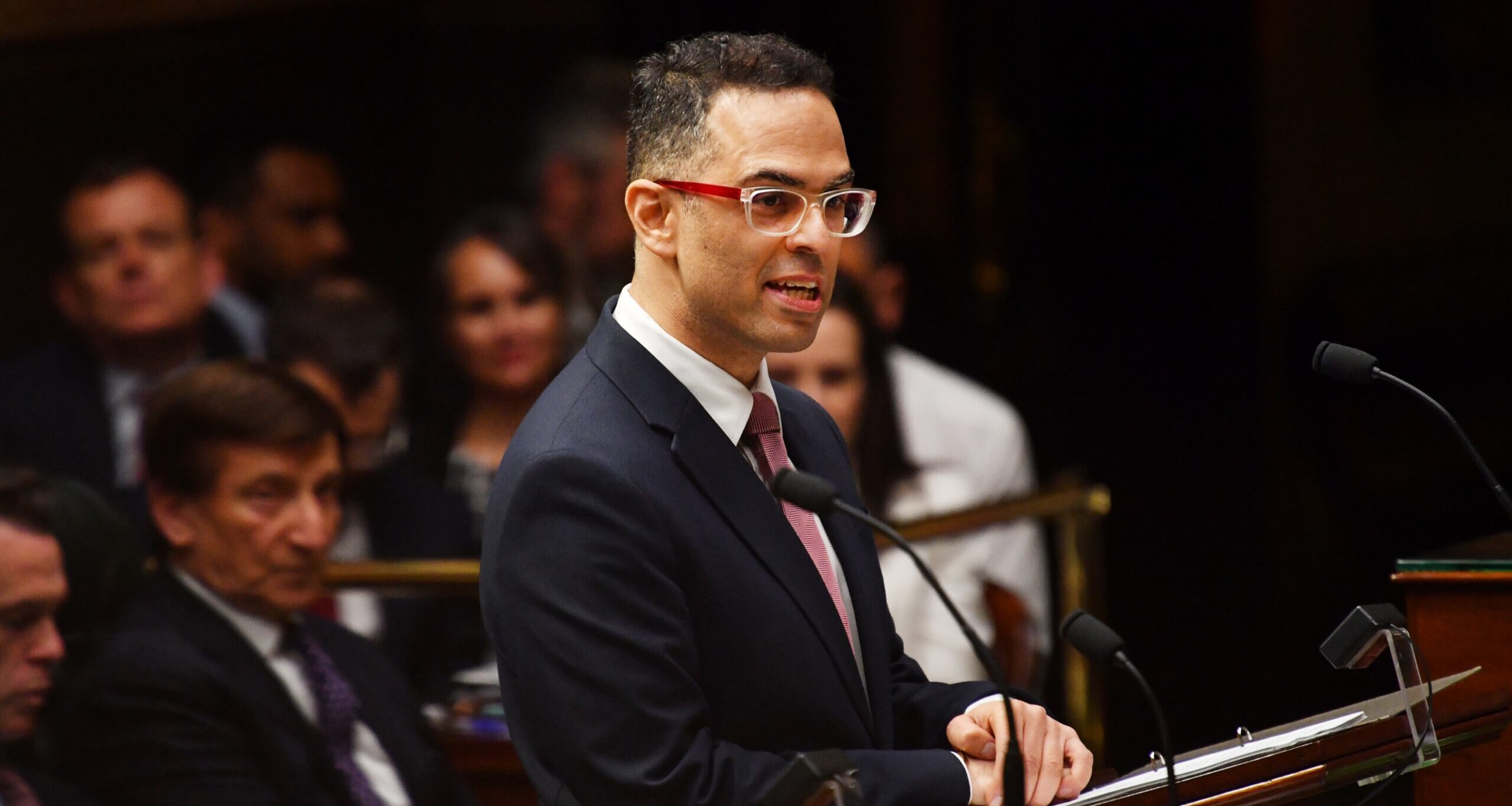
NSW treasurer Daniel Mookhey announced the government's plan in parliament on Tuesday, explaining how the $3.6 billion Essential Services Fund will enable the government to negotiate workplace changes and improve these services.
"I would much prefer to be able to spend money on the state’s essential services and essential workers, rather than have to write big cheques to the state’s bondholders," the treasurer said during his announcement.
"This is an investment New South Wales must make to deliver vital public services to the standard people expect."
The budget's $13 billion in cuts and savings and the tax increases on big multinationals will fund the promised $3.6 billion in pay rises for public sector workers such as nurses and teachers.
"If we want a world-class health system, we have to train, recruit and retain enough health workers to staff our hospitals," he said.
"The government will work to rebuild essential services by working to fill labour shortages.
“The Essential Services Fund will give them certainty and help bolster their ranks to ensure essential services workers are supported to deliver the best outcome for the people of New South Wales.”
By removing the wage caps at the start of September, the state government will now start to introduce a new wage bargaining system, and it's hoped that the plans to reform salary packaging benefits for some of the lowest-paid health workers will retain them in the healthcare industry.
The budget paper states better healthcare will come from rewarded and respected nurses, paramedics, and healthcare workers in our hospitals and health facilities.
NSW's overall debt is climbing and will reach $188.2 billion by 2026, exacerbated by rising interest rates. However, the government forecasts there will be a $844 million surplus for 2024-25 thanks to this year's modest spending.