After just four days of evidence, the coronial inquest into a young mother’s death in August 2017 has raised serious questions about her treatment and highlighted startling failures among medical professionals at two prestigious Victorian hospitals.
But the precise findings yet to be handed by the Inquest into the death of 37-year-old Toorak lawyer Annie O’Brien are unknown, as the question of responsibility becomes more difficult as the inquest proceeds.
In the early afternoon of August 15, O’Brien’s life support was turned off at St Vincent’s Private Hospital, nearly 18 hours after she was first seen by a doctor at Holmesglen Private Hospital in Moorabbin, where she was incorrectly diagnosed with gastroenteritis.
This week the inquest, before State Coroner John Cain, has heard from five medical professionals, four of whom were directly involved in O’Brien’s care.
The inquest has so far heard suggestions that there was a misdiagnosis, the absence of handover notes, unused doses of antibiotics, neglected tests, poor communication between staff, the late administration of medicine and disagreement between senior doctors over whether O’Brien needed intensive care.
On top of this, Brian Moylan, O’Brien’s father and a doctor himself, told the inquest on Monday that the family had been “frustrated” in their search for answers over their daughter’s death by the notoriously opaque Victorian health system.
For this, Moylan pointed the finger at Holmesglen, St Vincent’s, then-health Minister Jenny Mikakos and Premier Daniel Andrews.
“A grieving family deserves full information,” Moylan, who has attended each day of the inquest and probed witnesses himself, said.
On Monday, the inquest commenced with the testimony of Dr Hui Shi, the lone emergency doctor at Holmesglen on the night of August 14, when O’Brien arrived with a temperature of 40, vomiting, back pains and diarrhoea.
Under intense questioning from barrister Sharon Keeling, Shi conceded that “with the benefit of hindsight” she would have run lactate tests on O’Brien that night, a test which could have indicated the presence of sepsis.
But throughout her questioning, Shi insisted O’Brien did not appear to be “really sick” and said that by 9:30pm she “thought her condition” was improving.
Shi said there was no indication of early organ failure, symptomatic of sepsis, and her care of O’Brien ceased shortly after 11:30pm when O’Brien’s membrane prematurely ruptured, an event which led her to be transferred to St Vincent’s.
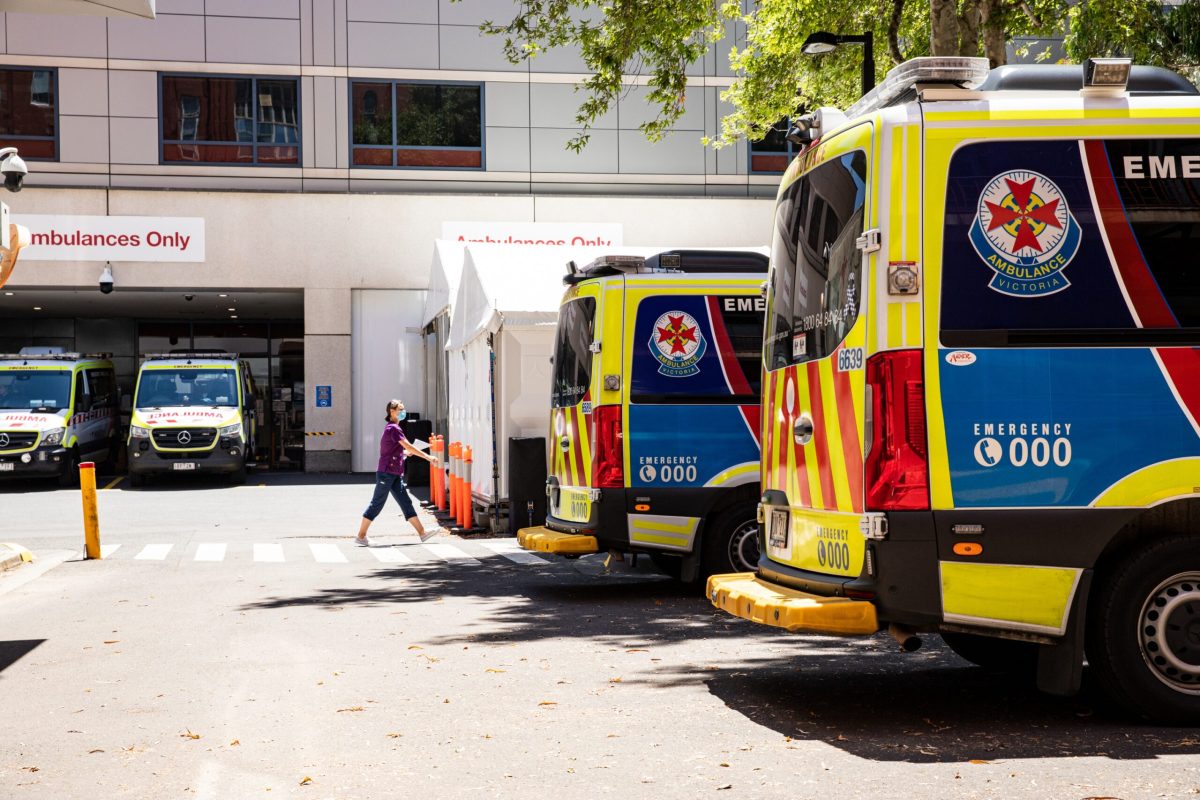
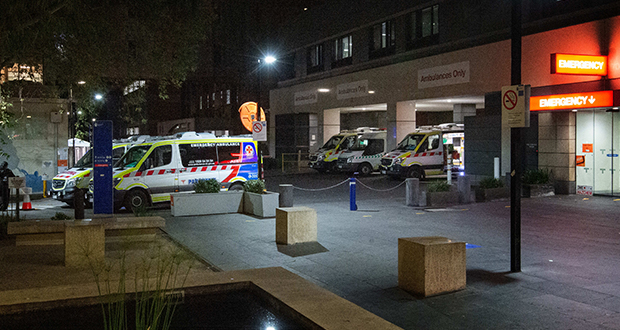
The inquest heard that when O’Brien arrived at St Vincent’s at approximately 12:15am, midwife Gillian Codd, who described O’Brien as “very distressed,” was asked immediately by a male paramedic who transferred the patient whether O’Brien’s level of blood loss was “normal”.
“I was concerned,” Codd told the inquest on Wednesday. “She was becoming more distressed.”
Codd’s evidence was echoed by another nurse on shift that night, who told the inquest O’Brien was “uncomfortable and shivering”, had discoloured lips and was so sick she wondered internally if she needed to be transferred to another hospital.
That nurse has since quit the profession, citing the trauma of the night O’Brien died as the catalyst for her career change.
Codd gave evidence that from 2am she had been told by O’Brien’s obstetrician to start administering antibiotics and, referring to a record that night, said Ergometrine, Zoffran, Ceftriaxone, Syntocinon, and Piperacillin were administered.
She said, at the end of her shift, she found an unused dose of Flagyl on a kidney dish beside the bed.
She also placed O’Brien on seven litres of oxygen per minute.
At 2:12am, O’Brien delivered a stillborn child.
It was at this stage of O’Brien’s treatment that the inquest shone a spotlight on obstetrician Dr Vicki Nott.
On Thursday, Nott, O’Brien’s obstetrician, told the inquest that neither Shi nor Codd had conveyed to her how sick O’Brien was, in evidence that directly contracted the pair’s earlier testimony.
Nott was rigorously questioned by Keeling over why it took her 45 minutes to arrive at O’Brien’s bedside after she was contacted, and it was revealed during the inquest Nott was on her iPad in her car in the hospital, a time she said was spent researching, before reaching O’Brien at 1:30am.
Nott told the inquest that contrary to Shi’s, evidence O’Brien’s abnormally high temperature had not been raised with her, nor did Shi tell her she had used morphine.
Nott said she had received no handover documentation, and denied critical parts of Codd’s testimony.
She denied Codd had told her O’Brien was shivering when she arrived and denied she was told her condition was “serious”.
Despite this evidence, Nott was grilled by Keeling, who put it to the obstetrician that from the moment O’Brien arrived at St Vincent’s, her “first priority” was to personally inspect her.
Nott said she was “taken aback” by the “grossly bloated” state of O’Brien when she saw her.
“Not one person had said to me this lady was really sick,” Nott said.
She said she called ICU at 1:30am, and told the inquest she believed O’Brien’s condition to be serious and that she was potentially at risk of cardiovascular collapse.
Nott told said she had a disagreement with St Vincent’s ICU department, with a nurse testifying that shortly before 3am, a member of St Vincent’s ICU, referring to O’Brien’s condition, said “it’s good – (O’Brien’s) blood pressure is OK”.
One of the most consistent points of questioning concerned why it took Nott until after 2am to administer antibiotics if she considered O’Brien to be as sick as she was at 1:30am, with the obstetrician maintaining she thought O’Brien’s symptoms had appeared “suddenly”.
“Why didn’t you summon immediate help?” Nott was asked.
She said she summoned help within 10 minutes of her arrival, and said she had in mind the “golden hour” – that she had a small amount of time to still administer antibiotics, but had prioritised the birth of the child.
The inquest was told that just over 20 minutes after O’Brien was denied admission into ICU, O’Brien’s hospital gown was raised, revealing a mottled blue stomach.
“Her body’s shutting down,” Nott said at the time, the inquest heard.
The inquest was told that O’Brien was rushed to the operating theatre at this time, and experienced cardiac arrest by approximately 8am.
O’Brien’s family has maintained that only shortly before her death were they told her condition was potentially fatal.
The inquest continues.