The appearance of the two latest Covid subvariants may warrant the end of the global pandemic, an epidemiology expert has said.
Sydney University's professor Robert Booy, who specialises in infectious diseases, said the latest strains BQ.1.1 and XBB are not very different from the previous Covid versions.
"The virus is running out of ways to mutate," he says.
"Normally, we see a new variant every six months – we haven't seen a new one for twelve months.
"It's literally infected tens of millions of people, so there are not many mutations it hasn't tried to become more transmissible."
BQ.1.1 and XBB evolved from the Omicron lineage and have shown increased transmissibility and immunity evasion.
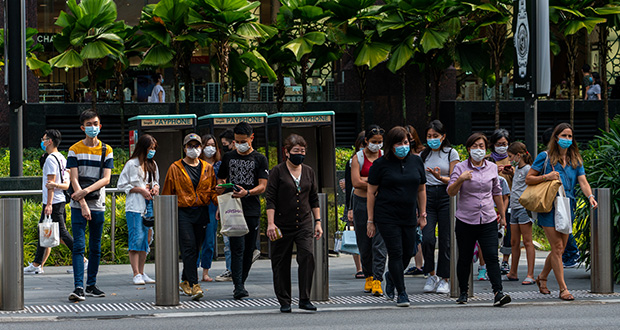
The two strains first appeared in Singapore in August, causing Covid numbers to double by the day.
Last month, XBB appeared in 35 countries and BQ.1.1 in 65 countries, including Australia.
Yet, Booy said there have been 'hundreds of minor variations in the last few months.'
"The only reason why these two are predominating at the moment is that they're a bit more transmissible."
He's not expecting the subvariants to cause a significant uptick in Australia's Covid numbers over the upcoming months.
"There might be a small up in cases, but not as big as previous waves, because the strain is not sufficiently different compared to other Omicron variants," he explained.
"In Australia, we've got roughly 80 per cent of the population who've been vaccinated and a similar number who've had wildfire infection, based on blood samples.
"So, I don't think there will be another lockdown or uptake of restrictions."
He said Singapore had more cases because people just came out of lockdown and severe restrictions, so they were more susceptible to infection.
"They're a bit more transmissible, but there's no evidence to suggest they're more likely to cause severe disease."
Nevertheless, Booy said there are still reasons to be cautious, especially those that are vulnerable and people working in high-risk settings.