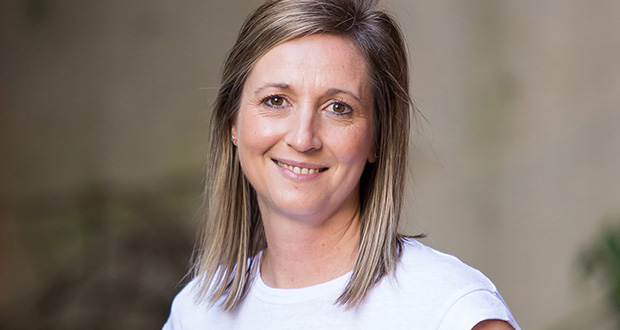
Midwife April Jardine has been honoured as HESTA's Midwife of the Year for her instrumental role in integrating the continuity of carer model.
Ms Jardine became Midwifery Clinical Coordinator and Educator at Dhelkaya Health in regional Victoria three years ago and leads a team of five midwives.
In 2021, the service introduced the Midwifery Continuity of Carer Model Toolkit which provides a woman with a primary midwife and a backup midwife for the antenatal, intrapartum, and postnatal periods.
"It's great and important that rural services are recognised for the great work that they're doing," Ms Jardine said.
"It's crucial that women still have access to local maternity services."
Nursing Review spoke with Ms Jardine about how the model has improved the midwifery services in rural Victoria.
NR: What was your response to becoming HESTA's Midwife of the Year?
It only just started to sink in.
When I heard, I felt overwhelmed but also grateful and humbled that a small service in a rural community could receive such a prestigious award.
It's such an honour to be recognised for the great work we're doing in delivering women continuity of care.
It's important that rural services are recognised and to emphasise the value of smaller maternity services, especially at a time when many of them are closing down.
It's crucial that women still have access to local maternity services instead of having everything centralised in larger hospitals.
If our service wasn't available, women would have to travel long distances to high-level facilities, which can bring about numerous challenges.
So, it is essential to have a service like ours, where women don't have to drive for hours and can still receive care within their local community.
It's vital to continue providing women with accessible options, and the community immensely values it.
How have you ensured that your clinic's midwifery practice model was successful?
The Midwifery Group Practice or continuity of care is still only offered to a few women across Australia.
I feel proud that we are one of those services.
We provide caseload midwifery, where we assign a dedicated midwife to care for women throughout the antenatal, intrapartum, and postnatal periods.
Working in a group practice and managing a caseload allows for great flexibility in managing your time.
We were looking for a new model because we realised that our current model was outdated.
So, we thoroughly reviewed our practices and formed a working party, incorporating community input.
It was then decided that offering women continuity of care was the best way forward.
We had our first full year of the model running in 2022.
In May 2021, we re-established our services under a midwifery group practice model, which received strong support from our General Practitioner Obstetricians (GPOs).
Our remodelling also involved developing a collaborative relationship with our nearest tertiary-level hospital.
So now, we have excellent multidisciplinary meetings with our GPOs, maternity and obstetric leads from the higher-level service, and our midwives.
We can all come together to discuss our women and form collaborative plans for their care.
What are your tasks and responsibilities on a typical work day?
Our midwifery group practice midwives work closely with their assigned women and tailor the antenatal care based on individual needs and preferences.
This allows us to structure our days around the women we care for.
We provide antenatal care within our facility but also conduct domiciliary visits for those requiring it.
And if a woman in our care goes into labour, she can contact her assigned midwife directly.
The midwife will then meet her at the hospital and provide continuous care and support throughout the labour and birth.
What do you enjoy most about your position?
For me, it's about forming that relationship with the women and their families.
Getting to know them and understanding what's important to them in their pregnancy and having contact for up to six weeks once they've had their baby to support them in becoming new parents.
I've always had a deep passion for caring for others, especially babies.
I feel a strong maternal instinct, and that's why I have always been fascinated by pregnancy and childbirth.
Providing care, support, and education to women throughout their pregnancy journey, childbirth, and the transition into parenthood is incredibly rewarding and holds a special place in my heart.
Being present and involved in bringing a child into the world is an incredible privilege.
And building a close bond with the family and getting to know them personally adds an extra layer of fulfilment.
It's truly an enriching and gratifying experience.