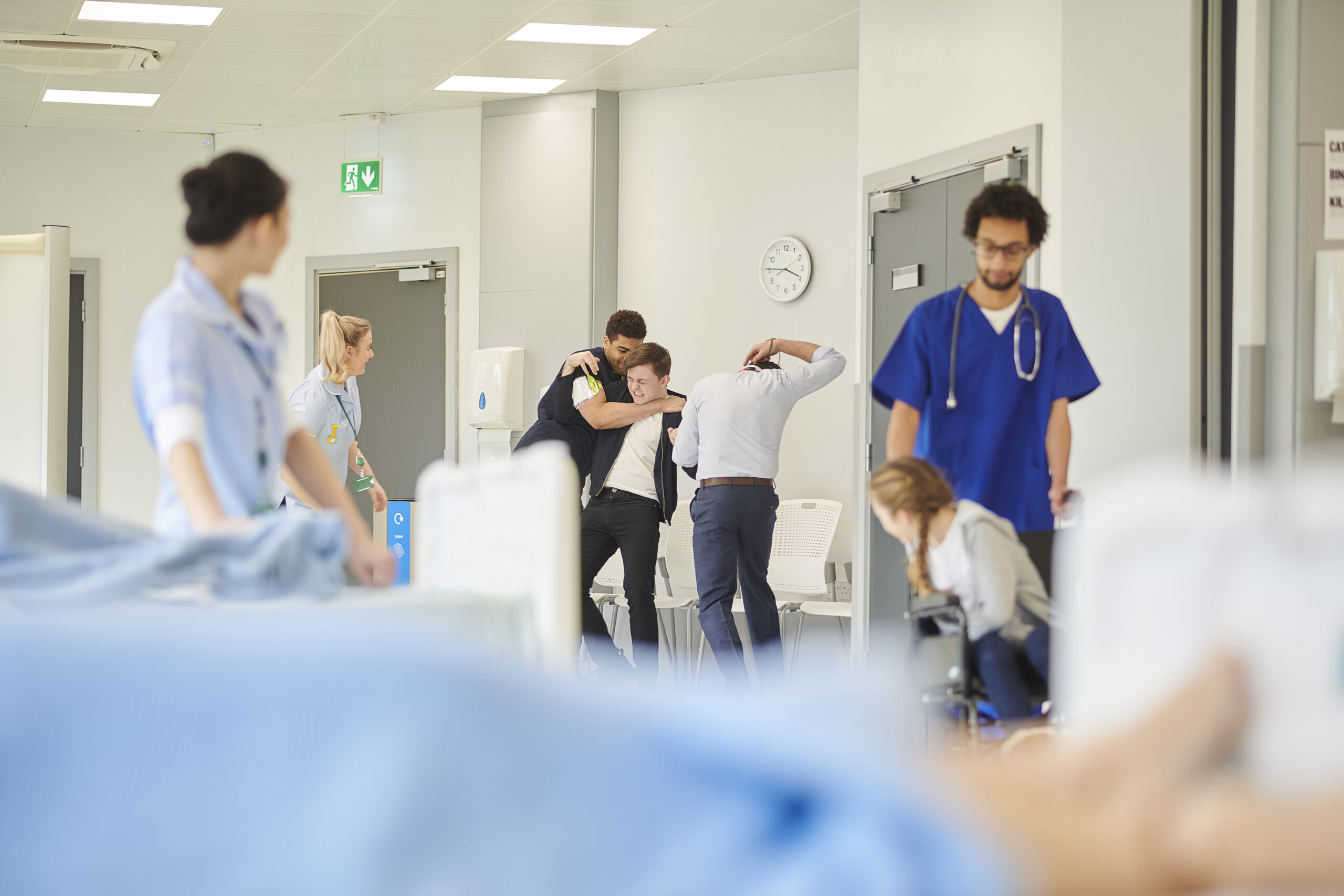
Violence against nurses, midwives and carers is continuing to rise, with new data revealing both the scale of the problem and the urgent need for better protection for frontline workers.
A report released by the NSW Nurses and Midwives’ Association (NSWNMA) shows 88 per cent of nurses, midwives and carers surveyed in 2025 had experienced or witnessed violence or aggression in the previous six months, a 10 per cent rise since 2019.
Public sector workers reported the highest exposure, with 92 per cent subjected to violence, while those working in residential aged care were more likely to face physical assaults.
NSWNMA general secretary Michael Whaites said the findings confirmed what nurses had been reporting for years.
“Violence and aggression are a systemic and widespread issue facing our members across all health sectors in NSW,” he said.
“We know occupational violence has a significant impact on our members, with many reporting psychological harm and trauma as a result. This leads to higher rates of burnout and workers compensation claims among nurses and midwives.”
The report also found that violence remains significantly underreported, with only one in four respondents saying they log every incident. Members from culturally and linguistically diverse backgrounds were even less likely to report violence, despite experiencing higher rates of hate speech and sexual assault.
NSWNMA assistant general secretary Katrina Bough said many nurses had lost confidence in reporting systems.
“Less than two in 10 respondents who reported occupational violence believe any action was taken as a result of their report,” she said.
“The complexity of reporting systems, extreme workloads, and a feeling of not being listened to are significant barriers identified by our members.”
The union is calling for more staff, safer facility design, better risk management and stronger reporting processes, with more than 30 recommendations outlined in the report.

As the pressure on frontline workers grows, new research from Edith Cowan University (ECU) suggests virtual reality (VR) technology could play a role in preparing student nurses and midwives to manage aggressive behaviour more safely.
A study involving 221 undergraduate nursing students found that a single 20‑minute VR training session significantly improved participants’ confidence in de‑escalating violent situations.
The program, known as I‑VADE, immerses users in realistic scenarios and allows them to practise communication and de‑escalation techniques before encountering aggression in real clinical settings.
PhD candidate Joshua Johnson, who led the research, said many clinicians enter the workforce feeling unprepared for violent incidents.
“Training in aggression and violence de‑escalation can effectively assist in preparing both students and clinicians to manage hostile patients,” he said.
“We had an overwhelmingly positive response from the students that took part in the study.”
Associate Professor Brennen Mills, who helped develop I‑VADE, said the technology’s scalability was a breakthrough.
“It allows clinicians and students to really practise de‑escalation strategies in realistic, fully immersive scenarios before they encounter them in the real world, where the stakes are high,” he said.