Unprecedented circumstances and workforce pressure has led more nurses, midwives and students to call for mental health support during COVID, a national counselling service has told Nursing Review.
Mark Aitken, a registered nurse and manager from the Nurse & Midwife Support hotline, said the uncertainty caused by the pandemic has led to increased reports of burnout, stress and an inability to “shut off” from health staff.
“We’ve certainly seen an increase in contacts to our service over the past 18 months,” said Aitken.
“Nurses and midwives being on the frontline, they’ve had to pivot into action and had to do a lot of training, they’ve had to understand the PPE required, and they’ve had to understand the resourcing.
“There was a sense of uncertainty, and then of course it's the prolonged nature of all of this.”
While the rest of Australia has dealt with the boredom, isolation and anxiety caused by lockdown, nurses and midwives have grappled with the added demands a pressured healthcare system.
In countries including the UK, the US, Italy, Korea, and Spain, nurses have also reported widespread chronic fatigue and mental health symptoms as a result of excessive workloads.
“We’re hearing from nurses and midwives that they are starting to feel quite burnt out,” said Aitken.
“Living and working with uncertainty for a prolonged period is quite stressful for people.
“Workplace and life stress is certainly a big factor and often with that stress brings anxiety, panic attacks and depression, but again it can be very individual.”
Higher levels of violence and aggression from patients have also been reported by nurses throughout the country.
Rates of violent assault made against healthcare workers has risen up to 50 per cent in NSW in five years, according to The Australian.
Aitken says the 24/7 hotline commonly hears stories of the daily public pressures placed on frontline staff.
“What we hear from nurses and midwives is that they often experience occupational violence from the general public,” he said.
“We’ve also heard stories of nurses and midwives leaving the workplace in their scrubs because they often don’t have a choice to get changed at work.
“They say they are going into the community or popping in to get some milk on the way home, and getting abused for spreading COVID-19 in the community.”
The weight of poor work-life balance and interpersonal expectations have also added to increased levels of stress, said Aitken.
“Often as a nurse or a midwife, you’re the go-to person in that community or in that family group. It’s like you never switch off, you’re always that person that somebody will go to to seek advice and support.
“If you can’t switch off, then you’re not refuelling yourself, you’re not engaging your own health and wellbeing or self- care.
“We say it’s vitally important that people build into their day some time to switch off, to refuel, to pause, and to reflect on what they are experiencing, and if they’re not feeling okay, to get in touch with our services.”
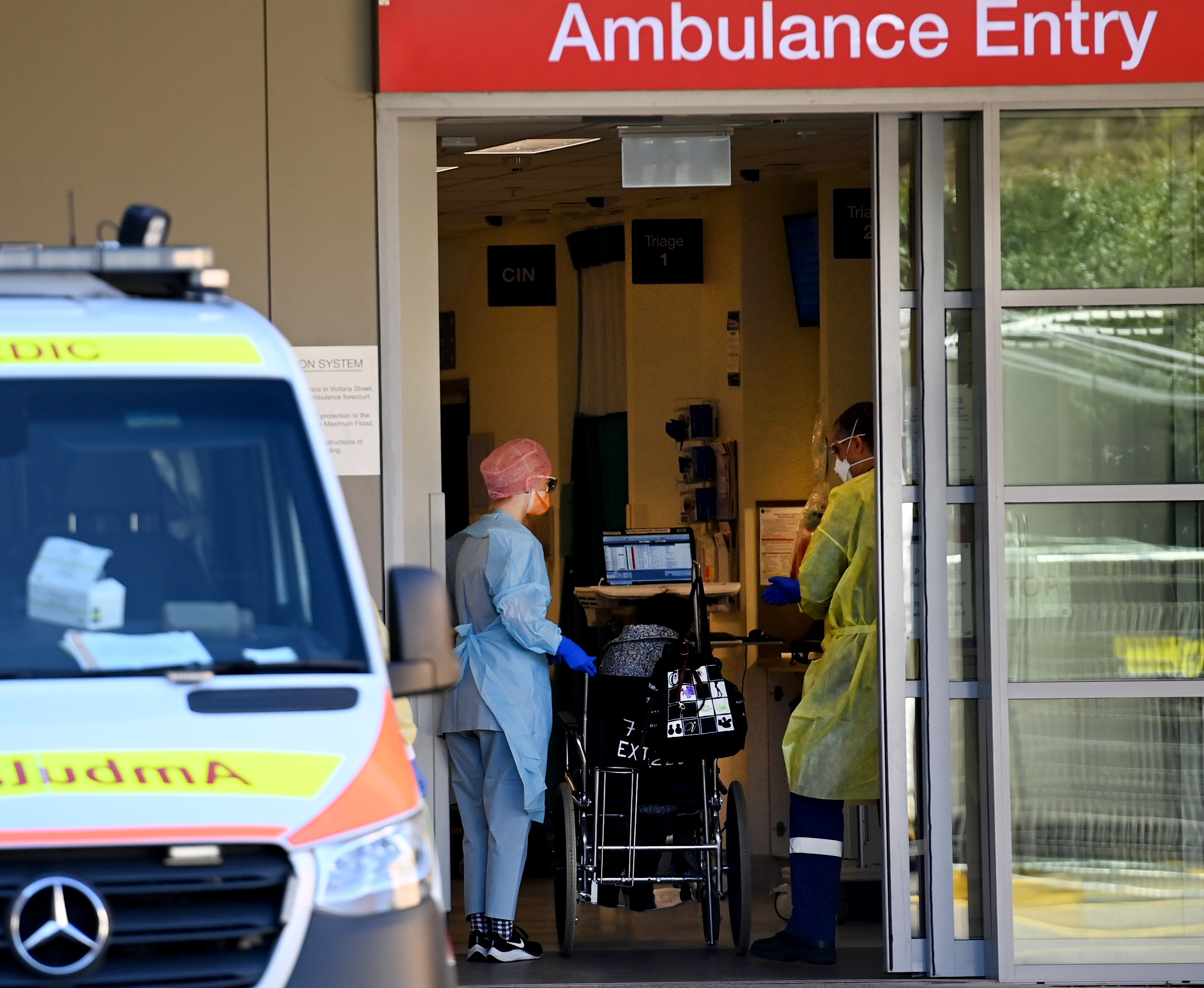
In the largest global study on the impact of COVID-19 on the wellbeing of health workers, almost two-thirds of 7846 Australian frontline staff reported an increase in symptoms of mental illness.
Chief investigator Associate Professor Natasha Smallwood said that nurses were found to be particularly at risk of experiencing mental health problems compared to other groups.
“There is absolutely no doubt that from our larger data already it is very clear that nurses are more vulnerable,” she said.
“Nurses often have absolutely limited job control and therefore may be more at risk of being redeployed or having a change in role and that’s often associated with lower confidence.
“If you’re redeployed or change your work role, then you are more likely to have mental health problems because you’re more likely to be anxious or have a low mood.”
Addressing the mental health of healthcare workers, including nurses and midwives, will require a long-term vision from policymakers and solid organisational changes, according to Smallwood.
“I don’t think there is an easy quick fix to the problem,” she said.
“We should be dealing with occupational mental health issues with the same urgency as we do if it was a physical occupational health issue, and that hasn’t been the case.
“The problem is not on the person, the problem is the healthcare organisation itself, and the workplace.”
The Nurses & Midwives hotline is anonymous, confidential and free, and provides services 24/7 and can be reached on 180 6678 887 or nmsupport.org.au.
For other help and support, call:
- Lifeline Australia 13 11 14
- MensLine Australia 1300 78 99 78
- Beyond Blue 1300 22 4636
- NSW Mental Health Line 1800 011 511.