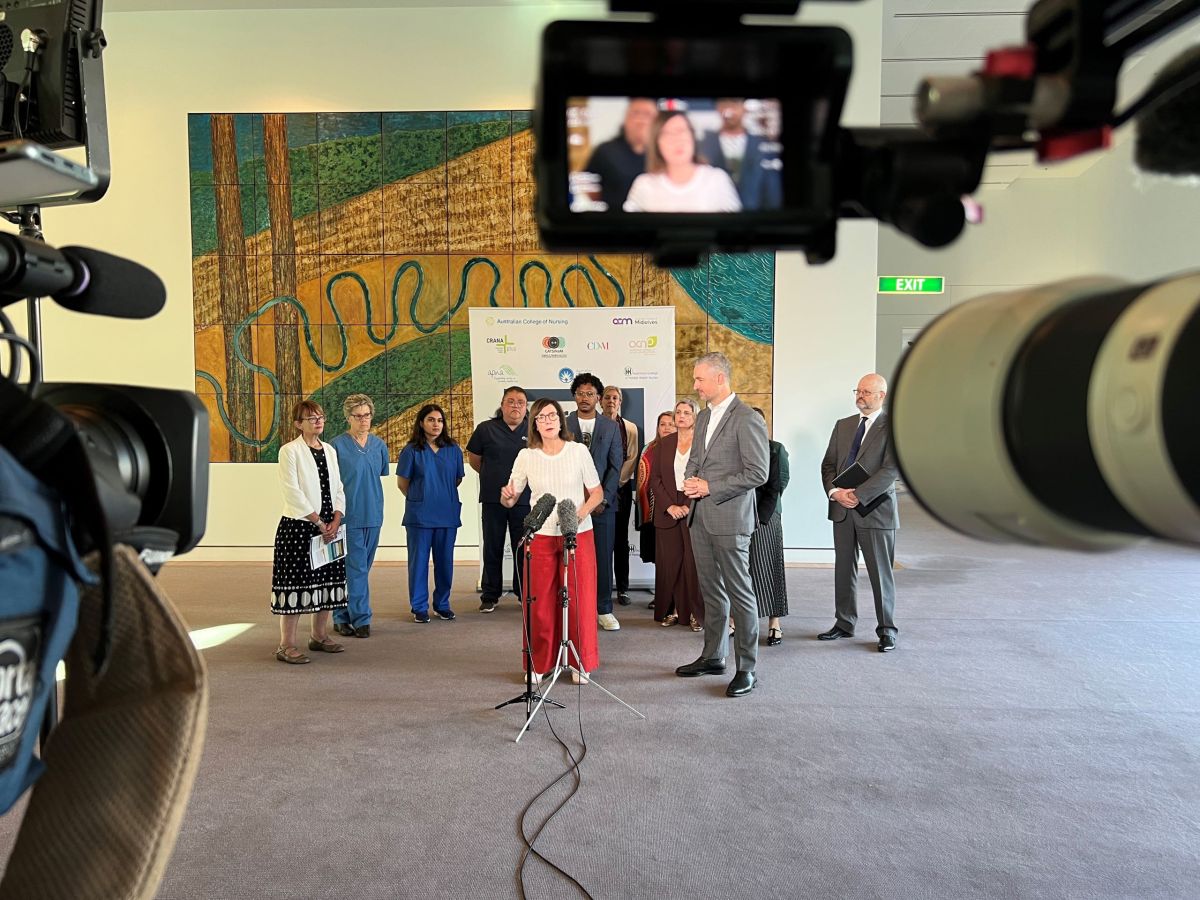
Australia’s growing burden of chronic disease is increasing pressure on the health system, with nursing leaders arguing that expanding access to nurse-led care could help keep more people well and out of hospital.
The Australia’s Health 2026 report from the Australian Institute of Health and Welfare (AIHW) shows three in five Australians are now living with at least one chronic condition, while two in five are living with two or more.
The findings come as chronic disease costs the health system an estimated $98 billion each year, accounting for more than half of all disease spending.
Australian College of Nursing (ACN) chief Adjunct Professor Kathryn Zeitz said the data highlights the need for significant reform in primary healthcare.
“Nurses must be granted access to primary care funding they are currently locked out of,” she said.
“We have the evidence to show nursing care in the community prevents expensive hospitalisations and re-hospitalisations. But we are blocking our largest, most trusted and most widespread workforce – nurses – from delivering it.”
The AIHW report found Australians are living longer than ever before, with life expectancy reaching 81.1 years for men and 85.1 years for women. However, experts say those extra years are increasingly being spent managing chronic illnesses.
University of Sydney (USyd) Associate Professor Nicholas Chartres said longer lives are not necessarily translating into better health.
“Life expectancy has risen steadily over decades; however, chronic diseases account for most of the health burden in Australia with approximately 61 per cent of people living with at least one chronic condition and 40 per cent living with two or more in 2022,” he said.
“This means Australians live longer, but with poor quality of life.”
Related: Nurses, midwives showcase skills at Parliament | Nurses can combat falling vaccination rates | Nurses key to improved chronic wound care
The report also identified obesity as Australia’s leading risk factor for disease burden, overtaking tobacco smoking. About 67 per cent of adults and 27 per cent of children and adolescents were living with overweight or obesity in 2022–24.
Alongside rising rates of chronic illness, access to primary care is becoming increasingly challenging for some Australians. Data cited by the ACN shows the proportion of people delaying or skipping a GP visit because of cost has increased from 4.1 per cent to 7.7 per cent over the past decade.
People living with chronic conditions were more likely to forgo care because of cost than those without chronic illness, at 9.2 per cent compared with 5.5 per cent.
“The sickest Australians are the ones being priced out of primary care, which ends up shifting the cost onto our expensive hospital system,” Prof Zeitz said.
“Nurse practitioners and nurse-led clinics deliver safe, high-quality chronic disease care – monitoring, prescribing, wound care, health checks, prevention – at lower cost and closer to home. But they battle for funding in a system that treats the GP as virtually the only primary health care provider.”
She said nurses should be viewed as part of the solution to rising healthcare demand rather than as a supplementary workforce.
“General practitioners are core to primary health care – but we need to reorient the system to recognise that not every primary health care encounter requires a medical practitioner, and reduce pressure on hospitals.”
“Failing to do so means that people simply go without, or end up in an emergency department, with one in five ED patients there because a GP wasn’t available in time.”
The ACN is calling for a series of funding reforms, including expanding access to Medicare-funded services for nurse-led clinics, extending workforce incentive payments and increasing support for nurse prescribing.
Professor Zeitz argued that better use of nurses in community settings could help shift the healthcare system from treating illness to preventing it.
“Around one-third of Australia’s disease burden is preventable. Keeping a person with diabetes, heart disease or kidney disease well managed in the community saves many times what that care costs by preventing hospitalisation,” she said.
“Funding reform that unlocks nurse-led care is the key to delivering high-quality care, efficiently.”