
Leadership of healthcare teams should be determined by the needs of patients rather than traditional professional hierarchies, according to a new joint statement endorsed by nine national nursing and midwifery bodies.
In the Statement on multidisciplinary teams in health care, organisations including the Australian College of Nursing (ACN), Australian Nursing and Midwifery Federation (ANMF), Australian College of Midwives (ACM) and Australian College of Nurse Practitioners (ACNP), argue that nurses, midwives and nurse practitioners should be supported to lead multidisciplinary teams where their skills and relationship with the patient make them best placed to coordinate care.
The group says better coordination between health professionals could help improve access to care and reduce avoidable hospitalisations.
“There isn’t one model that works for every person or every community,” ACN chief Adjunct Professor Kathryn Zeitz said.
“For an older person managing several long-term conditions at home, the best person to coordinate their care might be a nurse practitioner. For a woman going through pregnancy and birth, it might be her midwife. In a remote town, a registered nurse may be the only health professional for hundreds of kilometres.”
The statement argues that multidisciplinary teams should be designed around the person receiving care rather than assumptions about which profession should lead.
It highlights the role nurses and midwives already play in coordinating care, conducting assessments, managing chronic conditions, supporting discharge planning, and ensuring continuity of care across different healthcare settings, while also drawing attention to growing pressures on the Australian health systems, including chronic disease, workforce shortages and an ageing population – nearly 800,000 hospital admissions each year linked to potentially preventable conditions.
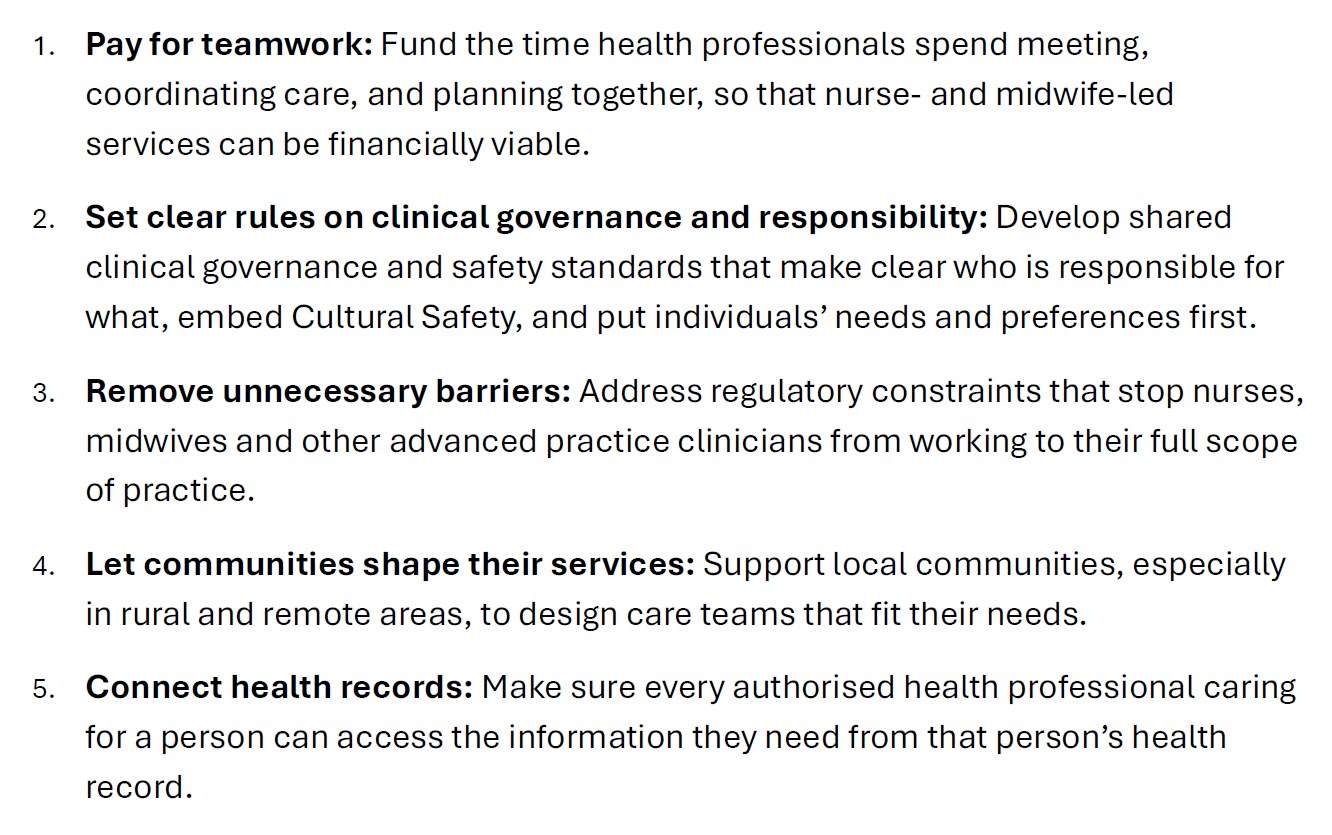
The organisations are calling on governments to fund time spent coordinating care and participating in multidisciplinary teams, remove barriers preventing nurses and midwives from working to their full scope of practice, improve access to shared health records, and support locally designed models of care in rural and remote communities.
ANCP chief Geri Sumpter said funding arrangements needed to better reflect patient needs.
“We urgently need structural and, importantly, funding change to reflect this reality,” she said.
“Funding should follow patient and community needs, not professional hierarchies.”
The statement also raises concerns about funding inequities affecting nurse practitioners, including their exclusion from MyMedicare incentive payments unless practising within a GP-led service.
According to the nine organisations, enabling all health professionals to work to their full scope could improve access to care, strengthen workforce sustainability and support more person-centred health services.
The Statement on multidisciplinary teams in health care was endorsed by nine national organisations: the Australian College of Mental Health Nurses, Australian College of Midwives, Australian College of Nurse Practitioners, Australian College of Nursing, Australian Nursing and Midwifery Federation, Australian Primary Health Care Nurses Association, Congress of Aboriginal and Torres Strait Islander Nurses and Midwives, Council of Deans of Nursing and Midwifery and CRANAplus.