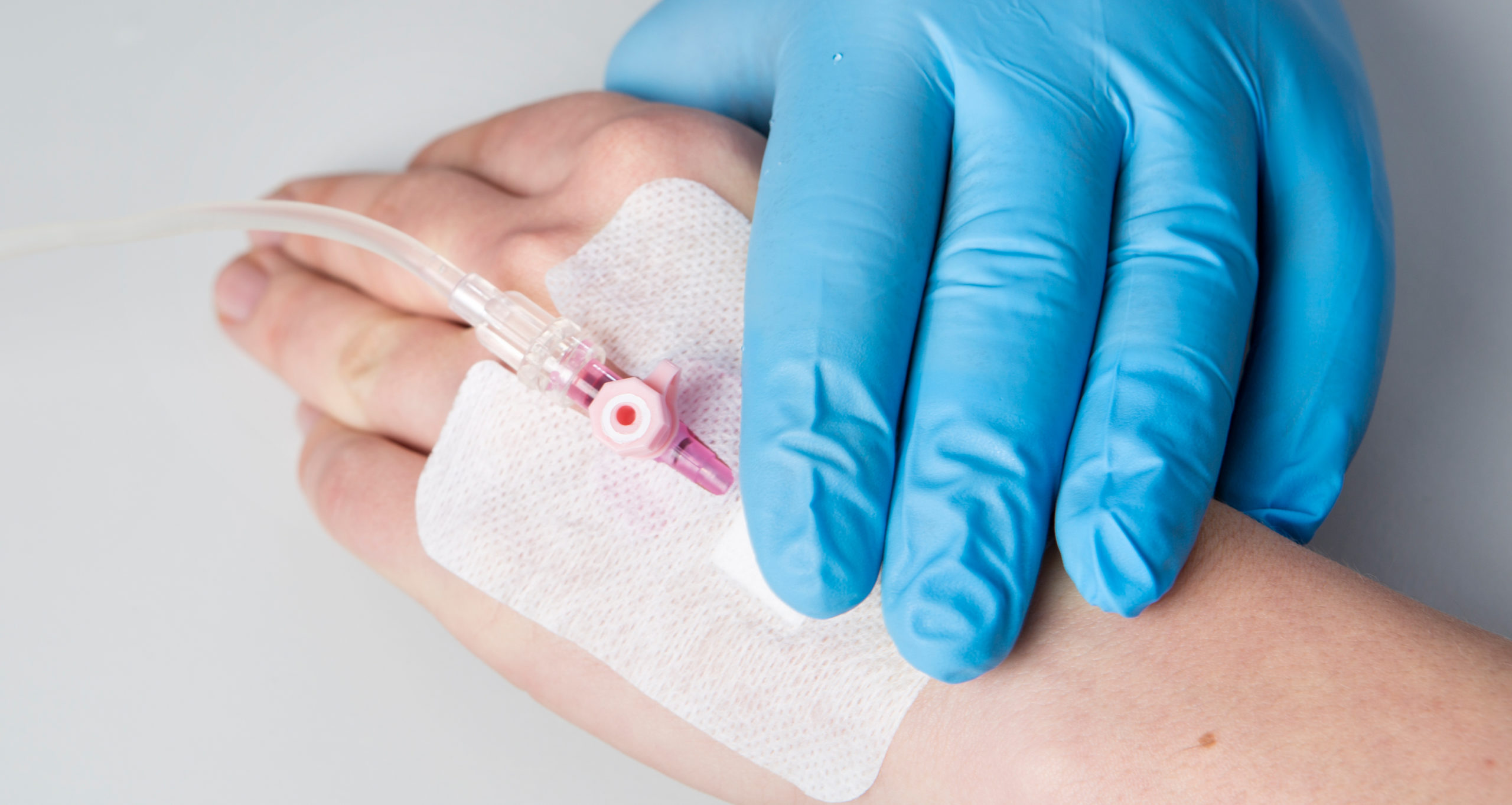
Peripheral intravenous catheter (PIVC) or cannula insertion is the one of the most common medical procedures in Australia, experienced by 7.7 million patients each year.1 While it is a well-practiced procedure, research reveals significant issues in the way that PIVCs are managed, flagging the need for quality improvement and a rethink of our approach.
Quality and safety issues identified include frequent unnecessary cannulation, multiple insertion attempts, and a high rate of removal due to complications. Also, one third of adults have veins that are difficult to access, which compounds the challenge of inserting a PIVC – even for experienced vascular access experts.
Major policy levers for effecting consistent best practice in Australian health care include the National Safety and Quality Health Service (NSQHS) Standards2 and Clinical Care Standards, developed by the Australian Commission on Safety and Quality in Health Care (the Commission). Together, these standards provide a foundation for safe, high-quality health care in Australia.
With PIVC insertion so common during hospital admission, it is important to understand the potential impact of the Commission’s new Management of Peripheral Intravenous Catheters Clinical Care Standard released in May.
Standards spotlight patient care
Clinical care standards were introduced to Australia in 2013 by the Commission to improve patient care by reducing unwarranted practice variation and optimising the uptake of evidence-based care. Motivation to implement the clinical care standards is provided by specific actions in the NSQHS Standards that are mandatory for approximately 1320 health service organisations nationwide.
Collaborative and consultative methods are used to develop content and ensure clinical relevance and engagement across all levels of the health care system.3 Evaluation indicates that not only are the clinical care standards relevant and feasible, they have led to much-needed practice changes in the clinical environment. Standards are recognised as an important method for improving the provision of health care and supporting reliable performance when they allow for flexible standardisation.4 Clinical care standards are intended to support quality improvement locally, with indicators for local level measurement to help identify and address specific barriers and enablers to best-practice care.
Facing up to complications
Most hospital patients in Australia receive at least one PIVC during their admission. An essential part of modern healthcare delivery, a PIVC enables fast, convenient and effective delivery of medications and fluids directly into the bloodstream. Despite this, national and international research literature shows that PIVC insertion and management is often inconsistent with evidence-based practice.5
Often viewed by healthcare staff as a simple procedure, up to 33 per cent of PIVCs are inserted in patients unnecessarily, just in case they might be needed: a waste of medical resources and staff time.6 Unfortunately, PIVC complications are also common and can have serious consequences for people receiving care. Almost two-thirds of PIVCs become blocked, dislodged, inflamed or infected long before therapy is complete, causing discomfort and additional risk to patients.7 Repeated PIVC insertions can be painful and traumatic for the patient,8 as well as time-consuming for staff and costly for the healthcare service.9
As PIVCs are such a common medical device, it is important that staff are properly trained in their insertion and management to reduce unwanted variations in care. The new PIVC clinical care standard supports a nationally consistent approach to care and is a substantial step towards improving clinical management of PIVCs. Developed by a roundtable of vascular access experts, healthcare managers, infection control clinicians and consumers, the clinical care standard pulls together the best evidence and sets key expectations for PIVC insertion and management.
Appropriateness of care
The PIVC clinical care standard includes 10 quality statements and 10 corresponding monitoring indicators. It focuses on preserving a person’s vessel health by promoting prudent insertion and appropriate care for those who receive a PIVC as part of their comprehensive care plan. The first six statements focus on competency and insertion.
The quality statements reinforce steps to ensure people receive PIVCs only when clinically appropriate – rather than routinely – and that they are inserted by trained and competent clinicians in order to avoid repeated insertion attempts. The remaining statements relate to ongoing management and removal of the device when it is no longer required. These steps are vital for reducing harm to patients and improving their healthcare experience.
The tendency to view PIVC insertion as a simple, routine medical procedure can lead to high risk of human error. Relying on unconscious or automatic decision making can contribute to truncated clinical decisions and skills-based slips and lapses.10
The Management of Peripheral Intravenous Catheters Clinical Care Standard is expected to reduce the risk of these errors and improve patient outcomes. It provides clear guidance to support healthcare professionals in working together to reduce the number of unnecessary cannulations, maximise first insertion success and reduce the risk of infection from PIVCs. Nurses have a key role in every stage of caring for patients with cannulas.
The new standard requires policy and leadership support for implementation as well as capacity to measure implementation success. While the new standard targets PIVCs, it presents future opportunities to apply the same principles to all other invasive vascular devices.
Marghie Murgo is Senior Nursing Advisor at the Australian Commission on Safety and Quality in Health Care. Dr Gillian Ray-Barruel is Adjunct Senior Fellow at the School of Nursing, Midwifery and Social Work, The University of Queensland.
References
1. Australian Commission on Safety and Quality in Health Care. Management of Peripheral Intravenous Catheters Clinical Care Standard. [Internet] Sydney: ACSQHC; 2021 Available from: https://www.safetyandquality.gov.au/publications-and-resources/resource-library/management-peripheral-intravenous-catheters-clinical-care-standard.
2. Australian Commission on Safety and Quality in Health Care. National Safety and Quality Health Service Standards. 2nd ed. [Internet] Sydney 2017.
3. Chew DP, Herkes R, Page MA. Clinical care standards: appropriate care everywhere - acute coronary syndromes as an example. Med J Aust. 2016 Nov 21;205(10):S8-s11.
4. Braithwaite J, Vincent C, Nicklin W, Amalberti R. Coping with more people with more illness. Part 2: new generation of standards for enabling healthcare system transformation and sustainability. Int J Qual Health Care. 2019 Mar 1;31(2):159-163.
5. Alexandrou E, Ray-Barruel G, Carr PJ, Frost SA, Inwood S, Higgins N, et al. Use of Short Peripheral Intravenous Catheters: Characteristics, Management, and Outcomes Worldwide. J Hosp Med. 2018 May 30;13(5).
6. Gledstone-Brown L, McHugh D. Review article: Idle 'just-in-case' peripheral intravenous cannulas in the emergency department: Is something wrong? Emerg Med Australas. 2018 Jun;30(3):309-326.
7. Marsh N, Webster J, Ullman AJ, Mihala G, Cooke M, Chopra V, et al. Peripheral intravenous catheter non-infectious complications in adults: A systematic review and meta-analysis. J Adv Nurs. 2020 Dec;76(12):3346-3362.
8. Cooke M, Ullman AJ, Ray-Barruel G, Wallis M, Corley A, Rickard CM. Not "just" an intravenous line: Consumer perspectives on peripheral intravenous cannulation (PIVC). An international cross-sectional survey of 25 countries. PLoS One. 2018;13(2):e0193436.
9. Tuffaha HW, Marsh N, Byrnes J, Gavin N, Webster J, Cooke M, et al. Cost of vascular access devices in public hospitals in Queensland. Aust Health Rev. 2019 Oct;43(5):511-515.
10. Bate L, Hutchinson A, Underhill J, Maskrey N. How clinical decisions are made. Br J Clin Pharmacol. 2012 Oct;74(4):614-620.